

Printed materials
Printed marketing materials for your business
Well made business cards, one-pagers and packets keep working on desks and in lobbies long after your call ends.
The short answer
Printed materials give people a tangible reminder of your brand and show that you are prepared and serious. Every consultant should have business cards, a one-page flyer, introductory packets, a printed service agreement and handouts that guide clients through next steps. Piedmont Avenue Consulting, Inc. helps consultants and business owners with printed marketing materials and company packets across the San Francisco Bay Area, Los Angeles, Orange County and New York.
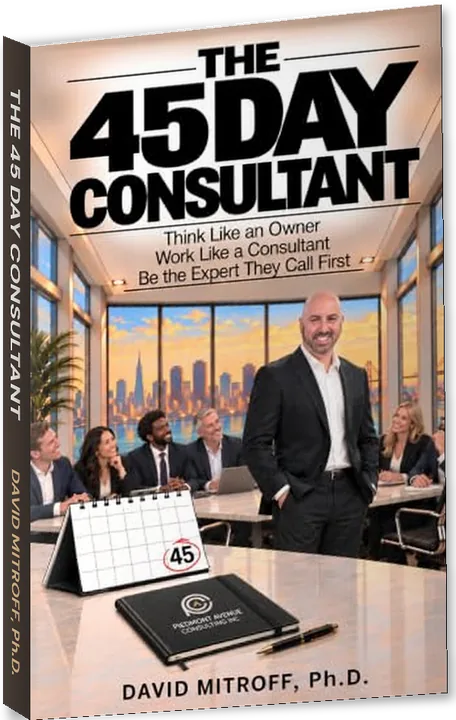
From The 45 Day Consultant
In the chapter titled “Printed Materials,” David Mitroff, Ph.D. writes:
“Printed materials communicate commitment. When a potential client sees that you’ve invested in high-quality print, they’re more likely to believe you’ll invest in delivering quality service.”
Quality print sends a quiet signal about the quality of your work. David Mitroff, Ph.D. treats every card and packet as proof that you invest in doing things well.
 (opens in a new tab)
Get the book on Amazon (opens in a new tab)
See every topic
Our point of view
Why print still matters
An email can be forgotten in seconds. A good brochure can sit on a coffee table for weeks. The weight and texture of the paper create a premium feel, and a QR code, NFC chip or vanity URL can send someone straight to your website or scheduling tool.
Print is part of the sales process. After a call with a prospect, David sends a company overview packet with testimonials, case studies and client logos, plus a business questionnaire about goals, competitors and what is or is not working. The questionnaire shows the breadth of what you do, from operations and HR to marketing, branding and exit strategy.
Keep it fresh and consistent. Use the same fonts, colors and logo placement everywhere. Print in small batches of 50 or 100 so you can update without waste. Review your one-pager and packets every quarter, audit your inventory twice a year, and redesign if close rates dip.
“Everyone learns differently. Some need to hear it. Some need to see it. Some need to read it. And print reinforces what digital introduces.”
From the book
What David does after a first call
David describes what happens after a first phone call. Instead of promising to send a few names, he tells the prospect he will send his company overview packet and a questionnaire. The packet is full of references, case studies and logos. Most people never call the references, but seeing them builds trust before the next conversation.
From there, the message lines up everywhere. A prospect may find his website, read his Yelp or Google reviews, hear the same message on the call, see it again in the packet and once more on his business card. By then they have met his positioning six or seven different ways, and questions like who are you and why should I trust you are already answered.
Put the chapter to work
Your printed materials checklist
Use this list to build a print kit that supports every stage of the sale.
- Review your current printed materials and note what is missing or outdated.
- Create a one-page flyer that covers your services, benefits, process and a real client win.
- Build an industry-specific packet, starting with your most frequent client type.
- Bring a printed service agreement on heavier stock to client meetings.
- Add unique QR codes or custom URLs so you can track which pieces lead to engagement.
- Place a card or one-pager under the coffee cup at your next coffee meeting.
This is also in David’s book
Read the whole chapter in The 45 Day Consultant
This page shares one idea and one story from the chapter “Printed Materials.” The book walks through the full chapter, with the stories, steps and examples David Mitroff, Ph.D. uses with clients.
Testimonials
What our clients say
“Right away things started to happen. We have managed to fill up our seminar rooms again, he has found us great new staff, and business is booming. More than a marketing consultant, he is also a business confidant […]”

“David was very helpful with structuring online marketing for my business. He presented clear ideas and strategy that was totally relevant for my dental office. His innovative thinking helps me to think outside the box.”

“We worked with Piedmont Avenue Consulting to implement new sales processes and launch a successful customer loyalty program. As a result, we have dramatically increased revenues from catering events and ‘front of mind’ sales.”

How it works
How we work: call, assessment, plan.
Schedule a call
Tell us where the business is today and where you want it to be.
Assessment
We look at your numbers, marketing, team and operations.
90-day plan
Three to five initiatives with owners and dates, plus a 12-month marketing calendar.
Ongoing initiatives
We stay on as a long-term partner and keep the plan moving.
In the first 90 days, our job is to find our fee: make or save you more than you pay us.
On the blog
Articles that go deeper on this topic.
Keep reading
More topics from The 45 Day Consultant




Questions
Questions people ask
What printed materials does a consultant need?
Start with business cards, a one-page flyer, introductory packets, a printed service agreement template, and handouts or worksheets for after meetings. Together they show that you are prepared and professional.
What goes in a company overview packet?
Include an introduction to your company, case studies, testimonials, team bios and next steps. Client logos add visual credibility. Create tailored versions for the industries you serve most, such as hospitality, construction or tech startups.
Is print still worth it in a digital world?
Yes. Print leaves a sensory impression that an email cannot, and a brochure can sit on a coffee table for weeks. It also bridges to digital through QR codes, NFC chips or vanity URLs that lead to your website or scheduling tool.
How often should I update printed materials?
Review your one-pager and packets every quarter and update numbers, testimonials and offerings. Audit your inventory twice a year and recycle anything outdated or off-brand. If close rates dip or feedback weakens, redesign your packets.
How many pieces should I print at a time?
Print in small batches of 50 or 100 pieces. That way you can make updates without wasting a large inventory. Professional printers can add specialty finishes when you want a more premium feel.
Work with us
Schedule a call about your printed materials
In the first ninety days of working together, our job is to find our fee, which means making or saving you more than you pay us. We start with an initial consultation and a paid assessment, then build a ninety-day plan and a twelve-month marketing calendar.
One conversation and a clear next step.