




A call with David Mitroff, Ph.D.
Talk through your business with David
Quick answer
Our view, in short: Belgian companies grow in the United States when they choose one city first, write a U.S. version of their materials in U.S. English, plan relationships around the six to nine hour time difference and build credibility with U.S. customers and partners before they spend on advertising. Piedmont Avenue Consulting, Inc. works with international companies entering the San Francisco Bay Area, Los Angeles and New York.
Key takeaways
- Belgian founders already know how to sell across languages and borders, and that experience carries over to the regional U.S. market.
- A Dutch or French original, or a European English version, still needs a U.S. version: spelling, numbers, dates, prices and tone.
- Brussels is six hours ahead of New York and nine ahead of San Francisco, so U.S. coverage and planned visits matter.
- U.S. buyers decide on proof from companies like theirs, so a first U.S. customer and local partners come before ad spend.
Expanding a business from Belgium to the USA starts from a strong position. Belgian founders grow up in a market with three official languages and borders close by in every direction, so many of them have sold abroad long before they look across the Atlantic. At Piedmont Avenue Consulting, Inc., we are a business and marketing consulting firm that works with owners in the San Francisco Bay Area, Los Angeles, Orange County and New York to start, grow and scale their businesses. David Mitroff, Ph.D., has run accelerators, boot camps, workshops and company visits for government programs that bring founders from abroad to the United States and Silicon Valley. This guide covers what Belgian founders tend to face when they enter the United States, and how to plan for it.
The short version: pick one U.S. city first, write a U.S. version of your materials even if your team already works in English, plan your relationships around the time difference and build credibility before you spend on advertising.
Taking your Belgian company to the United States?
Schedule a call with David Mitroff, Ph.D. We look at your offer, the right first city and the first relationships to build there.
Or call David at 510-761-5895, 8 AM to 8 PM, seven days a week.
What Belgian founders bring, and what changes
Belgian companies often arrive with real advantages: a team that already works in two or three languages, customers in neighboring countries and a habit of adapting an offer for each market. Much of that carries over. Three things change.
One language, many regional markets
The United States works in one main business language, and it is still not one market. Buyers in each region look first to their own industry groups, partners and neighbors. A company that is well known in Flanders, Brussels and Wallonia, and across the border, can be unknown two cities apart in the United States. Founders who try to reach the whole country at once spend their budget everywhere and become known nowhere.
The scale is different
A Belgian company may already serve a large share of its home market. In the United States, a single state can hold more buyers than all of Belgium. That scale is the opportunity. It also means a first U.S. launch works best when it is narrow: one city, one type of buyer, one offer.
Proof has to be rebuilt
U.S. buyers respect European success, and they still want to see proof from companies like their own, in their own market. Your European customer list opens a conversation. A U.S. customer closes one.
David has worked with founders from many countries through government programs, accelerators, workshops and mentoring, and he has six years as a Google mentor. Across those programs, the founders who move fastest are the ones who accept these changes early and plan for them. Our companion guide for international companies covers the questions most founders ask. This article focuses on what Belgian companies in particular tend to run into.
Teaching Belgian business students in San Francisco
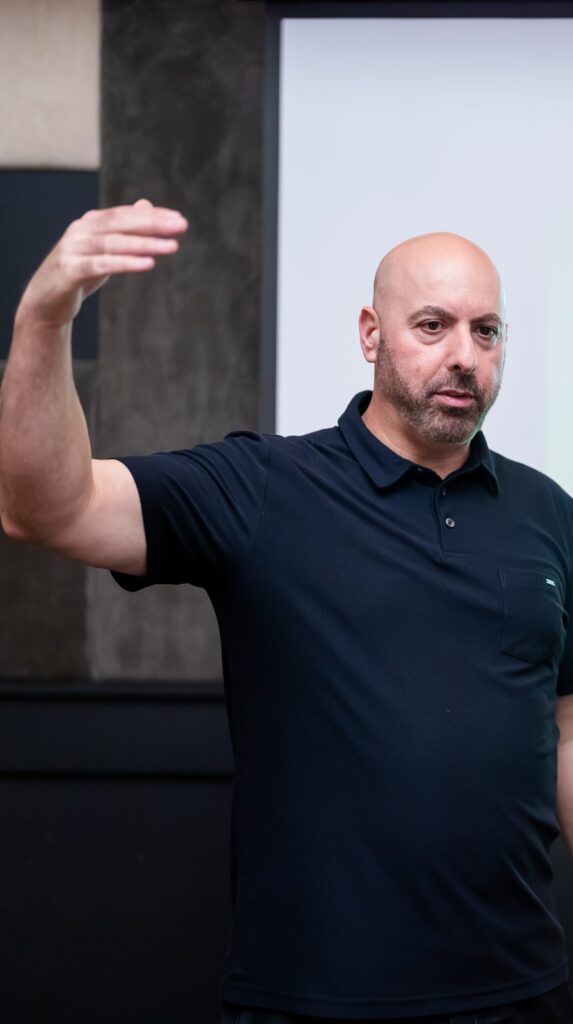
David Mitroff, Ph.D. has taught groups of students from Vlerick Business School, a business school in Belgium, during their study programs in San Francisco with the University of California, Berkeley Extension. He taught those groups two years in a row, including a class on entrepreneurial marketing: how a new company finds its first customers and builds a name in a market where nobody knows it yet.
That is the same question every Belgian company faces in its first year in the United States. The rest of this guide is our answer to it.
The time difference is a relationship problem
Brussels is usually six hours ahead of New York and nine hours ahead of San Francisco and Los Angeles. The working day in Belgium is nearly over when the U.S. West Coast starts its morning. Founders often treat this as a scheduling problem. It is really a relationship problem.
U.S. buyers expect quick replies. A question sent in the afternoon in San Francisco that gets an answer the next morning from Belgium may feel slow to the buyer, even when your team answered first thing. Over months, those small delays add up to an impression that you are far away.
Ways Belgian companies close the gap
- A U.S. point of contact. A local team member, partner or representative who answers during U.S. hours.
- Clear response times on the website and in proposals, so buyers know when to expect an answer.
- Late afternoon calls from the Belgian side, which reach New York in the morning and the West Coast early in the day, planned on purpose and kept consistent.
- Written follow-up after every call, so the conversation keeps moving overnight.
- Regular visits, planned months ahead, so U.S. contacts know when you will be in town.
Plan for the people who cannot meet
When you fly in for a week, not everyone you want to see will be available. That is normal, and it is not a no. The people who cannot make the main event are often the ones worth a coffee, a call or a company visit.
“For international visitors, plan the second option first: the call, the coffee, the company visit for everyone who can’t make the main event.”
David Mitroff, Ph.D., in The Event Effect, Chapter 16: Events That Grow Organizations
Build that second option into every trip. Before you board the flight, know who you will offer a call to, who you will visit in their office and who you will follow up with after you land back home.
Writing for U.S. buyers
Many Belgian teams start from a Dutch or French original, or from an English version written for buyers across Europe. U.S. readers notice the difference within seconds. Localization goes further than translation.
Read your website, pitch deck and proposals as a U.S. buyer would, and look for:
- Spelling. Organisation, colour and centre read as foreign to many U.S. buyers. A U.S. version uses U.S. spelling.
- Numbers. Belgium writes one thousand euros and fifty cents as 1.000,50. U.S. readers expect a comma for thousands and a period for cents.
- Dates, prices and units. U.S. readers write the month before the day, expect prices in U.S. dollars and often think in feet, pounds and Fahrenheit.
- Terms. Words that are ordinary in Europe, such as VAT, turnover or tender, may read differently to a U.S. buyer, who may say sales tax, revenue or request for proposal.
- Contact details. A U.S. phone number, a U.S. address and business hours in a U.S. time zone.
- Tone. Modest, detailed European proposals can read as uncertain in a U.S. pitch. U.S. buyers expect the result and the ask stated plainly, near the top.
- Proof. Case studies and testimonials from companies a U.S. buyer recognizes, or rewritten so the result comes first.
This is not about hiding where you come from. A Belgian origin can be part of your story, above all in food and drink, design and other fields where European quality carries weight. The goal is to make it easy for U.S. buyers to see themselves in your offer.
Choosing your first city: the San Francisco Bay Area, Los Angeles or New York
Most Belgian companies we talk with weigh the same three cities. Each one works best for a different kind of company.
The San Francisco Bay Area
The San Francisco Bay Area suits software, life sciences, health technology, climate technology and companies looking for Silicon Valley investors, mentors and partners. Our startups and tech work centers here, and so do many of the accelerators and programs David has run for founders from abroad.
Los Angeles and Southern California
Los Angeles suits consumer brands, food and beverage, design, fashion, entertainment, media and trade. Our Los Angeles business growth guide describes the local landscape for owners.
New York
New York suits finance, media, advertising, fashion, luxury goods and companies that sell to large corporate headquarters. It is the closest of the three to Belgium in both distance and hours, which makes it a natural first stop for many European companies.
Piedmont Avenue Consulting, Inc. has offices in Oakland and San Francisco, at One Embarcadero Center, along with virtual offices in Los Angeles and Manhattan. We work in all three markets, and we still recommend starting in one.
Questions to settle the choice
- Where are your first ten target buyers? If most of them are in one region, that is your city.
- Where do your industry’s associations and conferences meet? Being in those rooms matters more than the address on your website.
- Where are your partners? A distributor, importer or complementary company can make introductions faster than any campaign.
- Which city can you visit most often? Regular visits build relationships. A single trip rarely does.
How U.S. buyers decide
U.S. buying decisions often follow a pattern that surprises European founders. Knowing it in advance saves months.
- They look for proof from peers. A buyer wants to know which companies like theirs already use you, ideally in the United States.
- More people weigh in. In many U.S. companies, a decision passes through several people, so your materials need to stand on their own when you are not in the room.
- They expect follow-up. Steady, useful follow-up reads as reliability. Silence reads as a lack of interest.
- They respond to a clear ask. A specific next step, such as a pilot, a tasting, a demo or a second meeting, moves a conversation forward.
- Relationships open doors. An introduction from someone the buyer trusts often matters more than the strength of the pitch.
“A sales message asks for something. An invitation offers something.”
David Mitroff, Ph.D., in The Event Effect, Chapter 1: Invite, Don’t Sell
That is why we put invitations, introductions and partners ahead of cold outreach and advertising in a new market.
Your first person on the ground
Sooner or later, most Belgian companies need someone in the United States: a hire, a partner, an importer, a representative or a founder who relocates for a season. Who that person is shapes how U.S. buyers see the company.
The strongest first person usually has three things:
- Relationships in your industry in the city you chose, so introductions start in the first weeks.
- The authority to say yes to a pilot, a meeting or a small change in the offer, without waiting a day for an answer from Belgium.
- A clear rhythm with the Belgian team, such as one standing call at a time that works on both sides of the Atlantic.
Some companies start with a founder on the ground for the first months, then hire locally once the offer has its first U.S. customers. Others start with a partner or an importer and add a hire later. Either path works when the person is visible: at the industry events, on the website and in the follow-up after every meeting.
Credibility first, then advertising
Advertising in a market where nobody knows your name usually sends strangers to a website with no U.S. proof on it. The clicks cost money, and few of them turn into conversations. Build these first:
- A first U.S. customer, even a small pilot, for a testimonial, a reference and a case study.
- Local partners who already serve your buyers and can introduce you.
- Mentors and advisors with experience in your U.S. industry.
- Membership in the industry associations and chambers where your buyers meet.
- A verifiable U.S. presence: an address, a phone number and a named person who answers.
Once those are in place, advertising has something to point to, and it can target the buyers who already know your name.
PR and thought leadership in the United States
Belgian founders often bring a European point of view to U.S. audiences, and that is a real asset. Thought leadership turns it into visibility.
- Write for U.S. readers in trade publications, on LinkedIn and on your own site, on the questions your U.S. buyers ask.
- Speak on panels, at workshops and at accelerators in your target city.
- Pitch U.S. media with a story that includes a U.S. customer or a U.S. problem.
- Stay consistent. One strong article a month for a year does more than a burst of ten in one week.
“One powerful insight I’ve learned is this: being on the cutting edge instantly increases your credibility.”
David Mitroff, Ph.D., in The 45 Day Consultant, Chapter 29: Future Trends in Consulting
Our public relations consulting work starts with the topics, outlets and stages that fit your buyers.
Events, programs and partners
Events give U.S. contacts a reason to meet you, and they make every trip from Belgium count for more. David has produced pitch contests, workshops, executive lunches and accelerator programs for governments and organizations, and he did outreach for a Swiss government conference at the Santa Clara Convention Center. The lesson from all of them is the same: the event itself is the easy part.
“Each one takes weeks of outreach to put the right people in front of the right companies.”
David Mitroff, Ph.D., in The Event Effect, Chapter 19: It’s Not as Easy as It Looks
For a Belgian company, that outreach might go toward:
- A roundtable lunch or dinner for buyers in your industry during your visit.
- A tasting or demo hosted with a local venue or partner.
- A panel with a U.S. partner and a U.S. customer.
- A side event during a major U.S. industry conference, when your buyers are already in town.
- An accelerator or trade program that brings founders from abroad together with U.S. mentors, investors and buyers. Our guide to startup accelerators and boot camps explains how those programs work.
Belgium’s regional trade and investment agencies, chambers of commerce, business schools and university networks also run missions and events. Ask each one what they offer in your target city, and plan your trips around them.
A planning framework: before the first trip, the first ninety days, the first year
Before the first trip
- Write one paragraph describing your U.S. buyer: role, industry, region and problem.
- Choose the city, and list the associations, partners, events and publications there.
- Build the U.S. version of your website, pitch deck and one-page overview.
- Line up meetings with potential partners, mentors and buyers, plus a second option for each.
The first ninety days
- Hold the first round of meetings in person, and follow up on every one in writing.
- Set up U.S. coverage for calls and email during U.S. business hours.
- Land a first proof point: a pilot, a partner agreement or a speaking slot.
- Review what buyers responded to, and adjust the offer before spending more.
The first year
- First quarter: foundations, from the buyer and the city to the U.S. materials and the first relationships.
- Second quarter: proof, with first customers, testimonials and a case study written for U.S. readers.
- Third quarter: visibility, through articles, a panel or workshop and a hosted event.
- Fourth quarter: growth, with targeted advertising, more partners and a plan for the next city.
We work on three to five initiatives at a time and add the next ones as each one lands. Between months three and six, expect ups and downs while the new market takes hold.
Legal, tax and immigration
Company formation, contracts, employment, taxes, privacy rules and visas all depend on your situation. Bring in qualified attorneys and accountants in both countries early. We work alongside them on the market side: positioning, marketing, partnerships and events.

How we work with Belgian companies
We choose the first U.S. city with you, build the U.S. version of your message and materials, map the associations, partners and events that matter there, and plan a calendar of visits, introductions and visibility for the first year. We start with an assessment, agree on the priorities that matter most, and define what success looks like, then build a 90-day plan for ongoing work. We start with an initial consultation and a paid assessment, then build a ninety-day plan and a twelve-month marketing calendar.
Learn more about our work with international companies and global markets. David Mitroff, Ph.D. also speaks to audiences from around the world; see his international keynote speaking.
Take action
Your next three steps
- Pick one U.S. city for the first year and write down why your first buyers are there.
- Read your website as a U.S. buyer would and mark every number, date, price and term written the European way.
- Plan your next trip around a short list of meetings, an event to attend and a follow-up for everyone who could not meet.
In their own words
What clients say about working with us
“Right away things started to happen. We have managed to fill up our seminar rooms again, he has found us great new staff, and business is booming. More than a marketing consultant, he is also a business confidant […]”
 David RosenbaumPartner, McDowall Cotter, APC

“David was extremely helpful, and the most responsive consultant I’ve ever worked with. If he didn’t know something, he had no problem acknowledging that, and calling in an expert. His follow-up was absolutely impeccable.”
 Judith Szepesi, J.D.Partner, Blakely Sokoloff Taylor & Zafman

Read more client stories or see our case studies.
Frequently asked questions
Frequently asked questions
How do I expand my business from Belgium to the USA?
To expand a business from Belgium to the USA, choose one U.S. city first, write a U.S. version of your website and pitch, plan relationships around the time difference with regular visits and local coverage, and build credibility with U.S. customers and partners before spending on advertising.
Which U.S. city is best for a Belgian company?
The best U.S. city for a Belgian company is the one where its first buyers and partners already gather: often New York for finance, luxury goods and corporate buyers, the San Francisco Bay Area for technology and life sciences, or Los Angeles for consumer brands, food and design.
Our team already works in English. Do we need a U.S. version of our website?
Yes. U.S. buyers notice European spelling, number formats, date formats, prices and terms such as VAT or turnover. A U.S. version with U.S. contact details, dollar prices and U.S. proof reads as written for them.
How do Belgian companies handle the time difference with the United States?
Belgium is usually six hours ahead of New York and nine hours ahead of the West Coast. Belgian companies handle it with a U.S. point of contact, clear response times, planned late afternoon calls, written follow-up after every conversation and regular visits planned well ahead.
How do U.S. buyers decide whether to work with a European company?
U.S. buyers usually look for proof from companies like theirs, involve several people in the decision, expect steady follow-up and respond to a clear next step, such as a pilot, a tasting or a demo. Introductions from people they trust carry a lot of weight.
Has David Mitroff, Ph.D. worked with Belgian business students?
Yes. David Mitroff, Ph.D. taught groups of Vlerick Business School students during their programs in San Francisco with the University of California, Berkeley Extension, two years in a row, including a class on entrepreneurial marketing.
Does Piedmont Avenue Consulting, Inc. work with international companies?
Yes. Piedmont Avenue Consulting, Inc. works with international companies on positioning, localization, partnerships, PR and events in the San Francisco Bay Area, Los Angeles and New York. Schedule a call with David to talk about your U.S. plans.
Let’s grow together.
Schedule a call with David. Tell us which U.S. city you are considering, and we will look at the first relationships to build there.
Or call David at 510-761-5895, 8 AM to 8 PM, seven days a week.
About the author
David Mitroff, Ph.D. wrote this article. He is the founder of Piedmont Avenue Consulting, Inc., a business and marketing consulting firm serving the San Francisco Bay Area, Los Angeles, Orange County and New York. Meet David or read more articles by David.
- Founder and Business Growth Strategist at Piedmont Avenue Consulting, Inc.
- Doctorate in clinical psychology, with additional coursework in business administration, law and culinary arts; bachelor’s and master’s degrees.
- Taught marketing and entrepreneurship at the University of California, Berkeley for more than seven years.
- Author of several books, including The 45 Day Consultant, The 45 Day Consultant Field Guide, Online Business Growth Strategies, The Event Effect: Invite, Don’t Sell, and Law Firm Business Growth Strategies (Second Edition).
- Started seven companies; previously owned and ran a recruiting and staffing company.
David works with a small team of consultants and specialists on every engagement. Meet our team or read about Piedmont Avenue Consulting, Inc.