
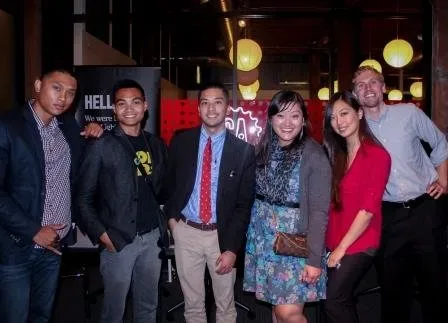


A call with David Mitroff, Ph.D.
Talk through your business with David
Quick answer
To host a business event that brings in clients, start with a clear reason, invite the right people personally, act as the host in the room and follow up with every guest within forty-eight hours. Piedmont Avenue Consulting, Inc. plans business events, executive dinners and networking events for clients in the San Francisco Bay Area, Los Angeles, Orange County and New York, and hosts its own through The Professional Connector®.
Key takeaways
- Most event mistakes happen before anyone books a room, so start with who you want there and what happens afterward.
- Hosting beats attending because the host decides who is in the room and becomes the person everyone remembers.
- Measure an event by what happens next, such as follow-up calls booked, and not by how many people came.
- A regular event series builds a reputation, because guests start planning around it, become regulars and bring others with them.
Knowing how to host a business event pays off. A well-run business event can bring in more qualified conversations in one evening than a month of ads. At Piedmont Avenue Consulting, Inc., we work with owners in the San Francisco Bay Area, Los Angeles, Orange County and New York to start, grow and scale their businesses, and events are one of the strongest tools we use. Through The Professional Connector®, we have hosted hundreds of networking events, workshops, tastings and invite-only executive dinners.
Start with the reason, not the venue
Most event mistakes happen before anyone books a room. An owner sees a competitor host a party, picks a date and starts ordering food. Weeks later, the room is half full of the wrong people, and nobody follows up.
Start with three questions instead:
- Who exactly do you want in the room? Name the industry, the role and the region.
- What do you want to happen after the event? A follow-up call, a site visit, a proposal, a referral partnership.
- Why would those people give up an evening to come? The answer is rarely the food.
Sometimes the honest answer is that an event is not the next step. In The Event Effect, David Mitroff, Ph.D., describes how he starts with an assessment of the business before he plans anything:
“And sometimes the answer is ”don’t do an event yet. Fix your website first,“ or ”your buyers don’t go to events; they go to trade associations.“”
David Mitroff, Ph.D., in The Event Effect, Chapter 4: Start With Why
If people who hear about your event look you up and find an outdated website, the invitation loses much of its power. Get the basics right first. You can read more about our marketing consulting approach.
Three owners, three different reasons
The same three questions lead to very different events. Here is how they play out for three kinds of business.
- An accounting firm wants more owners who need advice all year, not only at tax time. The right people are owners of growing companies and the bankers and attorneys who serve them. The reason to come is a short, practical talk on what owners wish they had known in January. The next step is a planning meeting.
- A boutique shop wants regulars who bring friends. The right people are its best customers and the shops nearby that share them. The reason to come is a first look at a new season, with something to taste or try. The next step is a second visit, with a friend.
- A general contractor wants to be first in line for the next job. The right people are architects, property managers and owners who build. The reason to come is a walk through a finished space and a chance to ask how it was built. The next step is a site visit or an invitation to bid.
Write your own version in one sentence before you do anything else: “We are inviting these people, for this reason, so that this happens next.” If you cannot finish the sentence, the event is not ready yet.
Why does hosting beat attending?
Going to other people’s events is useful. Hosting your own is far more powerful, because you decide who is in the room and you become the person everyone remembers. David puts it in one line:
“The host is the most connected person in any room, because the host is the one who made the room.”
David Mitroff, Ph.D., in The Event Effect, Chapter 3: How Leaders Create Luck
He also tells a story about his grandmother Ruth, who threw a big party every January and invited everyone she knew. After one party, she told him she was happy because she was done for the year. Whether people came or not, they all remembered the invitation. As David writes in the book, “One night in January kept her in everyone’s mind for twelve months.”
That is the hidden value of hosting. Even the people who cannot come remember that you thought of them.
Which event format fits your goal?
The right format depends on who you want to meet and what you want them to do next.
- Small dinner: eight to twelve senior people around one table. Best for building deep relationships with decision-makers.
- Workshop or panel: a short talk with time for questions. Best when you want to show expertise and attract people with a specific problem.
- Tasting or showcase: wine, food, a product demonstration or a tour. Best for businesses with a space or product people can experience.
- Open house: a long window where guests can stop by when it suits them. Best for audiences with full, unpredictable schedules.
- Networking mixer: a larger, relaxed evening. Best for building awareness and meeting new people across industries.
Build the event around your guests’ schedule, not yours. For one property management client, we hosted an open house that ran from 8 AM to 8 PM, because the vendors they wanted to see spent their days in the field. People stopped by between jobs, and the client finally met in person the people they usually only talked to on the phone.
Plan the evening backward from the follow-up
Most owners plan forward from the date. Plan backward from what you want to happen afterward, and the steps fall into place. Our answers on how far ahead to plan a business event cover the timeline in more depth.
Six weeks out
- Write the one-sentence purpose and the follow-up email.
- Build the target list and pick a date that suits your guests.
- Book the space, and confirm what the venue provides and what you bring.
Four weeks out
- Send personal invitations to the top of your list.
- Ask partners to invite their own people.
- Line up any speaker, and agree on a talk of ten to fifteen minutes.
One week out
- Send the first reminder, with the address, parking and start time.
- Review who registered, and note the guests you most want to introduce to each other.
- Brief anyone working the door, so they know the names that matter.
The day of the event
- Send a short morning note to every confirmed guest.
- Arrive early, walk the room as a guest would and fix anything that feels awkward.
- Keep a pen and a few cards in your pocket for notes after each conversation.
Invite the right people, then invite more
The guest list is the most important part of the event, and the most work. David explains why:
“The room is the cheap part. The right people are the expensive part.”
David Mitroff, Ph.D., in The Event Effect, Chapter 19: It’s Not as Easy as It Looks
For our own executive dinners, the team researches the list, invites thousands of people by email, LinkedIn and phone, answers every reply, reviews every registration and confirms guests twice. That level of effort is why the right people end up at the table.
A simpler version works for most small business events:
- Start with a target list of thirty to fifty people you would most like to meet, plus current clients and partners.
- Invite personally first. A short note or call from you works better than a mass email.
- Then invite widely through email, LinkedIn, your website and partner organizations.
- Ask partners to co-host. A partner who invites their own network doubles your reach.
- Confirm twice. A reminder a few days before and a short note the morning of the event cut no-shows.
- Invite the people who probably cannot come. They will remember the invitation, and some of them will come next time.
Screen the list before the night
For small rooms, treat a registration as a request. At our own dinners, a seat is confirmed only after the team reviews the registration and approves it. That one step keeps the room right for everyone at the table.
“A dinner for twelve is twelve relationships, and each one starts before anyone sits down.”
David Mitroff, Ph.D., in The Event Effect, Chapter 6: The Executive Dinner
Our guide on hosting an executive dinner people want to attend covers the full format.
What to put in every invitation
- The reason to come, in one line, before the date and place.
- Who else is likely to be there, described by role or industry.
- The start and end time, so guests can plan the rest of their evening.
- The address, the parking and the nearest transit.
- A personal line from you, even a single sentence.
- A clear way to say yes, and a gracious way to say no.
If you are unsure how large to make the list, our answers on how many people to invite to an event walk through turnout and no-shows.
Planning an event for your business?
Schedule a call with David Mitroff, Ph.D. We look at who you want in the room, what you want to happen after the event, and whether an event is the right next step at all.
Or call David at 510-761-5895, 8 AM to 8 PM, seven days a week.
Run the room like a host
On the night of the event, your job is not to sell. It is to make sure every guest meets someone worth meeting.
- Greet everyone at the door. David greets guests with “Nice to see you” instead of “Nice to meet you,” because it works whether you have met before or not.
- Introduce people to each other. Put guests in small groups, then move on and start the next group.
- Keep any talk short. Ten to fifteen minutes of real value, then back to conversation.
- Look after first-timers. Promise to introduce them to someone in the first ten minutes, then do it.
- Protect the room. If someone is rude to staff or keeps pushing a sale on guests who said no, speak to them quietly. A nice event stays nice when the host keeps it that way.
- Take notes after each conversation, even a few words, so your follow-up is personal.
The first ten minutes with a first-timer
New guests often call before the event to ask what it is like. David welcomes those calls:
“I love those calls. I walk them through the evening, tell them where to find me when they arrive, and promise to introduce them to someone in the first ten minutes. Then I do it. That person usually becomes a regular.”
David Mitroff, Ph.D., in The Event Effect, Chapter 10: Promotion That Feels Like an Invitation
Keep a short list of two or three regulars who are good at welcoming people. When a first-timer walks in, you know exactly who to introduce them to, and the regular enjoys being asked.
Open with a question that is not a pitch
“What do you do?” can turn a conversation into a job interview. David asks guests where they are from and where they live, then talks about a favorite restaurant near them.
“Now we’re talking about food, and nobody is pitching anybody.”
David Mitroff, Ph.D., in The Event Effect, Chapter 13: Networking at Events
Other easy openers: how they heard about the evening, or who they hope to meet tonight. Our event day checklist covers the rest of the night, from the door to the last goodbye.
Measure the event by what happens next
Head count is the wrong scoreboard. David is direct about it:
“Eighty people who drank your wine and left are not a success. Twelve people, three of whom book a follow-up call, are.”
David Mitroff, Ph.D., in The Event Effect, Chapter 4: Start With Why
Before the event, decide what counts as success. It might be follow-up calls booked, partner introductions, proposals requested or new clients signed within ninety days. Track it, and you will know which events to repeat.
A simple scorecard for every event
- How many people on your target list said yes, and how many came.
- How many follow-up calls or meetings were booked within two weeks.
- How many introductions you made, and how many guests made for each other.
- How many partners brought guests of their own.
- What came of the event ninety days later: proposals, new clients or a new partnership.
Write the numbers down the morning after and again at ninety days. Over a few events, the pattern shows you which format, night and guest list work best for your business. Our guide on how to tell whether a business event worked covers each measure.
Follow up within forty-eight hours
The event creates goodwill. The follow-up turns it into business.
- The next morning: send a thank-you email to every guest with one useful link and an invitation to talk.
- Within two days: call the warmest contacts personally.
- Within a week: make any introductions you promised during the event.
- Within a month: invite guests to your next event, and ask a few of them to bring a colleague.
Write the follow-up email before the event, so it is ready to personalize and send. You can read our full guide to the follow-up system that wins more business.
David is clear that the night itself is only half the work:
“Most people think that’s the end. It’s actually the middle. The invitations, the room, the introductions: they create the opportunity. Follow-up is where you actually get it.”
David Mitroff, Ph.D., in The Event Effect, Chapter 14: Follow-Up Is Where the Value Is
Sort every name into a next step
After every event, David reviews the whole list: the people who came, the people who did not, the walk-ins and every business card collected. Each person goes into one of five groups:
- High priority: meet this week.
- Meeting: coffee or a call this month.
- Nurture: the newsletter, future invitations and an occasional note.
- Future event: a good fit for a specific panel, dinner or event coming up.
- Not a fit right now: thank them, keep them on the list and move on.
The first two groups get a personal note, not a template, within one business day. Everyone who registered gets a thank-you, including the people who could not make it. Opportunities come from people who showed up and from people who did not, so nobody on the list is wasted.
Common mistakes, and what to do instead
- Picking the venue first. The room is easy to find. Start with the list and the reason, then find a space that fits them.
- Inviting only by mass email. A personal note from you gets read. Send it to your top thirty to fifty people before anything goes out widely.
- Talking too long. A program that runs past fifteen minutes takes time from the conversations people came for.
- Standing with the people you already know. Your job is to introduce, so keep moving and start new groups.
- Selling in the room. Guests relax when nobody is pitching. Save the business conversation for the follow-up call.
- Waiting a week to follow up. The warmth of the night fades fast. Send the thank-you the next morning.
- Judging the night by head count. Count the meetings booked and the introductions made.
- Hosting once and stopping. A single event is a moment, and a rhythm of events is what builds a reputation.
What to do this week
- Write your one-sentence purpose: who you want, why they would come and what happens next.
- List the thirty to fifty people you most want in the room, starting with clients and partners.
- Pick a format from the list above that suits those guests’ schedules.
- Draft the invitation and the follow-up email on the same day.
- Ask one partner whether they would co-host and invite their own network.
- Put the next two dates on your calendar, so the first event starts a series.
Make it a series, not a one-time party
One event creates a moment. A regular series creates a reputation. When guests know you host something every month or every quarter, they start planning around it and bringing others.
We host invite-only executive dinners in the San Francisco Bay Area and Southern California every month, along with The Professional Connector® networking events and workshops. Over time, guests become regulars, regulars become partners and partners send introductions. That is the event effect in action. Learn more about how we plan event marketing and lead generation for clients.

How we plan events for clients
Every business and audience is different. In the first ninety days of working together, our job is to find our fee, which means making or saving you more than you pay us. We start with an initial consultation and a paid assessment, then build a ninety-day plan and a twelve-month marketing calendar, and for many owners an event series is one of the first initiatives on that calendar. We plan the guest list, invitations, run of show and follow-up, and we tell you plainly when something else would work better first.
From David’s books
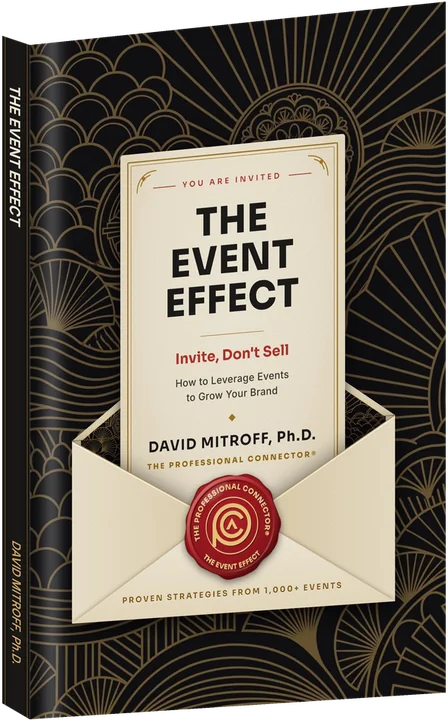
The Event Effect
David wrote the book on events that grow a business. The Event Effect, now in its second edition, covers how to plan, fill, host and follow up on them.
Take action
Your next three steps
- Build a target list of thirty to fifty people and invite them personally before inviting widely.
- Write your follow-up email before the event and send it to every guest the next morning.
- Schedule a call with Piedmont Avenue Consulting, Inc. to map out your event and its follow-up.
In their own words
What clients say about working with us
“Right away things started to happen. We have managed to fill up our seminar rooms again, he has found us great new staff, and business is booming. More than a marketing consultant, he is also a business confidant […]”
 David RosenbaumPartner, McDowall Cotter, APC

“David was extremely helpful, and the most responsive consultant I’ve ever worked with. If he didn’t know something, he had no problem acknowledging that, and calling in an expert. His follow-up was absolutely impeccable.”
 Judith Szepesi, J.D.Partner, Blakely Sokoloff Taylor & Zafman

Read more client stories or see our case studies.
Frequently asked questions
Our city pages for the San Francisco Bay Area cover the local events and seasons in each city that shape when to host.
Frequently asked questions
How many people do I need for a successful business event?
Fewer than most owners think. A dinner for twelve of the right people can be worth more than a mixer for two hundred. Measure success by follow-up meetings booked, not by head count.
How far in advance do I need to send invitations?
For most business events, send personal invitations four to six weeks ahead, a wider invitation three to four weeks ahead and reminders a few days before and on the morning of the event.
What kind of event works best for a small business?
The best event depends on your goal and audience. Small dinners work well for senior decision-makers, workshops work for showing expertise, and open houses or tastings work for businesses with a space or product people can experience.
Do I need a speaker at my event?
A speaker is optional. A short talk of ten to fifteen minutes can give guests a reason to come, and the most valuable part of most business events is the conversation. Keep any program short.
Can Piedmont Avenue Consulting, Inc. plan and host an event for my company?
Yes. Piedmont Avenue Consulting plans guest lists, invitations, venues, programs and follow-up, and has hosted hundreds of events through The Professional Connector®. Schedule a call with David to talk about your goals.
What do I do about people who registered and did not come?
Thank them anyway. Within a day or two, send a note saying you missed them and would love to see them at the next one, and send any promised slides or materials to everyone who registered. Opportunities often come from people who did not make it.
Do I need a partner or co-host for my first event?
A partner is optional, and one makes the room bigger. A partner may bring an audience, credibility or a space, and each partner who invites their own people widens your reach without much extra work.
Let’s grow together.
Schedule a call with David. Tell us who you want in the room, and we will map out the event and the follow-up together.
Or call David at 510-761-5895, 8 AM to 8 PM, seven days a week.
About the author
David Mitroff, Ph.D. wrote this article. He is the founder of Piedmont Avenue Consulting, Inc., a business and marketing consulting firm serving the San Francisco Bay Area, Los Angeles, Orange County and New York. Meet David or read more articles by David.
- Founder and Business Growth Strategist at Piedmont Avenue Consulting, Inc.
- Doctorate in clinical psychology, with additional coursework in business administration, law and culinary arts; bachelor’s and master’s degrees.
- Taught marketing and entrepreneurship at the University of California, Berkeley for more than seven years.
- Author of several books, including The 45 Day Consultant, The 45 Day Consultant Field Guide, Online Business Growth Strategies, The Event Effect: Invite, Don’t Sell, and Law Firm Business Growth Strategies (Second Edition).
- Started seven companies; previously owned and ran a recruiting and staffing company.
David works with a small team of consultants and specialists on every engagement. Meet our team or read about Piedmont Avenue Consulting, Inc.