

Law Firm Growth Guide
Law firm ethics and reputation: building marketing inside the rules
Piedmont Avenue Consulting, Inc. helps firm owners plan growth with law firm ethics and reputation in mind from the start. We work with law firms in New York, Los Angeles, Arizona, the San Francisco Bay Area and wherever you practice. We are a business consulting firm and do not give legal advice. Our goal is marketing that sits inside the rules, so the firm does not have to take anything down.
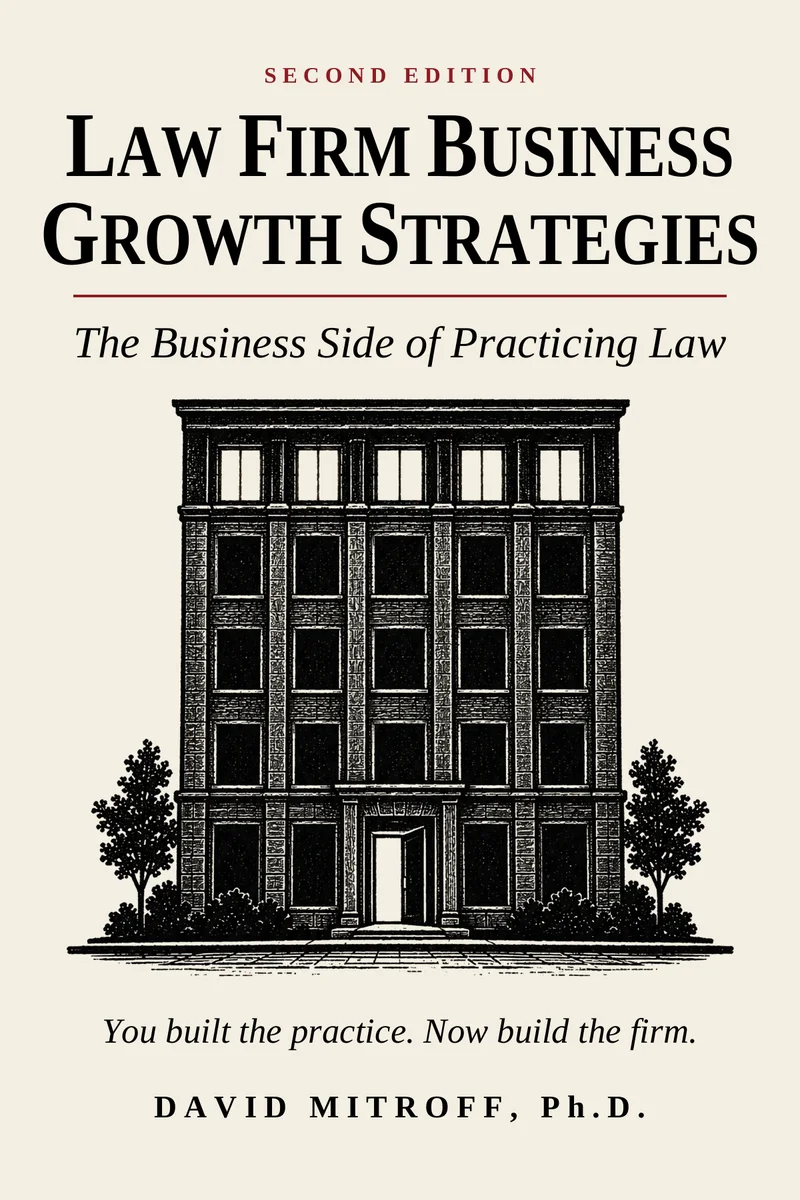
From the book
From the chapter
In the chapter titled “Risk, Ethics, and Reputation”, David Mitroff, Ph.D. writes:
“None of this limits growth. A lawyer can be the known name for one thing without claiming a single title, which is what becoming known is about. It limits the words, and words are easy to change.”
From Law Firm Business Growth Strategies, Second Edition, the playbook we bring to every firm we work with.
Questions firm owners ask about the rules
Law has more rules than most professions about what a firm may say about itself, and the body that issued the license enforces them. In this chapter, David Mitroff, Ph.D., gives a business consultant’s map of where those rules meet growth. He states that the chapter is not legal advice and that he is not a lawyer.
Do the rules differ from state to state?
Yes. The chapter gives three examples. California’s rules govern advertising and solicitation, limit the words a lawyer may use about their competence, and require written fee agreements above a modest threshold. New York has detailed advertising rules and requires a written engagement letter or retainer agreement in most fee-paying matters. Florida’s advertising rules are among the strictest, with review requirements for some advertising. All three protect a prospective client’s confidences from the first consultation. Check your own state.

What compliance system can a firm run?
The marketing lead, or the partner who owns growth, reads the advertising and solicitation rules once a year and keeps a one-page summary in the operating book. A lawyer reviews anything new before it is published. The firm’s own ethics counsel or the state bar’s ethics line answers the close calls.
Which words does a lawyer avoid using about themselves?
In most states a lawyer may say which fields they practice in, and that a practice is focused on, concentrated in or limited to a field. The chapter explains that some titles need the certification the state provides, and that the safe reading is to let other people describe your skill. The same caution applies to promising outcomes, to comparisons with other lawyers, to past results presented as promises, and to testimonials in states that limit them.
What goes in a social media policy?
The rules apply to every post, as they apply to a brochure. The chapter calls for a short written policy that every person signs. The policy says what may be posted and what may not. No matter, client or opposing party is discussed, even without names and even after the matter closes. No one connects with judges, jurors or opposing parties on a matter. One person handles review responses in one way, and the firm owns its accounts and holds the logins. The policy also says what happens on departure: a lawyer’s professional profile goes with them, and the firm’s page, listings, review responses and newsletter list stay with the firm.
How does a firm handle reviews?
Search the firm, every lawyer and every spelling of the firm’s name each month, and read the results as a stranger would. Ask clients for reviews when the matter closes, make it easy, and offer nothing in return. Respond to every review, promptly and briefly. With a negative review, the firm does not confirm the reviewer was a client, discuss the matter or defend itself with facts, because all of that is confidential. The response thanks the person, says the firm takes the concern seriously and offers a conversation offline.
Where does risk sit inside the firm?
The chapter lists the systems: conflict checks before intake hears too much, engagement letters that state the scope, closing letters that make the duty to a former client clear, supervision of associates and staff, trust accounting done exactly right and reviewed by a partner, technology vetted for confidentiality, and a checklist for departures. Each one is also a growth item, because a firm that runs them well is a firm its strategic partners are comfortable sending their own clients to.
In the first ninety days of working together, our job is to find our fee, which means making or saving you more than you pay us. We start with an initial consultation and a paid assessment, then build a ninety-day plan and a twelve-month marketing calendar.
Why firms work with David
David’s law firm work at LexisNexis.
Inside the largest firms
For six years at LexisNexis, David Mitroff, Ph.D. worked with some of the largest law firms in the world and met attorneys across the San Francisco Bay Area. Many of them told him the same thing: I want to start my own firm. They knew how to practice law. What they wanted was everything else: what to offer, how to price, and above all, where the right clients come from. So he helped them open their doors, and he has been growing firms ever since.
Teaching lawyers
David has been an approved California MCLE provider and has delivered more than 300 MCLE workshops, webinars and presentations through Piedmont Avenue Consulting, Inc., LexisNexis, Continuing Education of the Bar (CEB) and the San Francisco Bar Association. He has been featured in California Lawyer magazine.
Wherever you practice
We work with law firms in New York, Los Angeles, Arizona, Orange County and the San Francisco Bay Area, and wherever your firm is located. Our main office is on Piedmont Avenue in Oakland, and we meet by video everywhere else.
Personal injury or patent, a solo office or a large partnership, the business side works the same way. We work with:
- Personal injury
- Patent and intellectual property
- Estate planning
- Elder law
- Family law
- Business and corporate
- Employment
- Real estate
- Bankruptcy
- Criminal defense
- Immigration
- Litigation
“McDowall Cotter started working with David Mitroff and right away things started to happen. We have managed to fill up our seminar rooms again, he has found us great new staff to run our marketing department, and business is booming. More than a marketing consultant, he is also a business confidant, helping us keep course on our goal to growth.”


Quick self-assessment
Score your law firm
Nine questions on the nine keys from David Mitroff, Ph.D.’s book Online Business Growth Strategies. Tap an answer for each one and watch your score move.
On the blog
Articles that go deeper on this chapter
Questions
Questions firms ask.
How can a law firm stay current on advertising rules?
The chapter suggests that the marketing lead, or the partner who owns growth, reads the state's advertising and solicitation rules once a year and keeps a one-page summary in the operating book. A lawyer then reviews anything new before the firm publishes it, and ethics counsel or the state bar's ethics line answers close calls.
How does a law firm respond to a negative review?
A law firm responds to a negative review without confirming that the reviewer was a client, without discussing the matter, and without defending itself with facts about the representation. The response thanks the reviewer, says the firm takes the concern seriously and offers a conversation offline.
What does a law firm social media policy cover?
A law firm social media policy, signed by everyone, covers what may be posted, keeps every matter, client and opposing party out of posts, bars connecting with judges, jurors or opposing parties on a matter, names one person for review responses, and says who owns the accounts and what happens on departure.
Do law firm advertising rules differ from state to state?
Yes. The chapter gives three examples. California’s rules limit the words a lawyer may use about their competence and require written fee agreements above a modest threshold. New York requires a written engagement letter or retainer agreement in most fee-paying matters, and Florida’s advertising rules are among the strictest, with review requirements for some advertising. Each firm checks its own state.
How does risk management help a law firm grow?
The chapter lists the systems: conflict checks before intake hears too much, engagement letters that state the scope, closing letters, supervision of associates and staff, trust accounting reviewed by a partner, technology vetted for confidentiality, and a checklist for departures. Each one is also a growth item, because strategic partners are comfortable sending their own clients to a firm that runs these systems well.

Take the next step
Schedule a call with David.
Creative strategies, hands-on implementation, and the personal commitment of a partner invested in your success.
Quotes on this page are from Law Firm Business Growth Strategies, Second Edition by David Mitroff, Ph.D. Header photo: Tony Webster, CC BY 2.0, via Wikimedia Commons.