


A call with David Mitroff, Ph.D.
Talk through your business with David
Quick answer
The restaurant event ideas that work best fit what the restaurant already does well: community nights, tastings and pairing dinners, a chef’s table, business mixers and seasonal events that bring new guests in on slow nights and lead to catering and private bookings. Piedmont Avenue Consulting, Inc. plans events and marketing for restaurants, bars and hotels in the San Francisco Bay Area, Los Angeles, Orange County and New York.
Key takeaways
- Restaurants that invite the right people in, such as nearby scientists at a monthly Beers and Biotech night, often win catering and private events later.
- Events work best when they show off what the restaurant already does well, such as a strong wine list or a private room.
- Venues welcome events on slow nights because they keep the money made from guests who would otherwise stay away.
- A monthly series builds a community and a reputation, because people come to expect it and plan around it.
Every restaurant has slow nights, and the right restaurant event ideas can turn them into some of the most valuable nights of the week. At Piedmont Avenue Consulting, Inc., we work with restaurants, bars, hotels and hospitality groups in the San Francisco Bay Area, Los Angeles, Orange County and New York on marketing, operations and growth. Restaurants were among our first clients, and David Mitroff, Ph.D., has hosted networking events, tastings and dinners in restaurants and hotels for years.
Invite your way in instead of selling your way in
The most common restaurant marketing mistake is trying to sell harder: more discounts, more ads, more flyers. The events that work best do the opposite. They give the right people a reason to walk in, meet each other and come back.
In The Event Effect, David tells the story of a client restaurant in South San Francisco surrounded by biotech companies. The obvious move was to sell to those companies. Instead, the restaurant started a monthly event:
“We started a monthly event called Beers and Biotech and invited the scientists from all those companies to come for complimentary beers. No pitch.”
David Mitroff, Ph.D., in The Event Effect, Chapter 1: Invite, Don’t Sell
The event ran month after month. Scientists came, met people from other companies and started treating the restaurant as their place. Then the business followed:
“Then they start ordering catering for their teams, booking private events, and telling their coworkers. The restaurant did not sell its way into those companies. It invited its way in.”
David Mitroff, Ph.D., in The Event Effect, Chapter 1: Invite, Don’t Sell
Look around your own neighborhood. Who works, lives or gathers nearby? Hospitals, tech offices, schools, law firms, gyms, apartment buildings and community groups are all audiences you can invite in.
Event ideas that work for restaurants
A monthly community night
Pick one audience and one night a month. Nurses from the nearby hospital, teachers from local schools, members of a running club or professionals from a nearby office park. Keep the format the same each month so people can plan around it.
Tastings and pairing dinners
Wine, beer, spirits, sake, olive oil or chocolate pairings give guests a reason to come and a reason to talk. Partner with a local winery, brewery or distributor, who will often bring product and promote the event to their own list.
Chef’s table and cooking demonstrations
Guests love seeing how food is made. A small chef’s table, a demonstration or a hands-on class turns a regular dinner into an experience people talk about.
Networking events and business mixers
Local business groups, chambers of commerce and professional associations look for places to meet every month. Hosting them brings in groups on otherwise quiet evenings and introduces your restaurant to people who book corporate dinners and catering.
Holiday and seasonal events
Lunar New Year, Oktoberfest, harvest dinners and holiday parties give you a natural reason to invite people. David hosted an Oktoberfest at the Miele Experience Center in San Francisco with a chef cooking in the showroom kitchens, fresh pretzels, a beer tasting and a live podcast recording. Hundreds of people came. A restaurant can run the same kind of themed evening in its own space.
Book signings, talks and live recordings
Local authors, podcasters and speakers need places to host their audiences. Offering your space brings their followers through your door.
A quiet-season series
Every restaurant has a slow stretch of the year as well as slow nights of the week. A short series that runs through that stretch gives regulars a reason to come in when they otherwise would not. David gives an example of how a restaurant might plan its year in The Event Effect:
“A restaurant might put a holiday tasting in November, a quiet-season brunch series in January and a patio opening in April.”
David Mitroff, Ph.D., in The Event Effect, Chapter 11: The Timeline
Write your own version on one page: twelve boxes, one for each month, with the theme and the one or two events you plan in each. Our guide to a twelve-month marketing calendar for hotels and restaurants walks through it step by step.
A neighbor night
Invite the staff and owners of the businesses around you: the salon, the gym, the bookstore, the dental office. They eat out, they host gatherings and they recommend places to their customers every day. A neighbor night once a quarter turns the people who work on your street into people who send guests your way.
An industry night
Pick one profession and build a night for it: real estate agents, nurses, attorneys, contractors or teachers. When everyone in the room shares the same work, they have plenty to talk about, and they start to think of your restaurant as their place.
Why do venues welcome events on slow nights?
For years, David has hosted most of his networking events and happy hours without paying for the room. The venue keeps the money it makes, and the event brings in guests on nights that would otherwise be quiet. In The Event Effect, he writes:
“When I hosted every month at the W Hotel in San Francisco, the hotel told me they made one thousand to three thousand dollars every night I was there.”
David Mitroff, Ph.D., in The Event Effect, Chapter 18: What Events Cost
That is the opportunity for restaurant owners. Partner with people who already host events, such as business groups, meetup organizers and nonprofits, and give them a reason to choose your space on your slow nights.
Pick your slowest night on purpose
The best night for an event is the one that hurts the most when it is empty. David describes it plainly in The Event Effect:
“Every restaurant, bar and hotel has slow nights. Friday is packed. Tuesday is quiet. The staff is still on the clock, the lights are still on, and the room is half empty.”
David Mitroff, Ph.D., in The Event Effect, Chapter 7: Venues, Sponsors and Partners
How to find your slow night
- Look at sales by day of the week for the last few months, and note which nights fall furthest below the others.
- Ask your floor manager. The person running the room knows which nights feel quiet even when the numbers look close.
- Check your staffing. A night where the team stands around is a night that can carry an event without extra hires.
- Avoid your private event nights. Leave the nights that already book large parties alone.
How to approach a group that hosts events
Groups that host events are looking for good rooms. A short, warm note works well. Tell them who you are, describe the space, name the night you have in mind and offer to promote their event to your own guests. Ask whether they would like to come see the room. Then make it easy: a set menu, a clear count deadline and a contact person on your team. Our guide to event sponsors and venue partners covers what each side brings to the partnership.
Know what you do best
Events work best when they show off what your restaurant already does well. In The 45 Day Consultant, David describes a restaurant that tried to put every popular item from the street on its menu:
“They said, ”We took the best item from every place on the street and put it on our menu.“ But they didn’t make any of them well. You can’t be everything to everyone.”
David Mitroff, Ph.D., in The 45 Day Consultant, Chapter 20: Communication Skills that Win Clients
Build your events around your strengths. A great cocktail program suits a mixology class. A strong wine list suits a pairing dinner. A large patio suits a summer series. A private room suits small executive dinners.
Plan events that turn into catering and private bookings
The biggest value of a restaurant event often comes after the night itself. Plan for it:
- Collect names and emails at every event, with permission, through a simple sign-up or raffle.
- Have a private events menu ready to hand to anyone who asks.
- Mention catering and private dining briefly during a welcome, without a hard sell.
- Follow up within a day with a thank-you email, photos and a link to book a table or a private event.
- Track where bookings come from so you know which events to repeat.
You can read more about how we approach restaurant consulting and event marketing.
Want your slow nights to work harder?
Schedule a call with David Mitroff, Ph.D. We look at your calendar, your space and your neighborhood, and we map out events that bring in the right guests.
Or call David at 510-761-5895, 8 AM to 8 PM, seven days a week.
How do events pay for themselves?
A restaurant event does not need to be expensive to work. Many of the best ones cost little more than staff time and a small food or drink offer. Keep a simple budget for each:
- Food and drink cost for anything complimentary, such as a welcome drink or passed appetizers.
- Extra staff hours for setup, service and cleanup.
- Promotion, usually little beyond printed invitations and a boosted social post.
- Partner contributions, such as product donated by a winery or brewery.
Then compare it to what the night brings in: food and drink sales, new email sign-ups, catering inquiries and private event bookings over the next ninety days. Those later bookings can add up to far more than the night itself.
A simple run of show for a restaurant event
Guests remember how an evening flows. A plain plan keeps the night smooth for them and for your staff.
- Before guests arrive: brief the team on who is coming, what is being served and who greets people at the door.
- Arrival: a welcome drink or a small bite in hand, and a host introducing new guests to each other.
- The welcome: a few words from the owner or chef, a thank-you to the partner and a quick note on what the evening includes.
- The moment: the tasting, the demonstration or the talk that gives people something to remember and discuss.
- Mingling: time for guests to meet, with staff watching for anyone standing alone.
- The close: thank everyone, mention the next event and make the sign-up sheet easy to find.
Our event day checklist covers the details from the door to the last goodbye.
How do you know an event worked?
Head count is the easy number and rarely the useful one. In The Event Effect, David puts it this way:
“Eighty people who drank your wine and left are not a success. Twelve people, three of whom book a follow-up call, are.”
David Mitroff, Ph.D., in The Event Effect, Chapter 4: Start With Why
For a restaurant, the follow-up call is often a catering order, a private dinner or a group that starts coming every month. Track these after each event:
- New names on your list, and how many of them come back within a few months.
- Catering and private event inquiries that mention the event.
- Bookings from partners and groups who first came for an event.
- Sales on the night, compared with the same night in an ordinary week.
- Guest comments, in person, by email and in reviews.
We go deeper on this in how to tell whether a business event worked.
Promote each event the right way
You do not need a huge budget to fill a room. You need the right invitations in front of the right people.
- Start with partners. The group, brand or organization co-hosting the event will often promote it to their own list.
- Use your own list. Email and text your regulars first. They are most likely to come and bring friends.
- Post on your Google Business Profile, Yelp page and social media a few weeks ahead, with photos.
- Invite neighbors in person. Drop by nearby businesses with a printed invitation.
- List the event on local event calendars, Meetup and Eventbrite.
Make every guest feel welcome
The way guests feel at an event decides whether they come back. Train your team to treat event guests like future regulars.
- Greet every guest at the door and introduce them to the host or another guest.
- Keep the service smooth, with enough staff for a crowd.
- Introduce the chef or owner for a quick hello.
- Give people a reason to return, such as an invitation to the next event or a small offer for their next dinner.
Keep it consistent
One great event creates a good night. A monthly series creates a community and a reputation. Beers and Biotech worked because it happened every month, and people came to expect it. Pick one or two event formats that suit your restaurant, put them on a fixed calendar and keep them going long enough to see results.
The reward for that consistency is a room full of familiar faces. David describes how it works in The Event Effect:
“The people who keep coming become your regulars. The regulars become your friends, your partners, your clients and your best promoters.”
David Mitroff, Ph.D., in The Event Effect, Chapter 14: Follow-Up Is Where the Value Is
What do restaurant events look like in practice?
A few examples show how different restaurants can use the same ideas.
A neighborhood Italian restaurant
The owner picks the slowest weeknight and starts a monthly pasta class for eight to ten guests at the bar. Each guest leaves with a recipe card and an invitation to bring a friend next month. The owner keeps the private dining menu at the bar, because a guest who enjoyed the class is a natural person to ask about family celebrations.
A brewpub near an office park
The pub invites the teams from nearby offices to a monthly after-work tasting of new releases. Each company’s office manager gets a personal invitation. The pub hands out its catering menu at the door, so the office managers know who to call for the next team lunch.
A hotel restaurant
The restaurant hosts a quarterly dinner with a local winery for hotel guests and neighbors. The winery promotes it to its own list, and the hotel promotes it to guests at check-in. The dinner fills a quiet night and gives locals a reason to try a restaurant they may have walked past for years.
These are sketches of the method, not results from a client. What they share is one audience, one format and a steady schedule.
Common restaurant event mistakes
- Choosing a packed night. An event on your best night competes with your regular guests.
- Inviting everyone. “Come one, come all” gives nobody a reason to feel personally invited.
- Discounting the whole menu. A welcome drink or a tasting is enough of an offer.
- Running short on staff. Slow service at an event leaves a worse impression than no event at all.
- Skipping the sign-up sheet. Without names and emails, you cannot follow up.
- Stopping after one night. A single event is a test. A monthly series is a reputation.
What can you do this week?
- Pull your sales by day of the week and circle your slowest night.
- Choose one audience you would like to see in your dining room.
- Write one invitation to a group, a partner or a neighbor, and send it.
- Set up a sign-up sheet and a thank-you email you can send the morning after.
- Mark the next three event dates on your calendar and share them with your team.
For more ways to fill the room, read how to promote an event so the right people come, and see how we approach restaurant marketing.

How we work with restaurants
We work with independent restaurants, restaurant groups, hotels, bars and franchise owners on marketing, events, operations and growth. In the first ninety days of working together, our job is to find our fee, which means making or saving you more than you pay us. We start with an initial consultation and a paid assessment, then build a ninety-day plan and a twelve-month marketing calendar, and for many restaurants an event series is one of the first initiatives. Learn more about our San Francisco restaurant consultant and San Francisco restaurant marketing work.
From David’s books
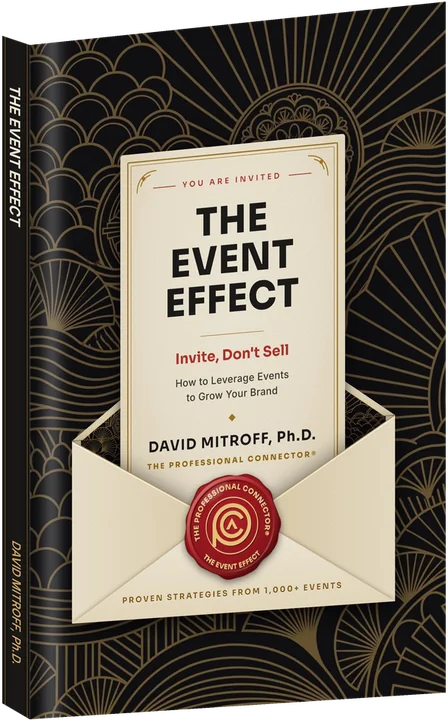
The Event Effect
David wrote the book on events that grow a business. The Event Effect, now in its second edition, covers how to plan, fill, host and follow up on them.
Quick self-assessment
Score your restaurant
Answer nine questions and get an initial score out of 100 for how easy your restaurant is to find and choose online. It is written for restaurants, and built on the nine keys from David Mitroff, Ph.D.’s book Online Business Growth Strategies.
Score your restaurantTake action
Your next three steps
- Pick one audience and one slow night each month, and keep the event format the same.
- Collect names and emails at every event and follow up within a day with photos and a booking link.
- Schedule a call with Piedmont Avenue Consulting, Inc. to plan an event series around your restaurant’s strengths.
In their own words
What clients say about working with us
“We’ve worked with David and his team for over 8 years. They created our branding and marketing, designed our bar menu, consulted on our bar program and private events, and helped us expand to multiple locations and launch our own brewery line. David and his team have been invaluable.”
 Neil RamarapuFounder, The Oxford, Sunnyvale and Lodi

“We worked with Piedmont Avenue Consulting to implement new sales processes and launch a successful customer loyalty program. As a result, we have dramatically increased revenues from catering events and ‘front of mind’ sales.”
 Sam HensleyGeneral Manager, Ben & Jerry’s Northern California

Read more client stories or see our case studies.
Frequently asked questions
Slow seasons differ from town to town. Our city pages for the San Francisco Bay Area show the local seasons and events that shape the busy and quiet months.
Frequently asked questions
What are good event ideas for a restaurant?
Monthly community nights for one audience, tastings and pairing dinners, chef’s tables, business networking mixers, seasonal and holiday events, and book signings or live recordings with local authors and podcasters.
How can a restaurant fill slow nights?
Host events for nearby audiences and partner with groups that already run events, such as chambers of commerce, business associations and meetup organizers. Choose your slowest nights, keep a fixed schedule and promote through partners and your own list.
Do restaurant events lead to catering and private events?
They can. Collect contact details, have a private events menu ready, mention catering briefly and follow up within a day. Track bookings so you know which events bring in the most business.
How do I promote a restaurant event without a big budget?
Ask your co-host to promote the event, email and text your regulars, post on your Google Business Profile, Yelp and social media, invite neighbors in person and list the event on local event calendars.
Does Piedmont Avenue Consulting, Inc. plan events for restaurants?
Yes. Piedmont Avenue Consulting plans event series, partnerships, promotion and follow-up for restaurants and hospitality businesses as part of a larger marketing plan. Schedule a call with David to talk about your restaurant.
Which night of the week is best for a restaurant event?
Your slowest night is usually the best choice. Look at sales by day of the week, ask your floor manager which nights feel quiet and avoid the nights that already book private parties.
How do I know whether a restaurant event was worth it?
Look past the head count. Track new names on your list, catering and private event inquiries, bookings from groups who first came for an event and sales compared with an ordinary night.
Let’s grow together.
Schedule a call with David. Tell us about your restaurant and your slowest nights, and we will plan events to fill them.
Or call David at 510-761-5895, 8 AM to 8 PM, seven days a week.
About the author
David Mitroff, Ph.D. wrote this article. He is the founder of Piedmont Avenue Consulting, Inc., a business and marketing consulting firm serving the San Francisco Bay Area, Los Angeles, Orange County and New York. Meet David or read more articles by David.
- Founder and Business Growth Strategist at Piedmont Avenue Consulting, Inc.
- Doctorate in clinical psychology, with additional coursework in business administration, law and culinary arts; bachelor’s and master’s degrees.
- Taught marketing and entrepreneurship at the University of California, Berkeley for more than seven years.
- Author of several books, including The 45 Day Consultant, The 45 Day Consultant Field Guide, Online Business Growth Strategies, The Event Effect: Invite, Don’t Sell, and Law Firm Business Growth Strategies (Second Edition).
- Started seven companies; previously owned and ran a recruiting and staffing company.
David works with a small team of consultants and specialists on every engagement. Meet our team or read about Piedmont Avenue Consulting, Inc.