
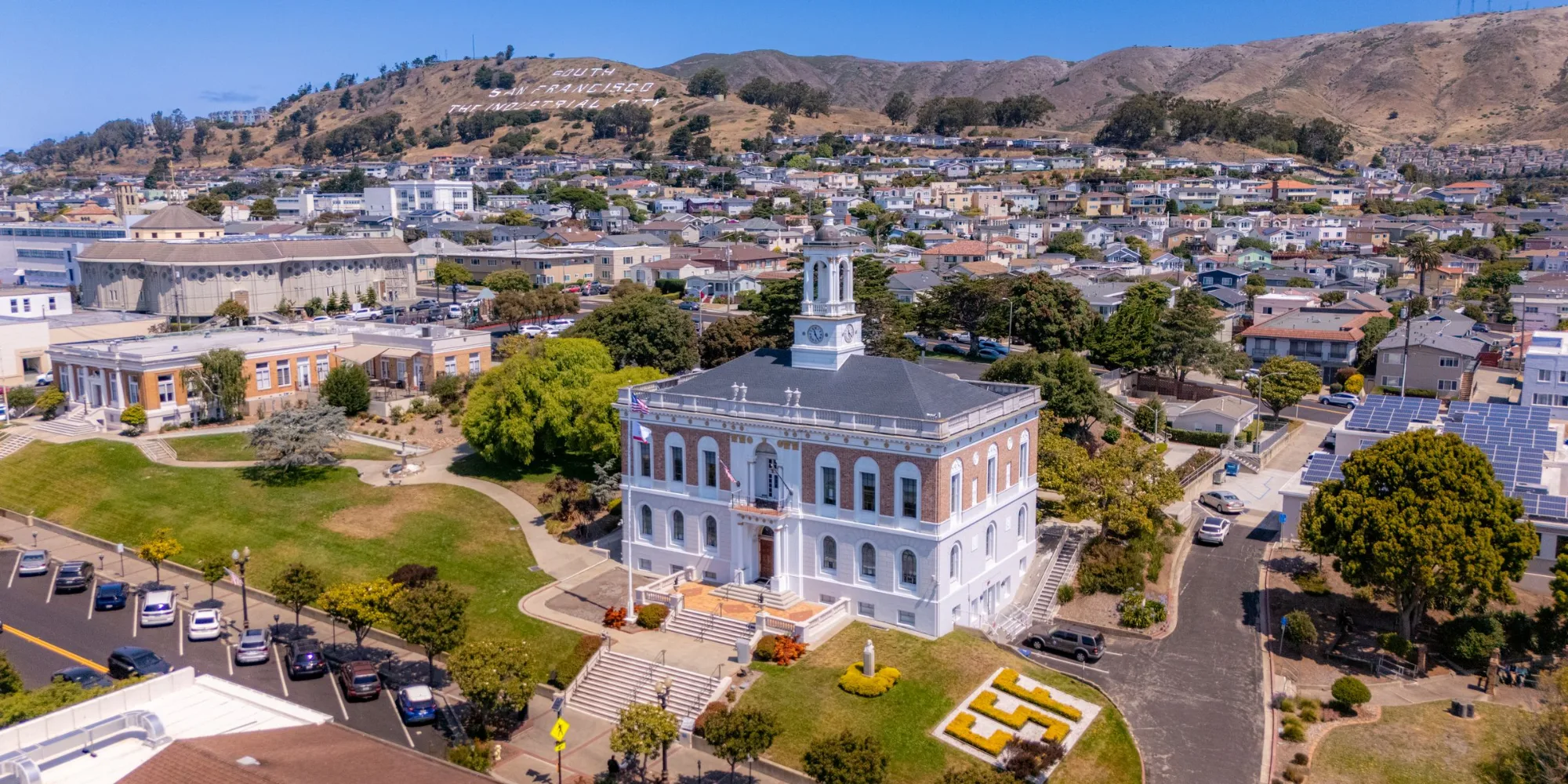


A call with David Mitroff, Ph.D.
Talk through your business with David
Quick answer
To grow a business in South San Francisco, decide whether you serve the biotech campuses, the people who work there or the neighborhoods west of Highway 101, then show up where those people meet, claim every online listing, use the city’s business resources and plan around the biotech calendar. Piedmont Avenue Consulting, Inc. works with South San Francisco owners on marketing, events, partnerships and growth.
Key takeaways
- South San Francisco calls itself the birthplace of biotechnology and is home to more than two hundred fifty biotech companies.
- Most biotech campuses sit east of Highway 101, while the west side is a city of family restaurants, shops and service businesses.
- Lunch orders, team events and office services for the campuses come from office managers and team leads, not individual workers.
- A theme such as biotech tells people who else will be in the room, which brings the right people to an event.
Growing a business in South San Francisco means working in the city that calls itself the birthplace of biotechnology. At Piedmont Avenue Consulting, Inc., we are a business and marketing consulting firm that works with owners in the San Francisco Bay Area, Los Angeles, Orange County and New York to start, grow and scale their businesses. David Mitroff, Ph.D., hosts a monthly Beers and Biotech mixer in South San Francisco, and this guide brings together what we see there and the local resources owners can use.
South San Francisco at a glance
- The birthplace of biotechnology. The city traces the title to the founding of Genentech there in nineteen seventy-six.
- More than two hundred fifty biotech companies, including Genentech, Merck, Pfizer, Astellas and Verily, among more than two thousand eight hundred firms and businesses.
- About twelve million square feet of biotech space, with millions more under construction.
- Easy to reach: under ten minutes from San Francisco International Airport, about fifteen miles from the center of San Francisco, with two BART stations, Caltrain and the San Francisco Bay Ferry.
- About sixty-five thousand residents, the city’s figure for its population.
City figures are from the City of South San Francisco’s own pages, read on Nov 23, 2026.
Two markets in one city
Most of the biotech campuses sit east of Highway 101, which is why the city named its biotech speaker series for that side of the freeway. West of it, South San Francisco is a city of family restaurants, shops, contractors, salons and service businesses.
Many owners here sell to both. A restaurant feeds lab teams at lunch and families on weekends. A caterer, a staffing firm or a print shop can build a steady business serving the companies east of the freeway. Knowing which side of the city your best customers come from shapes your hours, your marketing and the rooms you show up in.
Marketing to the campuses east of the freeway
Selling to a biotech campus is a business-to-business sale, even when what you sell is lunch. The person who decides is rarely the person who eats the sandwich or sits in the chair. It is the office manager, the team lead or the person planning next month’s team event.
Find the people who place the orders
Start with a short list of the companies closest to you. For each one, ask who books team lunches, plans offsite events and orders office services. Your regular customers who work there are the best source. A friendly question at the register, such as “Who orders lunch for your team?”, tells you more than a cold email.
Make booking easy for the office manager
The person ordering for a team of thirty wants three things: a clear menu or service list, a simple way to order and an answer within the hour. Put a one-page group order menu on your website. List the minimum order, the lead time and the delivery area. Give them one phone number and one email address that someone watches during work hours.
Offer something for the team, not only the person
A caterer can offer a standing monthly lunch. A print shop can offer a rush service for conference materials. A staffing firm can offer a short briefing for hiring managers. Each one turns a single order into a repeat relationship with the company.
Follow up after the first order
The first order is a trial. Send a thank-you note the next day, ask how it went and offer to put the next one on the calendar. Our guide to a follow-up system for small business shows how to make that step automatic.
Marketing to the neighborhoods west of the freeway
West of Highway 101, the customers are families, residents and the owners of other local businesses. They choose by convenience, reviews and word of mouth, so the marketing looks different.
- Hours that fit families. Weekend mornings and early evenings often matter more here than weekday lunch.
- Reviews that mention the neighborhood. Ask happy customers to say where they live or what they came for, so the next family recognizes themselves.
- Local partnerships. A salon and a nearby boutique can trade referrals. A contractor and a hardware store can share a counter card.
- A complete listing. A strong Google Business Profile with photos, hours and services is often the first thing a resident sees.
When you serve both sides
Many South San Francisco owners serve both markets, and the mistake is to send one message to both. A restaurant that feeds lab teams on weekdays and families on weekends has two customers with two different questions.
Picture a family restaurant west of the freeway that starts taking lunch orders from a campus nearby. The weekday message is about speed, group menus and reliable delivery. The weekend message is about the dining room, the kids’ menu and the regulars who come every Sunday. Both can live on the same website, on separate pages, with separate photos. The listings and the reviews then carry both stories.
A service business can do the same. A staffing firm can run one page for biotech hiring managers and one for local shops and restaurants that need seasonal staff. Each page speaks to one reader, so each one converts better.
Where South San Francisco owners meet
Beers and Biotech. The Professional Connector®, David’s events community, hosts a monthly Beers and Biotech mixer in South San Francisco, first at Hidden Tap and Barrel and now at Curry Pizza House. The evening brings people who work in and around biotech together with the owners who serve them.
Grand openings and partner nights. The community hosted the grand opening of Hidden Tap and Barrel together with an anniversary celebration for Curry Pizza House, a good example of a venue partnership where the venue gains new customers and guests gain a reason to come.
Across the city line. A short ride north, The Professional Connector® holds Cocktails and Tech mixers and professional networking evenings at the InterContinental San Francisco and other venues, and has hosted tech speed networking at Cloudflare’s headquarters.
A theme, such as biotech, is what brings the right people:
“A theme tells people who else will be in the room.”
David Mitroff, Ph.D., in The Event Effect, Chapter 5: Pick the Right Event
In The Event Effect, David tells how the idea started. A restaurant client was surrounded by biotech companies, and the obvious move was to pitch them catering. Instead, the restaurant started a monthly evening for the scientists, with no pitch, so people who worked near each other could finally meet.
“The restaurant did not sell its way into those companies. It invited its way in.”
David Mitroff, Ph.D., in The Event Effect, Chapter 1: Invite, Don’t Sell
The same approach works for a caterer, a fitness studio, a print shop or an accounting firm. Invite the people you want to serve to something useful or enjoyable, and let them get to know you before anyone talks about an order.
Our guides on business networking tips and the types of business events cover how to choose and work a room.
Growing a business in South San Francisco?
Schedule a call with David Mitroff, Ph.D. We look at who you serve, where they meet and the first steps that bring in more customers.
Or call David at 510-761-5895, 8 AM to 8 PM, seven days a week.
City and community resources
- City of South San Francisco Economic Development. The city’s Business Resources page lists the Bay Area Entrepreneur Center, SCORE, the Bay Area Urban Manufacturing Initiative, a Legacy Business Program, small business support programs and links to business licenses and financing.
- What’s Happening East of 101? The city runs a biotech speaker series under this name, a useful window into where the industry is heading.
- South San Francisco Chamber of Commerce. The local chamber connects owners across the city.
Programs were checked on the City of South San Francisco’s own site on Nov 23, 2026. Details change, so confirm before you plan around one.
Five ways to win more of the South San Francisco market
- Pick your side of the freeway. Decide whether you are marketing to companies, to the people who work there or to residents, and write your website and listings for that customer.
- Sell to the campus, not only the person. Lunch orders, team events, office services and recruiting events come from office managers and team leads. Make it easy for them to book you.
- Claim every listing. Your Google Business Profile, Yelp page and industry directories carry the same name, address, phone number and hours.
- Host something small. A lunch for lab managers or a tasting for a team builds more trust than an ad. David’s own monthly brunches showed what one niche room can do:
“Each of those rooms turned into business in that industry.”
David Mitroff, Ph.D., in The Event Effect, Chapter 5: Pick the Right Event
- Plan around the calendar. Put biotech conferences, the city’s speaker series, chamber events and your own mixers on one calendar. Our guide on how to build a twelve-month marketing calendar shows how.
How to host a small event in South San Francisco
You do not need a ballroom to bring the right people together. The city’s restaurants, taprooms and event spaces have quieter nights, and a small, regular event can fill one of them.
Pick the theme first
Decide who the evening is for. Lab managers, biotech founders, local retailers or people new to the Peninsula each need a different invitation. The theme in the name tells people who else will be there.
Approach a venue as a partner
“You’re not asking a venue for a favor. You’re offering to fill a slow night.”
David Mitroff, Ph.D., in The Event Effect, Chapter 7: Venues, Sponsors and Partners
Offer to bring a group on a weeknight the venue finds slow. Promote the venue by name on every invitation. Invite the venue’s own regulars too, so the night supports their business as much as yours. Our guide on how to get event sponsors and venue partners walks through the conversation.
Use the city’s location in your invitations
South San Francisco is easy to reach by BART, Caltrain, the San Francisco Bay Ferry and from the airport. Put the closest station and the walking or driving time on every event page. Guests who know how to get there are more likely to come, especially after work.
Run it every month
“One great night is a test. Every month for three years is a partnership.”
David Mitroff, Ph.D., in The Event Effect, Chapter 7: Venues, Sponsors and Partners
A monthly date lets people plan around it and bring a coworker next time. Each event also gives you a reason to reach out again, which is the real engine of local growth.
Common mistakes South San Francisco owners make
- Marketing to the scientist and forgetting the office manager. The person who orders is often not the person you meet.
- One message for both sides of the freeway. Campus customers and residents want different things from you.
- A listing that is half finished. Missing hours, old photos or the wrong phone number send customers to the next result.
- Hosting once and stopping. A single event is a test, and the relationships come from the repeat.
- Ignoring the biotech calendar. Conferences and company events shape when teams order, travel and celebrate.
- Waiting for orders to arrive. The businesses that win campus work ask for the first meeting.
How to measure what is working
Track a few numbers each month so you know which side of the city is growing:
- Group orders or company accounts, and how many of them reorder.
- New customers by source, such as a listing, a referral, an event or a campus contact.
- Event guests who become customers within a few months of attending.
- Reviews per month, and what they mention.
- Weekday versus weekend sales, for businesses that serve both markets.
If one number stalls for two or three months, change one thing about that channel and measure again.
Keep the numbers simple enough to update in ten minutes. A shared spreadsheet with one row per month is enough for most South San Francisco owners, and it makes the next planning conversation much easier, because you can see which side of the city carried each season.
Nearby cities to reach
South San Francisco owners often serve customers up and down the Peninsula. Plan your listings, events and partners for San Francisco to the north, Daly City to the northwest, San Bruno and Millbrae to the south and the rest of San Mateo County. Our pages on business consulting in Daly City, San Bruno and Millbrae cover those neighbors in more detail. Our San Francisco business consulting page and our San Francisco Bay Area business consulting page cover the wider region.
What to do this week
- Write down your best ten customers and mark which side of the freeway each one comes from.
- Name one company east of the freeway and find out who orders lunch, events or services for its teams.
- Check your listings for the same name, address, phone number and hours everywhere.
- Add a group order page or service page for campus customers if you serve them.
- Pick a date in the next month for a small, themed gathering, and ask one venue about a quiet night.
- Put three events on your calendar, such as a biotech conference, a chamber event and the city’s speaker series.

How we work with South San Francisco owners
We work with South San Francisco businesses on local search, reviews, events, partnerships and sales, with a plan built around who each business serves, on either side of the freeway. In the first ninety days of working together, our job is to find our fee, which means making or saving you more than you pay us. We start with an initial consultation and a paid assessment, then build a ninety-day plan and a twelve-month marketing calendar. Learn more about our event marketing work.
Quick self-assessment
Score your restaurant
Answer nine questions and get an initial score out of 100 for how easy your restaurant is to find and choose online. It is written for restaurants, and built on the nine keys from David Mitroff, Ph.D.’s book Online Business Growth Strategies.
Score your restaurantTake action
Your next three steps
- Decide whether you market to companies, their employees or residents, and write your website and listings for that customer.
- Host something small, such as a lunch for lab managers or a tasting for a team.
- Put biotech conferences, the city’s speaker series, chamber events and your own mixers on one calendar.
In their own words
What clients say about working with us
“Right away things started to happen. We have managed to fill up our seminar rooms again, he has found us great new staff, and business is booming. More than a marketing consultant, he is also a business confidant […]”
 David RosenbaumPartner, McDowall Cotter, APC

“I have known and worked with David for over 15 years, across numerous companies and ventures. He helped us build and promote Clark Meyers. He is my go-to marketing guru and has introduced me to the resources I need to grow.”
 Conor MeyersCo-Founder, Clark Meyers PC

Read more client stories or see our case studies.
Frequently asked questions
For local events, programs and how we work with owners there, see our business consulting page for South San Francisco.
Frequently asked questions
Why is South San Francisco called the birthplace of biotechnology?
South San Francisco is called the birthplace of biotechnology because Genentech was founded there in nineteen seventy-six. The city now counts more than two hundred fifty biotech companies.
Where can South San Francisco business owners network?
South San Francisco owners network at The Professional Connector® Beers and Biotech mixer each month, at South San Francisco Chamber of Commerce events and at professional mixers a short ride north in San Francisco.
What business resources does the City of South San Francisco list?
The City of South San Francisco lists the Bay Area Entrepreneur Center, SCORE, the Bay Area Urban Manufacturing Initiative, a Legacy Business Program, small business support programs, business licenses and financing links.
How can a small business win customers from South San Francisco biotech companies?
A small business wins biotech customers by making booking easy for office managers and team leads, offering lunch, event or office services, showing up at biotech mixers and planning around the industry calendar.
Does Piedmont Avenue Consulting, Inc. work with South San Francisco businesses?
Yes. Piedmont Avenue Consulting, Inc. works with South San Francisco owners on local search, events, partnerships and growth, and David Mitroff, Ph.D., hosts the monthly Beers and Biotech mixer there. Schedule a call with David to talk about your business.
How do I market to both biotech companies and South San Francisco residents?
Market to biotech companies and residents with separate pages, photos and messages. Campus customers care about group orders, speed and reliable delivery, while residents care about hours, reviews and the neighborhood feel of your business.
What kind of event works for a small business in South San Francisco?
A small, themed event on a venue’s quieter weeknight works well for a South San Francisco business. Repeat it every month, promote the venue by name and invite the people you want to serve, with no sales pitch.
Let’s grow together.
Schedule a call with David. Tell us who your best South San Francisco customers are, and we will look at where to find more of them.
Or call David at 510-761-5895, 8 AM to 8 PM, seven days a week.
About the author
David Mitroff, Ph.D. wrote this article. He is the founder of Piedmont Avenue Consulting, Inc., a business and marketing consulting firm serving the San Francisco Bay Area, Los Angeles, Orange County and New York. Meet David or read more articles by David.
- Founder and Business Growth Strategist at Piedmont Avenue Consulting, Inc.
- Doctorate in clinical psychology, with additional coursework in business administration, law and culinary arts; bachelor’s and master’s degrees.
- Taught marketing and entrepreneurship at the University of California, Berkeley for more than seven years.
- Author of several books, including The 45 Day Consultant, The 45 Day Consultant Field Guide, Online Business Growth Strategies, The Event Effect: Invite, Don’t Sell, and Law Firm Business Growth Strategies (Second Edition).
- Started seven companies; previously owned and ran a recruiting and staffing company.
David works with a small team of consultants and specialists on every engagement. Meet our team or read about Piedmont Avenue Consulting, Inc.