
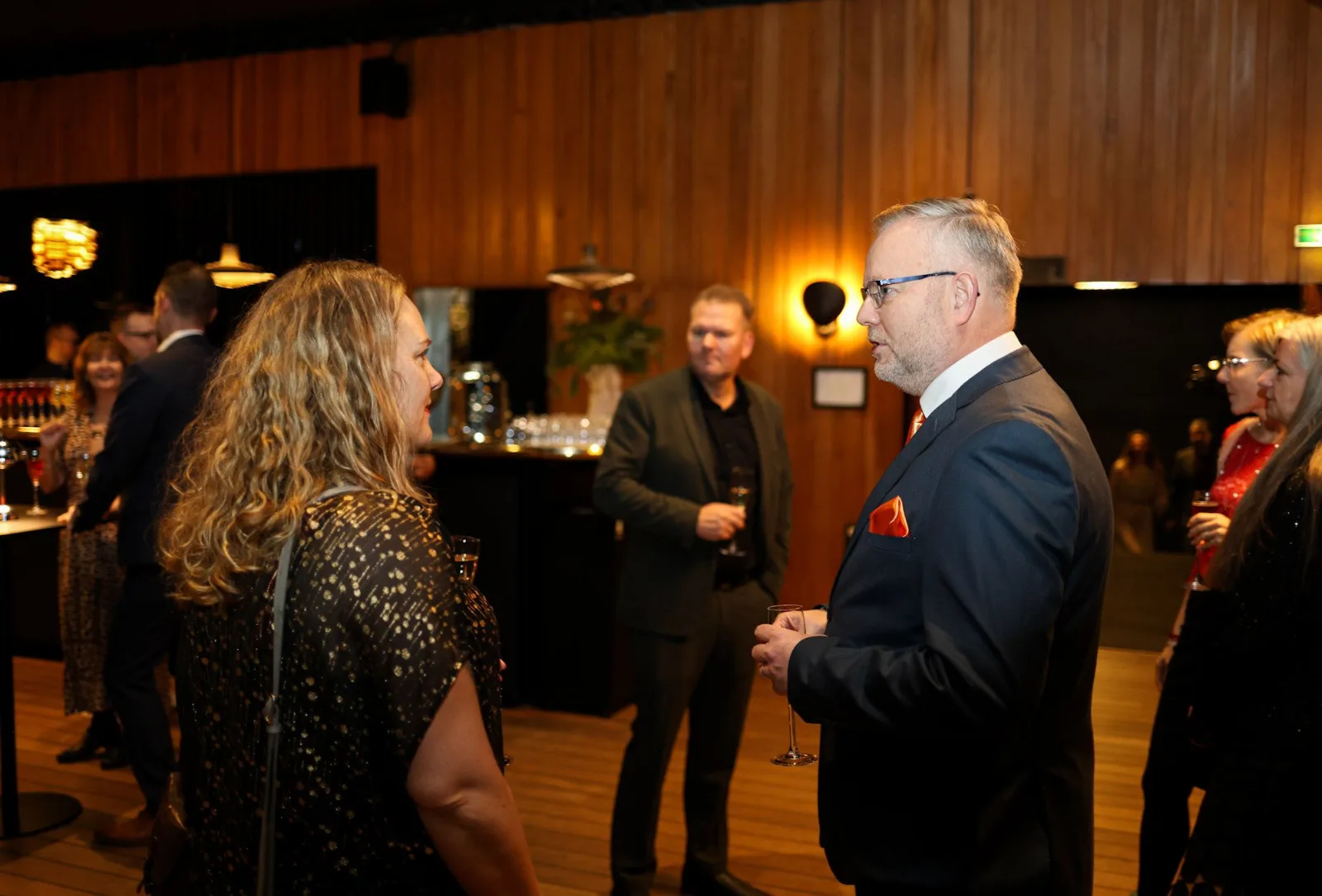


A call with David Mitroff, Ph.D.
Talk through your business with David
Quick answer
The right type of business event depends on why you are hosting it. A coffee or office hours builds one relationship at a time. A brunch or executive dinner builds trust with a small, chosen group. A mixer or happy hour meets the most new people. A panel or workshop teaches and positions you as an expert. A conference or summit brings a whole community together and takes months to plan. Piedmont Avenue Consulting, Inc. plans events of every size with owners across the San Francisco Bay Area, Los Angeles, Orange County and New York.
Key takeaways
- The right type of business event depends on why you are hosting it, because the reason changes who you invite.
- A coffee for two counts as an event, and it builds the habit of inviting, showing up and following up.
- A happy hour is social first, while a mixer is business first, with people coming to meet those who can grow their work.
- Most people try to start with a large event, and David Mitroff, Ph.D., advises starting smaller, getting good and climbing.
The types of business events an owner can host range from a coffee for two to a conference for thousands. At Piedmont Avenue Consulting, Inc., we are a business and marketing consulting firm that works with owners in the San Francisco Bay Area, Los Angeles, Orange County and New York to start, grow and scale their businesses. David Mitroff, Ph.D., has hosted nearly every kind of event on this list, and in The Event Effect he lays them out as a ladder.
Start with the reason
Before comparing formats, answer one question: what is this event for? Meeting new people, thanking clients, teaching, recruiting and team building each lead to a different guest list, a different room and a different invitation.
“Know why you’re doing it, because it changes who you invite.”
David Mitroff, Ph.D., in The Event Effect, Chapter 5: Pick the Right Event
Here is how the reason points to a format:
- Meeting new people: a mixer, a happy hour or a panel that partners promote to their own lists.
- Thanking clients: a small dinner, a brunch or an invite-only evening where clients meet each other.
- Teaching and credibility: a panel, a workshop or a webinar on one clear topic.
- Deepening a few key relationships: a coffee, a lunch or an executive dinner.
- Recruiting: an open house or open office hours where candidates meet the team.
- Team building: a class, an outing or a retreat.
If you have two reasons, pick the one that matters most this quarter. A single event that tries to thank clients, recruit staff and meet strangers usually does none of those well.
The types of business events, side by side
| Event | Size | Best for | Effort |
|---|---|---|---|
| Coffee for two | Two people | One relationship | An invitation |
| Open office hours | Whoever comes | Being easy to reach | A set time and place |
| Brunch or lunch | Six to ten | Trust with a small group | One table |
| Mixer or happy hour | Thirty to a hundred | Meeting new people | A venue partner and a reason to come |
| Panel or workshop | A room | Teaching and expertise | A topic and a few experts |
| Executive dinner | A long table | Senior relationships | A curated guest list |
| Conference or summit | Hundreds or more | A whole community | Months of planning |
The smallest events: coffee and office hours
A coffee for two counts as an event. “I’ll be at the café on Thursday at ten. Want to join me?” is an invitation, and it builds the habit every larger event depends on.
Open office hours set a time and a place with an open invitation. Nobody has to come, and the people who do come already want to talk.
These two cost almost nothing and teach the basics: inviting, showing up and following up.
How to make the smallest events count
- Name a regular time and place, so people learn where to find you.
- Invite people one at a time, with a personal note.
- Keep a short list of who came and what you talked about.
- Follow up within two days with one useful thing, such as an article or an introduction.
Small tables: brunch, lunch and the executive dinner
A brunch or lunch puts six to ten people around one table. David’s own monthly Saturday brunch, with dim sum in a friend’s office, became his personal advisory board, and he later made versions for hospitality, real estate, law and construction. Each one turned into business in that industry. Our article on what a personal advisory board is tells that story.
An executive dinner is the senior version: a curated room of leaders around a long table. The guest list matters more than the menu. Our guide on how to host an executive dinner covers the details.
Choose a small table when you want depth with a few people, such as clients, partners or prospects you already know.
Not sure which event to host first?
Schedule a call with David Mitroff, Ph.D. We look at your goal, your audience and the smallest event that gets you there.
Or call David at 510-761-5895, 8 AM to 8 PM, seven days a week.
Meeting new people: the mixer and the happy hour
David separates these two clearly:
- Happy hour: social first. Drinks, conversation and maybe some business.
- Networking event or mixer: business first. People come to meet people who can grow their work, even with a drink in hand.
A mixer of thirty to a hundred people works best with a venue partner and a real reason to come, such as a tasting, a new space or a theme. Most of David’s evening events run two hours, from six to eight, so everyone arrives after work and fills the room at the same time.
Choose a mixer when you want to meet the most new people in one evening and grow your list.
Give the mixer a reason to come
A mixer lives or dies on its reason. “Come network” rarely fills a room.
“When it’s just ”come network,“ people don’t get excited, and they don’t show up. When there is something they can’t get anywhere else, they come.”
David Mitroff, Ph.D., in The Event Effect, Chapter 5: Pick the Right Event
Reasons that work:
- A tasting of something guests cannot easily find elsewhere.
- A place people want to see, such as a new space, a private club or a company headquarters.
- A theme that tells guests who else will be there, such as restaurant technology or construction.
- A cause that gives people a reason bigger than business.
- A launch or an opening, because people like to be first.
Our plain definition of what an experiential event is covers how to build the evening around something guests do, not only something they hear.
Teaching: the panel and the workshop
A panel or workshop is about learning: one topic, a few experts and time for questions. It positions you as the host who brings knowledge into the room, and every panelist promotes the night to their own network. Our guide on how to host a panel discussion walks through it.
Choose a panel or workshop when you want credibility in a field and a reason people will come on a weeknight.
Online: webinars and virtual events
Virtual events are events too. A webinar can reach people far beyond your city, and it suits working professionals who can spare an hour at lunch and cannot spare an evening.
“A webinar where nobody talks to anybody is just a video.”
David Mitroff, Ph.D., in The Event Effect, Chapter 5: Pick the Right Event
The same rules apply, with a few changes:
- Keep it short, about an hour including questions.
- Invite the same way you would for an in-person event, with personal invitations and a clear title.
- Plan on fewer people live. Many registrants will want the recording, and they still count.
- Make it interactive with names in the chat, a quick poll and real time for questions.
- Give them something to keep, such as a checklist or a short guide.
- Send the slides and the recording to everyone who registered, whether they attended or not.
Choose a webinar when your audience is spread out or short on time, and use it to build relationships you later continue in person. Our guide on how to host a webinar covers the setup.
Social events: games, classes and outings
Not every event needs a speaker or a name tag. Some of the strongest business relationships start at events that look nothing like business:
- A game or a show, where a spare seat becomes an invitation people remember.
- A class, such as cooking or sushi making, where people talk while they work side by side.
- A tasting of wine, whiskey, sake or chocolate, which gives everyone an easy first thing to say.
- A group, such as a hiking or running club, where the same people meet every week.
- Team building and training for the people inside your own company.
Choose a social event when you want relationships to grow more personal, with clients or partners you already know.
The largest events: summits, conferences and retreats
- Summit: one community together for a half day or a full day, with several speakers and topics.
- Conference: multiple days or tracks, exhibitors, sponsors and hundreds or thousands of people.
- Boot camp or accelerator: a program over days or weeks, where the same group leaves with something built.
- Retreat: a team or group away from the office to think, plan and reconnect.
Choose a large event when you already know how to fill a smaller room and have the partners, sponsors and months it takes.
Match the format to your budget
The budget often decides the format before anything else does. David suggests turning the usual order around: decide what you can spend and what the event is for, then pick the format.
“Say your goal is to meet twenty business owners this quarter. With almost no budget, invite them one at a time to coffee. With a little more, host a mixer at a venue that wants to fill a slow night. With a sponsor, host an executive dinner. Same goal, three budgets, three formats, and each one works.”
David Mitroff, Ph.D., in The Event Effect, Chapter 18: What Events Cost
The lesson is that a small budget is not a reason to skip events. It is a reason to pick a smaller rung. Our guide on how to budget for a business event walks through each cost line, from the venue to the follow-up.
Pick a room a little too small
Whatever the format, the room shapes how the event feels. A full room feels like the place to be. A half-empty one feels like a mistake, even when the same number of people came.
“When you pick a venue, pick one a little too small. A room for forty with fifty people in it feels electric. A room for two hundred with fifty people in it feels like a party nobody came to.”
David Mitroff, Ph.D., in The Event Effect, Chapter 5: Pick the Right Event
Book the smaller room and let a wait list grow. A full brunch for eight does more for your reputation than a half-empty mixer. Our guide on how many people to invite to an event shows how to work back from the size of the room.
Climb the ladder
“Most people try to start at rung seven. Start lower. Get good. Climb.”
David Mitroff, Ph.D., in The Event Effect, Chapter 5: Pick the Right Event
Whichever type you pick, name it clearly on the invitation. A guest who expects a happy hour and walks into a long panel will not come back.
“None of these names is official. What matters is that you decide what yours is, define it, and say it clearly on the invitation.”
David Mitroff, Ph.D., in The Event Effect, Chapter 5: Pick the Right Event
Our event day checklist and guide on how to promote an event cover what comes next.
Which event fits your business?
Short scenarios show how the same ladder looks for different owners.
A dental office. The goal is new patients from nearby workplaces. A coffee with the office managers of neighboring businesses comes first. Next, a short lunch-and-learn on one topic for those staff. Later, an open house for the whole neighborhood.
A small law firm. The goal is referrals from other professionals. A monthly lunch for accountants and financial planners builds trust. A teaching workshop once a quarter adds credibility. An executive dinner with a sponsor brings in senior business owners.
A restaurant. The goal is private events and regulars. A tasting for nearby office managers fills a slow night. A themed mixer with a partner brings in new faces. A small dinner for the restaurant’s best regulars thanks the people who already love it.
A general contractor. The goal is relationships with architects and property owners. A breakfast at a finished job lets guests see the work. A panel with an architect and an attorney on one building topic positions the firm as a source of knowledge.
A new consultant. The goal is a first group of clients. Open office hours and coffees come first. A small brunch for owners in one industry follows. A webinar on one problem those owners share extends the reach.
A series or a single big event?
Once you find a format that works, repeat it. A monthly brunch or a quarterly panel builds a following, because guests come back and bring people with them. One large event once a year asks you to rebuild the audience from scratch each time. Our comparison of one big event and a series of small ones goes deeper on the trade-offs.
Common mistakes when choosing an event type
- Starting at the top of the ladder. A first event the size of a conference has a long way to fall.
- Choosing a format before the reason. The reason decides the guest list, and the guest list decides the format.
- Calling it the wrong thing. A “mixer” that turns out to be a sales presentation loses trust.
- Offering no reason to come. “Come network” is not enough on a weeknight.
- Booking a room that is too big. Empty space makes a good turnout feel thin.
- Hosting once and stopping. A format gets easier and better with each repeat.
How to know the format worked
Judge each event by what happens next, not by how full the room looked. Count the follow-up meetings booked, the partnerships started and the replies to the invitation. Compare formats over a few months, and keep the ones that bring the meetings that matter. Our guide on how to measure event success covers the scorecard.
What to do this week
- Write one sentence on what your next event is for.
- Pick the lowest rung on the ladder that serves that reason.
- Name the event clearly, and write the reason a guest would leave the office to come.
- Choose a room a little smaller than you think you need.
- Send the first five personal invitations.

How we work with owners on events
We work with owners to pick the right event for their goal, then plan and host it, from small brunches and executive dinners to mixers, panels and summits, and we host The Professional Connector® events across the San Francisco Bay Area and Southern California. In the first ninety days of working together, our job is to find our fee, which means making or saving you more than you pay us. We start with an initial consultation and a paid assessment, then build a ninety-day plan and a twelve-month marketing calendar. Learn more about our event marketing work.
From David’s books
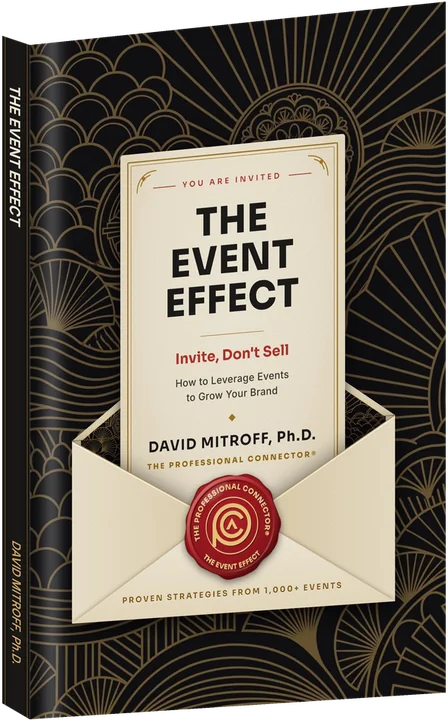
The Event Effect
David wrote the book on events that grow a business. The Event Effect, now in its second edition, covers how to plan, fill, host and follow up on them.
Take action
Your next three steps
- Write down what your event is for before you compare formats or pick a venue.
- Start with a coffee, open office hours or a small brunch before you plan a mixer or summit.
- Name your event type clearly on the invitation so guests know exactly what to expect.
In their own words
What clients say about working with us
“McDowall Cotter started working with David Mitroff and right away things started to happen. We have managed to fill up our seminar rooms again, he has found us great new staff to run our marketing department, and business is booming. More than a marketing consultant, he is also a business confidant, helping us keep course on our goal to growth.”
 David RosenbaumPartner, McDowall Cotter, APC

“David was extremely helpful, and the most responsive consultant I’ve ever worked with. If he didn’t know something, he had no problem acknowledging that, and calling in an expert. His follow-up was absolutely impeccable.”
 Judith Szepesi, J.D.Partner, Blakely Sokoloff Taylor & Zafman

Read more client stories or see our case studies.
Frequently asked questions
Frequently asked questions
What are the main types of business events?
The main types of business events are a coffee meeting, open office hours, a brunch or lunch, a mixer or happy hour, a panel or workshop, an executive dinner and a conference or summit. Each fits a different goal and size.
What is the difference between a mixer and a happy hour?
A happy hour is social first, with business as a bonus. A mixer or networking event is business first, and guests come to meet people who can grow their work.
Which business event is best to host first?
A small event is best to host first, such as a coffee, office hours or a brunch for six to ten people. Start small, get good and move up to larger events.
How long does an evening business event last?
Most of David Mitroff’s evening events run two hours, from six to eight, so guests arrive after work and the room fills at the same time.
Do webinars count as business events?
Yes. A webinar is a business event when it is short, interactive and followed up, with the slides and recording sent to everyone who registered, whether they attended or not.
How do I choose an event type on a small budget?
Decide what you can spend and what the event is for, then pick the rung that fits: coffees cost almost nothing, a mixer can fill a venue’s slow night and a sponsor can cover an executive dinner.
Does Piedmont Avenue Consulting, Inc. plan business events?
Yes. Piedmont Avenue Consulting, Inc. plans and hosts brunches, executive dinners, mixers, panels and summits and runs The Professional Connector® events. Schedule a call with David to talk about your next event.
Let’s grow together.
Schedule a call with David. Tell us what you want your next event to do, and we will pick the right rung together.
Or call David at 510-761-5895, 8 AM to 8 PM, seven days a week.
About the author
David Mitroff, Ph.D. wrote this article. He is the founder of Piedmont Avenue Consulting, Inc., a business and marketing consulting firm serving the San Francisco Bay Area, Los Angeles, Orange County and New York. Meet David or read more articles by David.
- Founder and Business Growth Strategist at Piedmont Avenue Consulting, Inc.
- Doctorate in clinical psychology, with additional coursework in business administration, law and culinary arts; bachelor’s and master’s degrees.
- Taught marketing and entrepreneurship at the University of California, Berkeley for more than seven years.
- Author of several books, including The 45 Day Consultant, The 45 Day Consultant Field Guide, Online Business Growth Strategies, The Event Effect: Invite, Don’t Sell, and Law Firm Business Growth Strategies (Second Edition).
- Started seven companies; previously owned and ran a recruiting and staffing company.
David works with a small team of consultants and specialists on every engagement. Meet our team or read about Piedmont Avenue Consulting, Inc.