

Streamlining operations
Streamlining operations. What we do: systems, checklists, hiring and training.
We build the systems, checklists, hiring and training that let your business run the same way every day, so you can grow it instead of holding it together.
San Francisco Bay Area, Los Angeles, Orange County and New York.
What streamlining means
Why your business needs systems.


Streamlining operations means building the systems that let your business deliver the same result every time, without the owner in the middle of every decision. Piedmont Avenue Consulting, Inc. works with owners and their teams on standard operating procedures (SOPs) and checklists, the right technology, hiring and onboarding, training, and the communication that keeps everyone pulling the same way. The result is a business that can grow, open another location or take a week off.
David Mitroff, Ph.D. has a line for owners who resist structure: “Structure creates freedom. Chaos only feels like it.” Another one comes from the same page of his book: “Do it once and it is a favor. Do it the same way every time and it is a business.”
Most operations problems are not technical. They are about people: confusion over roles, partners who disagree, a key employee nobody wants to confront. David often plays the outside voice who says what nobody inside the company can, kindly and directly. Sometimes the advice is as simple as, “You need to remove your cousin from the marketing team.”
Operations work makes everything else pay off. Better systems keep the customers that loyalty work brings back, and give your team room to follow up on the leads that lead generation creates. David calls the larger idea Growth Scaling: growing in a way the business can carry.
David Mitroff, Ph.D., Founder, Business Growth Strategist, Piedmont Avenue Consulting, Inc. Meet David
What we build
Systems and checklists we build with your team.
We advise, document and train alongside your team, then keep improving the systems as you grow.
Systems and checklists
Write it down once.
- Standard operating procedures
- Opening, closing and daily checklists
- An operations binder for the whole team
Technology and tools
Let software do the repeat work.
- Scheduling, booking and point of sale
- CRM and email automation
- Reporting the owner reads every week
Hiring and onboarding
Hire for values, train for the rest.
- Roles and job descriptions
- Interview questions and hiring steps
- An onboarding checklist for every new hire
Training and communication
Everyone pulling the same way.
- Leadership and manager training
- All-hands and team meetings
- On-site training for the whole company
Best practices
Operations lessons from real businesses.
Six practices we put in place, and the stories that taught them.
Give every new hire the same checklist
Onboarding by shadowing whoever is around produces a different employee every time. A written checklist, the same for every role, teaches how the whole business works.
At Piedmont Avenue Consulting, every team member works through the same onboarding checklist, whatever the role: writing a blog article, adding a web page, working events, sending a newsletter, taking meeting notes and learning every system.
Hire for values
Skills can be taught in weeks. Attitude, energy and curiosity are much harder to train. Write down what you value and interview for it first.
David’s rule of thumb: “Hire for values, energy, and curiosity. Train for everything else.”
Hold the meeting
When a team does not talk, small problems turn into big ones. A regular all-hands meeting is one of the cheapest fixes in business.
One business David assessed had fifteen to twenty key people, some of whom did not speak English and some of whom did not get along. The top issue was communication, and the fix was a monthly all-hands. The owner refused, and David declined the engagement. The company closed six months later.
Confirm everything four times
Vendors, venues and partners forget. Build confirmations into the process instead of hoping.
For every event, David confirms with the venue a month before, a week before, the day before and the morning of. He has still walked in to hear, “Oh, there’s an event tonight?”
Give staff one clear rule
Simple rules beat long manuals in the moment. Find the mistake that costs you most and write the one sentence that prevents it.
After a guest told a bar that drinks were covered, David started telling every venue the same thing: “If you don’t hear it from me or one of my employees, specifically telling you to do something, don’t do it.”
Staff for the customer you serve
Operations include who answers the phone and in what language. Match the team to the market.
One year we had five clients in San Francisco’s Chinatown, including two large dim sum banquet houses. David brought on a Chinese-speaking team member to support the work.
Expect the EKG Zone. After the first quick wins, months three to six bring ups and downs. David draws the graph for clients at the start, so when the dip comes, everyone knows it is part of the process and keeps going.
Case studies
Operations case studies.
Three clients, three kinds of growth. All case studies

Granite Wellness Centers
Granite Wellness Centers secured a $2 million grant. We wrote the application, produced video content and testimonials, interviewed more than thirty employees, documented programs and built new systems. We also led on-site leadership training and an on-site, company-wide training of over 200 people.

Moler Barber College
Moler Barber College grew from one location to five. Every new campus is a test of whether the way you run the first one can be repeated.
Orangetheory Fitness
Two Orangetheory Fitness studios opened from the ground up, in Colma/Daly City and Pinole. A grand opening runs on a checklist as much as on marketing.
“David gave our organization structure. He helped us organize our staff, improve our sales, and increase our leads. We eventually invited him to join our advisory board.”
“…David takes time to hear you and figure out if and how he can help, then he and his team offer good planning and advice and steps for you to achieve goals.”
Google review
Watch
Technology that makes operations easier.
For the Asian American Hotel Owners Association (AAHOA), David Mitroff, Ph.D. walked hotel owners through technology that makes housekeeping and maintenance more efficient. The same thinking applies to a restaurant kitchen, a clinic front desk or a contractor’s field crew.
David is a business growth strategist and keynote speaker who has taught operations, leadership and growth to owners, managers and their teams.
Video summary: an AAHOA session with David on hotel technology for housekeeping and maintenance. The video loads only when you press play.
How we work
Ongoing work on your systems.
Our partnerships are long-term, with three to five initiatives at a time and new ones added as each is done. Read our approach
Look under the hood
A working session on how the work actually gets done today, and where it breaks.
Pick the fixes
A 90-day plan and a 12-month calendar, with the operations changes that save the most time and money first.
Find our fee
In the first 90 days, our job is to make or save you more than you pay us.
Build with the team
About four meetings a month to document, train and adjust, then add the next initiative.
Operations initiatives clients choose
- Standard operating procedures
- Operations binder
- Onboarding checklist
- Job descriptions
- Hiring process
- Manager training
- All-hands meetings
- Booking and scheduling software
- CRM setup
- Weekly owner report
- New location playbook
- Grand opening checklist
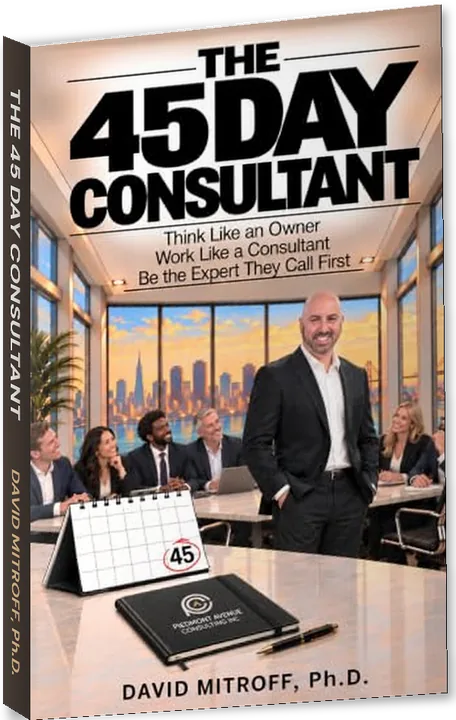
From David’s books
How we run our own operations.
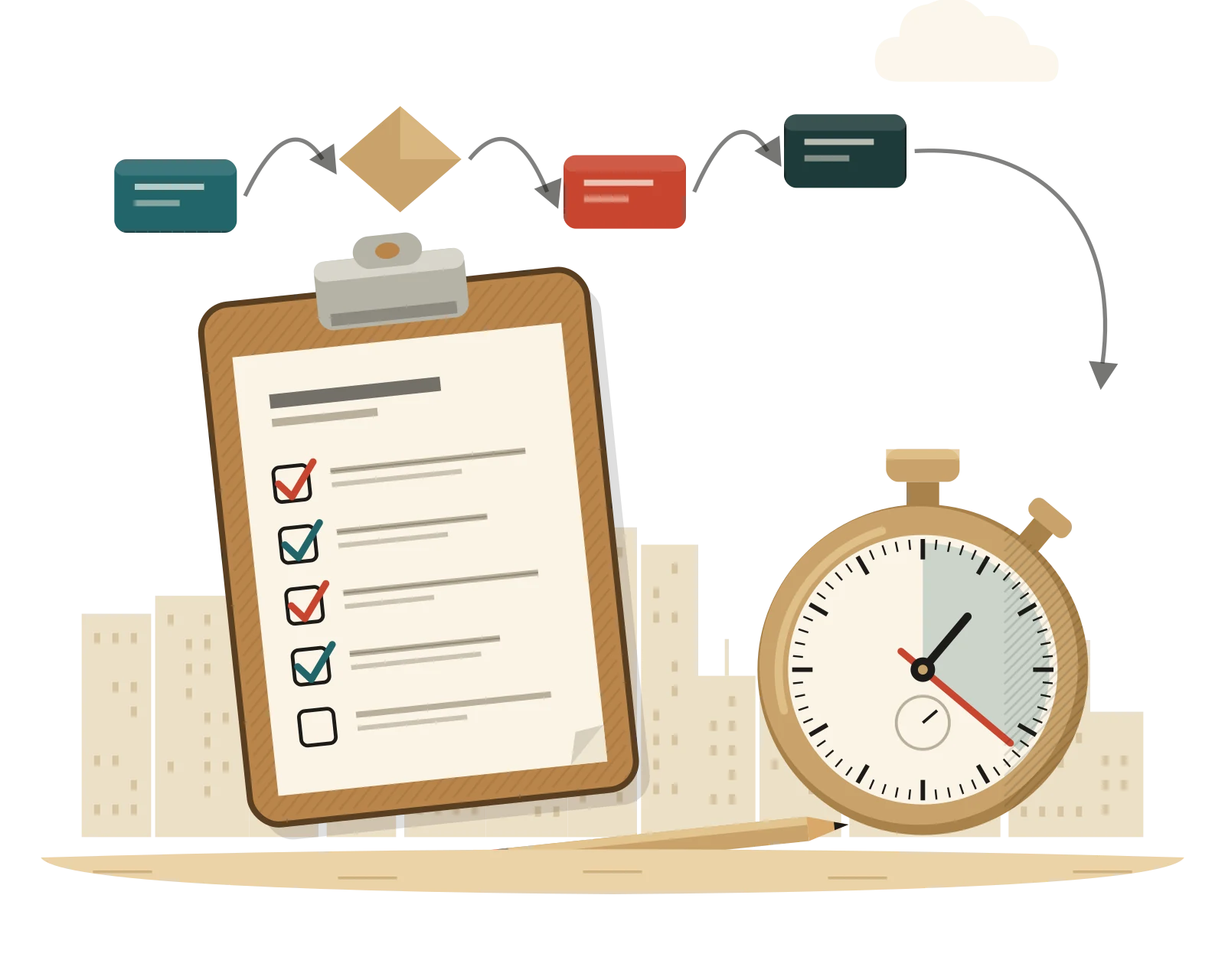
David’s book The 45 Day Consultant covers how he runs Piedmont Avenue Consulting itself: the operations binder, the onboarding checklist, hiring for values and the weekly rhythm of a firm that serves many clients at once.
Favor or business
“Do it once and it is a favor. Do it the same way every time and it is a business.”
The outside voice
An outside advisor can name the people problem that nobody inside the company wants to raise.






















How it works
How we work: call, assessment, plan.
-
Schedule a call
Tell us where the business is today and where you want it to be.
-
Assessment
We look at your numbers, marketing, team and operations.
-
90-day plan
Three to five initiatives with owners and dates, plus a 12-month marketing calendar.
-
Ongoing initiatives
We stay on as a long-term partner and keep the plan moving.
In the first 90 days, our job is to find our fee: make or save you more than you pay us.
Questions
Streamlining operations FAQs.
What does streamlining operations involve?
Streamlining operations with Piedmont Avenue Consulting, Inc. involves documenting how the work gets done, choosing the right technology, improving hiring and onboarding, training managers and staff, and setting up regular communication so the business runs the same way every day.
What is a standard operating procedure?
A standard operating procedure (SOP) is a written, step-by-step description of how a task is done in your business, from opening the doors to onboarding a new client. SOPs let a team deliver the same result every time and make training new hires much faster.
When does a business need operations consulting?
Operations consulting pays off when the owner is the bottleneck, when quality changes depending on who is working, when new hires take too long to get up to speed, or before opening a second location.
Can operations consulting prepare us for a new location?
Yes. Preparing a new location is one of the most common reasons clients choose operations consulting. We turn what works at the first location into checklists, training and a playbook. We worked with Moler Barber College as the school grew from one location to five, and on two Orangetheory Fitness studio openings.
Do you train staff on site?
Yes. We lead on-site leadership and staff training, including a company-wide training of over 200 people at Granite Wellness Centers. Training sessions are built around your systems, your customers and your team.
Which technology does Piedmont Avenue Consulting recommend for operations?
We recommend operations technology based on your business, your budget and what your team will actually use, from booking and point of sale to CRM, email automation and reporting. The goal is fewer tools that do more, set up well.
How do I start an operations initiative?
Schedule a call online or call 510-761-5895. An operations initiative starts with a conversation about how your business runs today, where the time goes and what you want the business to look like a year from now.
Related
Related pages.
 Orangetheory Fitness
 Construction
 Healthcare
 Walnut Creek
Further reading
Articles on operations consulting
- Eight reasons to still use faxing for your business
Eight reasons some businesses still use fax. - Knowing the legal requirements of having CCTV in your business
The legal rules for CCTV in a business. - Employment separation certificate guide for employers and employees
How an employment separation certificate works for employers and employees. - Employee training in manufacturing: what HR leaders need to know
What HR leaders need to know about training in manufacturing. - Business PTO: vacation ideas for every type of traveler
Vacation ideas for every kind of traveler on the team.
Take the next step
Schedule a call about streamlining your operations.
Let’s grow together. Clear systems, a trained team and a partner who keeps improving them with you.