
TEDx talk
When Are You Good Enough to Become an Industry Expert?
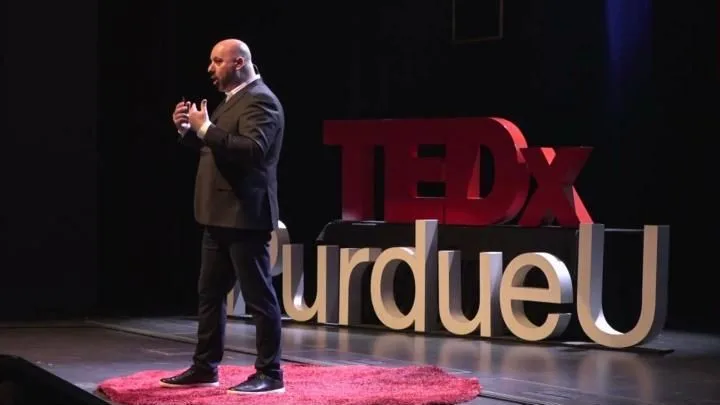
When Are You Good Enough to Become an Industry Expert? is a 12 minute TEDx Andrews talk by David Mitroff, Ph.D., founder of Piedmont Avenue Consulting, Inc. His answer: you do not have to wait 25 years. Experts keep learning, believe in what they do, and take action in their community.
About this video
What David covers
David tells how two audience members told him he was a stand up comic, how a city put the title on a poster, and how a friend kept saying he was not. He uses that story to ask who decides when you are an expert, then shares the three things he believes make one: knowledge, belief and action. He closes with how a nomination for the Oakland Indie Awards led him to the TEDx stage. Watch on TED (opens in a new tab)
- You do not have to work somewhere 25 years before you mentor, volunteer or lead.
- Impostor syndrome is normal: the more you learn, the more you see there is to learn.
- Experts keep learning and surround themselves with people who know more.
- Believe in yourself, your product, your service and your community.
- Take action. Nominate people for awards, volunteer and show up.
Related: Book David to speak · Business consulting in Oakland · Read David’s story
Transcript
Full transcript
So my family, a lot of them, worked 25 years, 30 years, and then they became an expert, became a consultant, or they went out and volunteered in the community. And when I was growing up, I realized: do I have to wait 25 years? Do I have to work a job for 30 years, and then I can do something I really want to do? I said, I just want to skip that part. So I just started going out there and doing things, trying to figure out what an expert looks like without working somewhere 25 years.
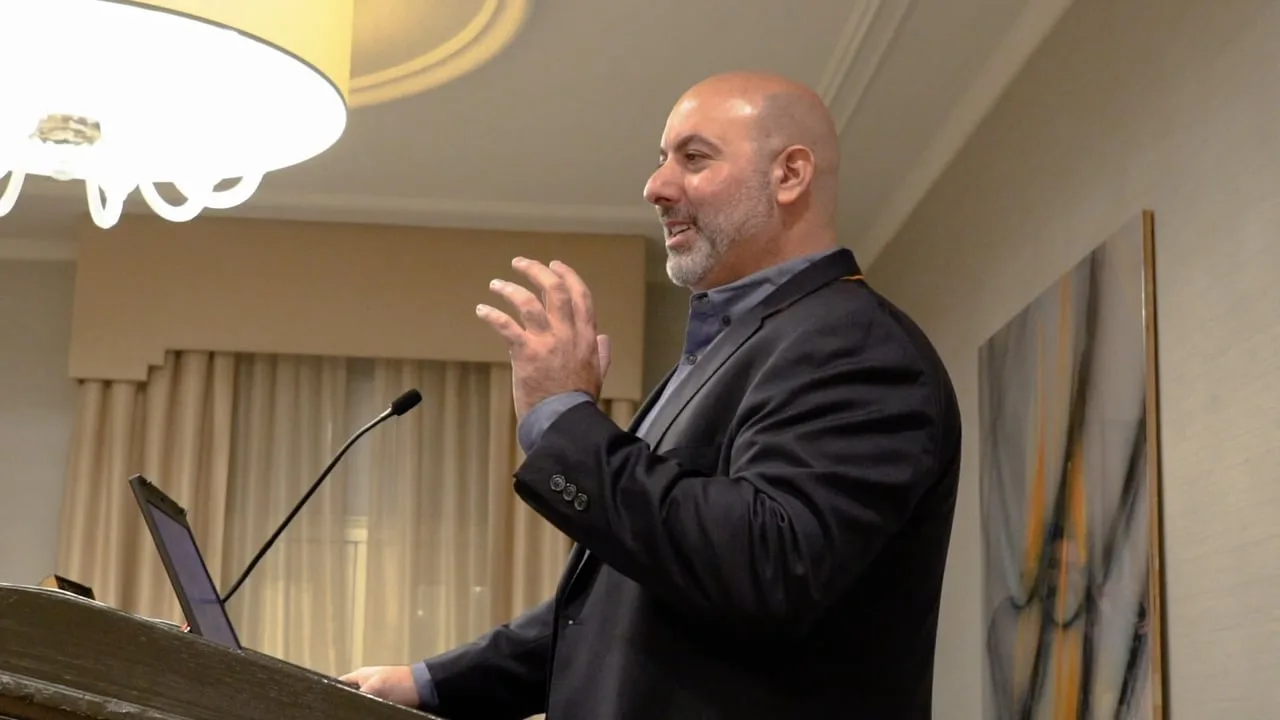
And so what happened was I just started speaking at different events. I was speaking at an event kind of like this, and I did a good job. I was kind of funny. And at the end, these two old guys come up to me and say, “You’re really funny. We’re old and we’ve been around a long time, and you’re really funny, and you should be a stand up comic.” I go, “What are you talking about?” “Well, you should combine business and comedy together and be a stand up comic around that.” I go, “I don’t know.” “We’re old. We know. We’ve been around. We’ve seen a lot of people like you.” And, you know, okay.
So I went home and I researched stand up comic. And when I did, the definition tells you that it’s someone that interacts with the audience. They’re dynamic. They’re fun. They kind of make things up on the fly. And I do that. When I’m speaking to different business owners, I just kind of say what I think, and it inspires people to take action. It also inspires communities to take action.
And so I said, “All right, fine. I guess what I’ll do is just put it on LinkedIn, because that’s what people do.” People that write reviews on Yelp say they’re a food critic. They put it on there. People that eat ice cream and post on Instagram say they’re a food blogger. So these two old guys said I could be a stand up comic, so I put it on there.
So I put it on LinkedIn, and of course what happens is the next day, one of my friends calls me and says, “You know, you’re not that funny.” And I go, “What are you talking about?” He said, “I saw that on LinkedIn you put that you’re a stand up comic, and you’re not.” I said, “Well, these two old guys, they seem to know a lot, and they said I am. And then I went to Google and I researched stand up comic, and I kind of do a lot of that stuff.” He goes, “No, you’re not funny, and you’re not a comic, and you can’t do that.”
So I started doubting myself and having what I call head trash, and just going, well, can I say that? Can I not say that? What do I do? And so I was thinking about this, and I just left it on LinkedIn.
About a week later, the same city I just spoke at, where the two old guys were, called me up and said, “You’re really great. You really inspired and motivated the audience of business owners to take action. So we want you to come back. Can you come back in about 45 days? We’ll bring a whole bunch more people, and this time we’ll pay you. We’ll put up a poster, put everything together.” I said, “All right, okay.”
So they put together everything and they sent it to me, and it was like the size of a lottery ticket. It was kind of embarrassing, a big picture. And I didn’t do anything other than put stand up comic on LinkedIn. But on this flyer, it said business consultant, marketing expert, stand up comic. And I was like, uh oh. And then they started putting together tweets and email newsletters, and they said stand up comic. I was like, okay, well. So I told one of my employees. She said, “Well, just go for it.” I said, “All right, fine.”
So about 45 days later, I show up, and they introduce me, you know, real nice, like they introduced me today. But at the end, they said, “And he’s a stand up comic.” And they hand me the microphone. I was like, oh boy, I’d better be extra funny. So I really tried hard to be extra funny. And at the end, this girl comes up and she says, “David, you’re really funny.” I said, “Oh, thanks.” She said, “How long have you been a stand up comic?” And I was like, duh.
And then I called my friend, and I said, “You’ll never guess what happened. They put it on a poster. They put it in an email. They put it on Twitter. This girl came up and said that I was one, and they paid me. So I guess I’m a stand up comic now.” He goes, “No.” I go, “What do you mean, no?” He says, “Well, did you get trained in that?”
So, well, oh, you know what? In undergraduate, I went to San Francisco State University, and I took Art of Comedy, and I got an A in that class. I completely forgot I took that class, but now that you remind me, I guess I did get trained. He’s like, “No, no, no. But you haven’t been in improv or on some stage.” I said, “Okay, you know what? Do me a favor. Go to Google and search Pleasant Hill stand up comic.” That’s the city I was in. If you searched Pleasant Hill stand up comic, I was number one through 10. And if you did an image search for Pleasant Hill stand up comic, it was all me. He’s like, “What are you talking about?” I said, “Well, because they promoted it so much, and there’s not that many people in that city, I was it. I’m number one through 10. So Google says I am.” He’s like, “No, no, no, no, no.”
So what happens is, when are you an expert? Right? Is it when others say you are? Is it when two old guys say you are, or when your friend says you’re not? Is it when you say you are? Is it when I say I am? Is it when you’re paid to do it? Is it when you’re trained to do it? So when are you an expert? Do you have to wait 25 years to take action?
It’s not just about being an expert. It’s about mentoring, volunteering, taking action in the community. When do you have permission to do that? Can you just do it, or do you have to wait? Can you volunteer to be a firefighter right now, or do you have to wait 10 years and then you can do it? That’s the kind of question that I want to look at.
So I looked at the definition of an expert. It’s a person who has a comprehensive knowledge of something, right? I don’t really have a comprehensive knowledge of stand up comedy. But these people kept saying it, and I kept researching more and more and more and realized, okay, I can do this. So I kept doing more and more of it.
But then there’s this impostor syndrome. The impostor syndrome is the idea that you doubt yourself a lot. And the idea is, as you start learning something more and more, you realize you know less and less, and you’ve got to learn more and more skills about it. And we get this when we get a new job or a promotion. It’s supposed to be exciting. You got a new job, you got a promotion. But no, most of us go, “Uh oh, they’re going to find out I don’t know anything. How long is it going to take for them to realize I don’t know what I’m doing? Is it three months? Is it six months?”
It’s the same thing with volunteering in your community. When you volunteer, you don’t know how to do it. You’re just doing it. And someone might find out you don’t know what you’re doing, that you’re not helpful. So you have to get out there and just do it. That’s the thing.
So after all this research and a lot of time and pain, I believe it takes three years to become an expert. Now, does that mean that you just wait three years and go, okay, well, I’m an expert now? No, you actually have to do stuff. So I’m going to cover the three main things that you want to do to become an industry expert.
Number one, knowledge. The research shows that experts actually continue to learn and educate themselves over and over and over, more and more and more. They get really into it, and they educate themselves nonstop, and they surround themselves with other people to become even more of an expert. You don’t just become an expert and stop learning. So you don’t just volunteer and then not continue to learn how to be a better volunteer or a better mentor.
Number two, you have to have belief. You have to believe in yourself. You have to believe in your product. You have to believe in your service. You have to believe in the community. You have to believe in what you’re doing. So here, you want to believe in your community and take action.
That’s the last one: take action. If you don’t leave your house, nothing happens, right? That’s why I say this every day. When it comes to networking events, do I really want to go? I don’t know. And then I just get up and go out. That’s what ends up happening. When you meet people, things happen. So you’ve got to take action and continue to take action. Don’t stop.
So what happened was, last night when I was standing here, I took a picture of this right here, this red carpet. And I realized that how I got here, and why I’m here, is related to this red carpet.
Several years ago, I was watching the Golden Globe Awards. You watch the Academy Awards, the Golden Globes, all these awards, and you realize that not many people win. There’s a lot of nominees. Leonardo DiCaprio here has been nominated well over 200 times. He’s only won about 40, 45 times.
But then I realized the nominees get just as much attention, in fact even more attention, than the winners. In all those shows leading up to it, they talk about the nominees all the time. They show the movies they’re in, and then they bring them up on stage and show them, and then the winner gets to come up and, you know, cry for a minute. That’s it. The nominees get just as much attention. And the Golden Globes is my favorite, because after the Golden Globes, every single poster says Golden Globe nominee. Every single movie you see, in the intro, it says Golden Globe nominee. It doesn’t say winner.
So I realized, wait a second, there’s lots of awards. I could start nominating people for awards. And why not? They might accidentally win sometimes. And if they don’t, it doesn’t matter, because I nominated them. So I started going out there and just nominating people for awards. And guess what? It was good for me and good for them. And I didn’t just nominate people for things that didn’t make sense. I nominated them for things that made sense for them. Just like on LinkedIn, I wouldn’t say I’m a dentist or a lawyer or a doctor. I would say stand up comic. There’s no certification for that. So that’s the idea.
So I started nominating them for things, and lo and behold, people started nominating me for things. Okay. So I got nominated for the Oakland Indie Awards, Social Changemaker. In the city of Oakland, I’ve spoken at Oakland City Hall over 60 times, where people can come for free and learn how to start a business, how to come up with new ideas, how to do marketing. And I enjoy doing it very much: giving back to the community, speaking and motivating people to take action.
And so someone nominated me (it might have been myself, I can’t remember) for this award. And so I went there, and people were like, “Great job. Congratulations. We appreciate the work you do here in Oakland.” I’ve been there 15 years. I love Oakland. I was born in San Francisco, but I love Oakland. And they kept taking me around and saying, “Oh, great job. Great job.” I didn’t win. I was just nominated, but it served the same purpose, right?
So how did I end up here? Well, lots of different things. Obviously, I teach at UC Berkeley, the University of California, Berkeley. I’m a Google mentor. I have a Ph.D. in clinical psychology. I have all these different things. But the number one thing they highlighted here, and she even said it when she introduced me, and they put it on Facebook when they announced me, is that I was nominated as a changemaker for the city of Oakland. So that nomination led me to be here, and I didn’t even win.
So my whole point is that you have to go out there and do something, right? You don’t just become an expert. You have to do something. So in conclusion, you just have to start. Just go out there and do something in your community. It doesn’t matter what it is. Nominate people for things. Volunteer for things. Just go out there and do things. And then all of a sudden you’re standing here, and apparently you’re an expert. So you have to manifest your destiny and just make it happen. Thank you so much.
Transcript edited lightly for reading.
Keep watching
More videos with David
Questions
About this video
What is the TEDx talk When Are You Good Enough to Become an Industry Expert? about?
The TEDx Andrews talk asks who decides when you are an expert. David Mitroff, Ph.D. shares three things experts do: keep learning, believe in their work and take action.
Where did David Mitroff, Ph.D. give the industry expert TEDx talk?
David gave When Are You Good Enough to Become an Industry Expert? at TEDx Andrews in South Carolina.
How long is the industry expert TEDx talk?
The TEDx Andrews video runs 12 minutes and 39 seconds.
What are the three steps to becoming an industry expert in the TEDx Andrews talk?
Knowledge, belief and action. Experts keep educating themselves, believe in themselves and their community, and keep taking action.
Does David Mitroff, Ph.D. speak on becoming an industry expert at events?
Yes. David gives keynote talks for companies, chambers of commerce and conferences. See speaking or schedule a call to talk about your event.
Work with David
Schedule a call with David.
Tell us about your business or your event, and we will map out a clear next step.