

Law Firm Growth Guide
How to build law firm strategic partners with a top twenty list
Piedmont Avenue Consulting, Inc. helps law firms build strategic partners through a top twenty list and a steady habit of lunches. Twenty people upstream of your clients can send work for years. We work with law firms in New York, Los Angeles, Arizona, the San Francisco Bay Area and wherever you practice.
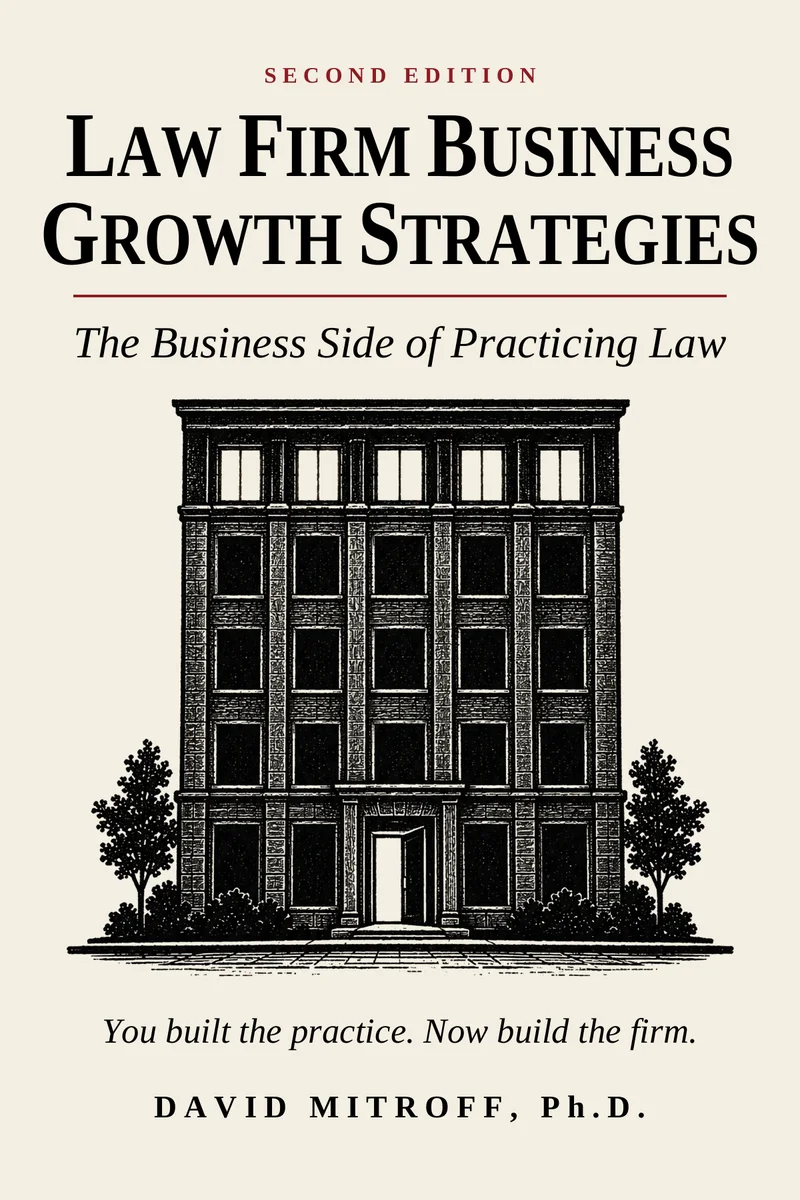
From the book
From the chapter
In the chapter titled “Strategic Partners and the Top Twenty List”, David Mitroff, Ph.D. writes:
“Network like a farmer, not a hunter. Build a list of the twenty people upstream of your clients who can send you work, from people you like, and see them on a schedule.”
From Law Firm Business Growth Strategies, Second Edition, the playbook we bring to every firm we work with.
Building a top twenty list that works
Many lawyers network like hunters: they go out, look for a client and come home with one or without one. In this chapter, David Mitroff, Ph.D. describes a different way, which he has watched out-earn hunting for twenty years. He calls it farming: plant relationships, tend them on a schedule and harvest years later.
Write the top twenty list
Write down the twenty people who could send your firm the most work over the next five years. These are not clients. They are the people upstream of clients, who hear about the problem first. For an estate planning firm, that means financial advisors, accountants, insurance agents and private bankers. For a business firm, it means accountants, commercial bankers and business brokers. A personal injury firm looks to chiropractors, physical therapists and body shops. A construction litigator looks to contractors, architects, engineers and sureties. Every firm’s list includes other lawyers. Twenty is enough to matter and few enough to see.

Choose people you like
This sounds unprofessional, and it is practical. If you like someone, you will make time, and the second lunch will happen too. People also gather people like themselves, so a partner you enjoy opens the door to more people you will enjoy, some of whom need a lawyer.
Keep most of the people you meet
David draws two shapes. The funnel finds many people, converts a few and keeps a handful. That fits a practice that advertises. The engagement approach turns the funnel upside down, so keeping is the wide part. You collect connections, because connections lead to introductions, board seats, speaking slots and event partners. A firm can run both, though the twenty people on the list are not leads to convert.
Host lunches with referral partners
Spread thirty-six lunches a year across the twenty names. You see most of them once or twice a year, and a few every quarter. Sit two people who ought to know each other at one table and ask questions. That is hosting, not selling. A lawyer at the table changes the conversation and sees the risk in a plan. In the book, David describes a litigator who kept in touch with a managing partner after one lunch. Five years later, a serious real estate problem came in, the managing partner thought of one lawyer, and the matter became one of the largest in that firm’s history.
Join one board and give first
A board or association is a room, not a person. Join one where your clients already are, because you care about the work, and do your part. An estate planner might join a community foundation, a construction lawyer a trade association, and an employment lawyer a human resources group. If you join only to get clients, people notice. If you contribute first, the clients come as a result, for years.
Make it a system
A list and good intentions are not a system. The system is the list, the lunches on the calendar in January, a note after each meeting, the introductions made and asked for, and a check-in rhythm that runs whether anyone feels like it or not. In a solo practice, that is a spreadsheet and a habit. In a larger firm, it is a shared list per practice group, reviewed quarterly, with a partner responsible for each name. Give nothing of value for a recommendation beyond a thank-you and good work, keep any two-way arrangement non-exclusive with the client told, and read your state’s rule on referrals before the first lunch.
In the first ninety days of working together, our job is to find our fee, which means making or saving you more than you pay us. We start with an initial consultation and a paid assessment, then build a ninety-day plan and a twelve-month marketing calendar.
Why firms work with David
David’s law firm work at LexisNexis.
Inside the largest firms
For six years at LexisNexis, David Mitroff, Ph.D. worked with some of the largest law firms in the world and met attorneys across the San Francisco Bay Area. Many of them told him the same thing: I want to start my own firm. They knew how to practice law. What they wanted was everything else: what to offer, how to price, and above all, where the right clients come from. So he helped them open their doors, and he has been growing firms ever since.
Teaching lawyers
David has been an approved California MCLE provider and has delivered more than 300 MCLE workshops, webinars and presentations through Piedmont Avenue Consulting, Inc., LexisNexis, Continuing Education of the Bar (CEB) and the San Francisco Bar Association. He has been featured in California Lawyer magazine.
Wherever you practice
We work with law firms in New York, Los Angeles, Arizona, Orange County and the San Francisco Bay Area, and wherever your firm is located. Our main office is on Piedmont Avenue in Oakland, and we meet by video everywhere else.
Personal injury or patent, a solo office or a large partnership, the business side works the same way. We work with:
- Personal injury
- Patent and intellectual property
- Estate planning
- Elder law
- Family law
- Business and corporate
- Employment
- Real estate
- Bankruptcy
- Criminal defense
- Immigration
- Litigation
“I first worked with David while at Jackson & Wallace LLP. My experience with David’s services was excellent. He was always responsive to numerous questions; his answers and guidance were of the highest quality.”


Wallace LLP
Quick self-assessment
Score your law firm
Nine questions on the nine keys from David Mitroff, Ph.D.’s book Online Business Growth Strategies. Tap an answer for each one and watch your score move.
On the blog
Articles that go deeper on this chapter
Questions
Questions firms ask.
Who belongs on a law firm’s top twenty list?
A law firm's top twenty list holds the people upstream of clients, who hear about the problem first. Depending on the practice, that can mean accountants, financial advisors, bankers, business brokers, chiropractors, contractors, architects or therapists. Every firm's list also includes other lawyers.
Why does David suggest building strategic partners from people you like?
David says that liking someone means the lunch happens, and the second lunch happens too. People also gather people like themselves, so a strategic partner you enjoy leads to more people you will enjoy, and some of those people need a lawyer.
How long do strategic partner relationships take to produce a matter?
Strategic partner relationships usually take years. In the book, a litigator kept in touch with a managing partner after one lunch. Five years later a client with a serious real estate problem called, and the result was one of the largest matters in that firm's history.
How does a lawyer host a business development lunch?
Spread thirty-six lunches a year across the twenty names on the list, so you see most people once or twice a year and a few every quarter. Seat two people who ought to know each other at one table and ask questions. That is hosting, not selling, and a lawyer at the table changes the conversation and sees the risk in a plan.
Which board or association is right for a lawyer’s business development?
Join one board or association where your clients already are, because you care about the work, and do your part. An estate planner might join a community foundation, a construction lawyer a trade association, and an employment lawyer a human resources group. People notice a lawyer who joins only to get clients. A lawyer who contributes first sees clients come as a result, for years.

Take the next step
Schedule a call with David.
Creative strategies, hands-on implementation, and the personal commitment of a partner invested in your success.
Quotes on this page are from Law Firm Business Growth Strategies, Second Edition by David Mitroff, Ph.D. Header photo: Tony Webster, CC BY 2.0, via Wikimedia Commons.