

Law Firm Growth Guide
Better law firm referrals start with asking for introductions
Piedmont Avenue Consulting, Inc. helps law firms bring in new matters by asking for introductions instead of referrals. An introduction is a light ask, so people act on it. We work with law firms in New York, Los Angeles, Arizona, the San Francisco Bay Area and wherever you practice.
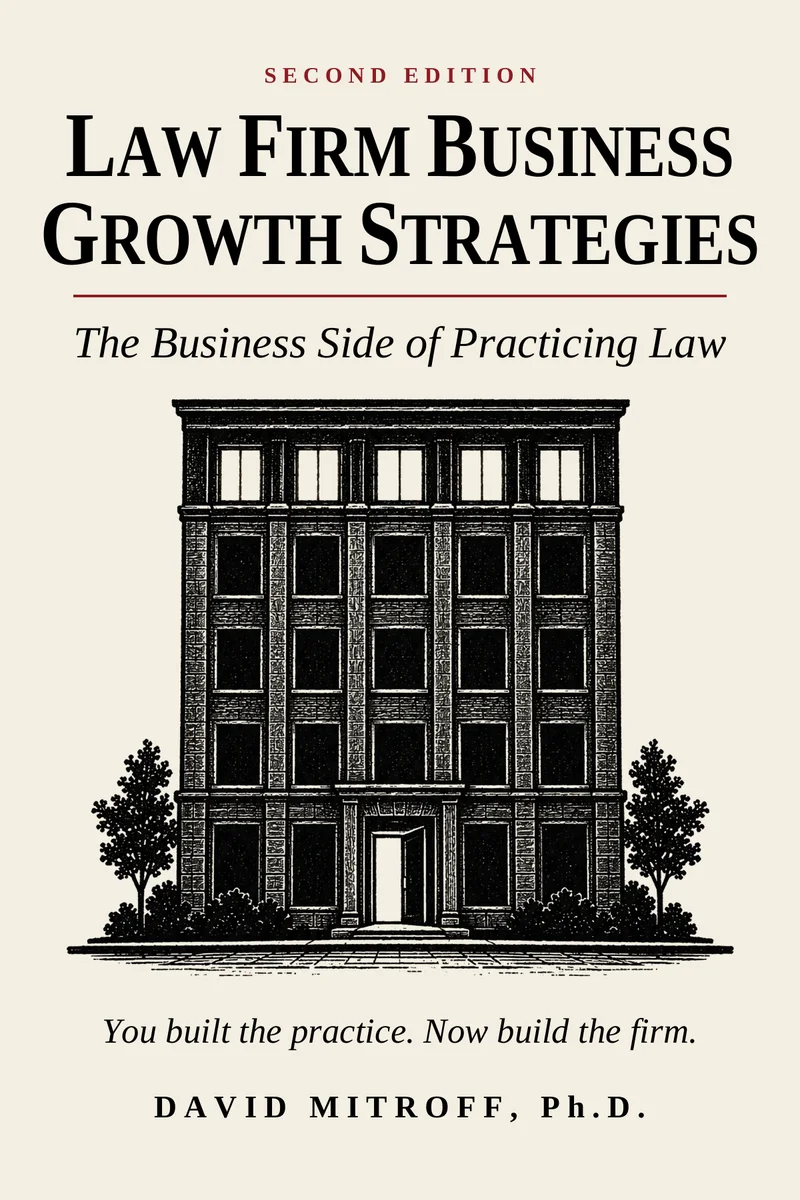
From the book
From the chapter
In the chapter titled “Introductions, Not Referrals”, David Mitroff, Ph.D. writes:
“An introduction is easier and more informal than a referral. Ask for the easy thing. The referral comes later, on its own, once the introduced person has met you and decided for themselves.”
From Law Firm Business Growth Strategies, Second Edition, the playbook we bring to every firm we work with.
Why introductions work better than referrals
Most lawyers hear the same advice about growth: ask for referrals. In this chapter, David Mitroff, Ph.D. explains why that advice produces so little, and what works in its place. Here are four common beliefs about law firm referrals, and what the chapter shows instead.
Myth: Asking for referrals is the way to bring in new matters.
A referral is a heavy request. The other person has to vouch for you, put their name behind your work and take on a small risk with someone they value. Many people agree to your face and then do nothing, because acting on it takes effort. An introduction is light. A two-line email that says two people might enjoy a conversation takes thirty seconds and endorses nothing. People say yes to that, and they follow through, because it is easy and it makes them look connected. The referral comes later, after the new person has met you and decided for themselves. The ask is the same for clients, other lawyers, accountants, bankers and real estate agents: “Who do you know that I ought to meet?”

Myth: Business development means pitching and closing.
Many lawyers picture a sales pitch, and that picture is the reason they avoid business development. The chapter offers a simpler goal: the goal of a meeting is the next meeting. Ask what the person does. Then ask what else they do, since almost everyone has a second answer and few people are asked for it. Listen, offer something useful such as a name, an article or a thought, and agree on when you will talk again. Lawyers already do this in a first meeting with a client.
Myth: Growth depends on luck or on a heroic effort.
Under the technique sits simple arithmetic. Know how many conversations lead to an introduction, how many introductions lead to a meeting, and how many meetings, over one year or five, lead to a matter. David gives attorneys one number to carry: three lunches a month, or thirty-six a year, with the twenty people who can send work. That is one lunch a week with two weeks off. It is a habit, and it is how a lawyer creates the chances for luck to happen.
Myth: Calls about matters you do not handle are a distraction.
People call the one lawyer they know about any legal problem, whatever the practice area. The chapter calls this the most natural introduction engine in any profession. When you tell the caller who does handle the matter and introduce them, the caller remembers it, the other lawyer remembers it, and you have done in five minutes what a referral network is meant to do. Over time, the lawyers you send calls to send theirs back. Send each caller to the right lawyer for them, and let nothing of value change hands for it, since every state has strict rules on that. Keep a list of lawyers in other practice areas you trust enough to send a friend to.
One more idea sits under all of this. A reactive calendar, running from one task to the next, leaves no room for lunches. A full calendar is planned, with time to think, to choose people and projects, and to work on the business and not only in it. A full lawyer has the thirty-six lunches booked in January.
In the first ninety days of working together, our job is to find our fee, which means making or saving you more than you pay us. We start with an initial consultation and a paid assessment, then build a ninety-day plan and a twelve-month marketing calendar.
Why firms work with David
David’s law firm work at LexisNexis.
Inside the largest firms
For six years at LexisNexis, David Mitroff, Ph.D. worked with some of the largest law firms in the world and met attorneys across the San Francisco Bay Area. Many of them told him the same thing: I want to start my own firm. They knew how to practice law. What they wanted was everything else: what to offer, how to price, and above all, where the right clients come from. So he helped them open their doors, and he has been growing firms ever since.
Teaching lawyers
David has been an approved California MCLE provider and has delivered more than 300 MCLE workshops, webinars and presentations through Piedmont Avenue Consulting, Inc., LexisNexis, Continuing Education of the Bar (CEB) and the San Francisco Bar Association. He has been featured in California Lawyer magazine.
Wherever you practice
We work with law firms in New York, Los Angeles, Arizona, Orange County and the San Francisco Bay Area, and wherever your firm is located. Our main office is on Piedmont Avenue in Oakland, and we meet by video everywhere else.
Personal injury or patent, a solo office or a large partnership, the business side works the same way. We work with:
- Personal injury
- Patent and intellectual property
- Estate planning
- Elder law
- Family law
- Business and corporate
- Employment
- Real estate
- Bankruptcy
- Criminal defense
- Immigration
- Litigation
“I have known and worked with David for over 15 years, across numerous companies and ventures. He helped us build and promote Clark Meyers. He is my go-to marketing guru and has introduced me to the resources I need to grow.”


Quick self-assessment
Score your law firm
Nine questions on the nine keys from David Mitroff, Ph.D.’s book Online Business Growth Strategies. Tap an answer for each one and watch your score move.
On the blog
Articles that go deeper on this chapter
Questions
Questions firms ask.
What is the difference between a referral and an introduction for a law firm?
A referral asks a person to vouch for a lawyer and take on a small risk, so many people agree and then do nothing. An introduction is a short email saying two people might enjoy a conversation. People act on introductions because they are easy and make them look connected.
How many business development lunches does a lawyer need each year?
The chapter suggests three lunches a month, or thirty-six a year, with the twenty people who can send the lawyer work. That works out to about one lunch a week with two weeks off. The lunches are a habit, not a heroic effort.
What can a lawyer do with a call about a matter outside the lawyer’s practice?
The lawyer can say who does handle that matter and introduce the caller to that lawyer by name, the same day. The caller and the other lawyer both remember the favor. Nothing of value changes hands for the introduction, because the rules on that are strict in every state.
What is the goal of a business development meeting for a lawyer?
The goal of a meeting is the next meeting. Ask what the person does, then ask what else they do, since almost everyone has a second answer and few people are asked for it. Listen, offer something useful such as a name, an article or a thought, and agree on when you will talk again. Lawyers already do this in a first meeting with a client.
How can a busy lawyer make time for business development?
A reactive calendar, running from one task to the next, leaves no room for lunches. A full calendar is planned, with time to think, to choose people and projects, and to work on the business and not only in it. The chapter’s picture of a full lawyer is one who has the year’s thirty-six lunches booked in January.
Take the next step
Schedule a call with David.
Creative strategies, hands-on implementation, and the personal commitment of a partner invested in your success.
Quotes on this page are from Law Firm Business Growth Strategies, Second Edition by David Mitroff, Ph.D. Header photo: Tony Webster, CC BY 2.0, via Wikimedia Commons.