

Law Firm Growth Guide
Mapping the law firm client journey from first call to years later
Piedmont Avenue Consulting, Inc. helps law firms in New York, Los Angeles, Arizona, the San Francisco Bay Area and wherever you practice map the client journey. In this chapter, David Mitroff, Ph.D. walks through every step, from the first call to long after the file closes. A law firm draws three lines on that map that other businesses do not.
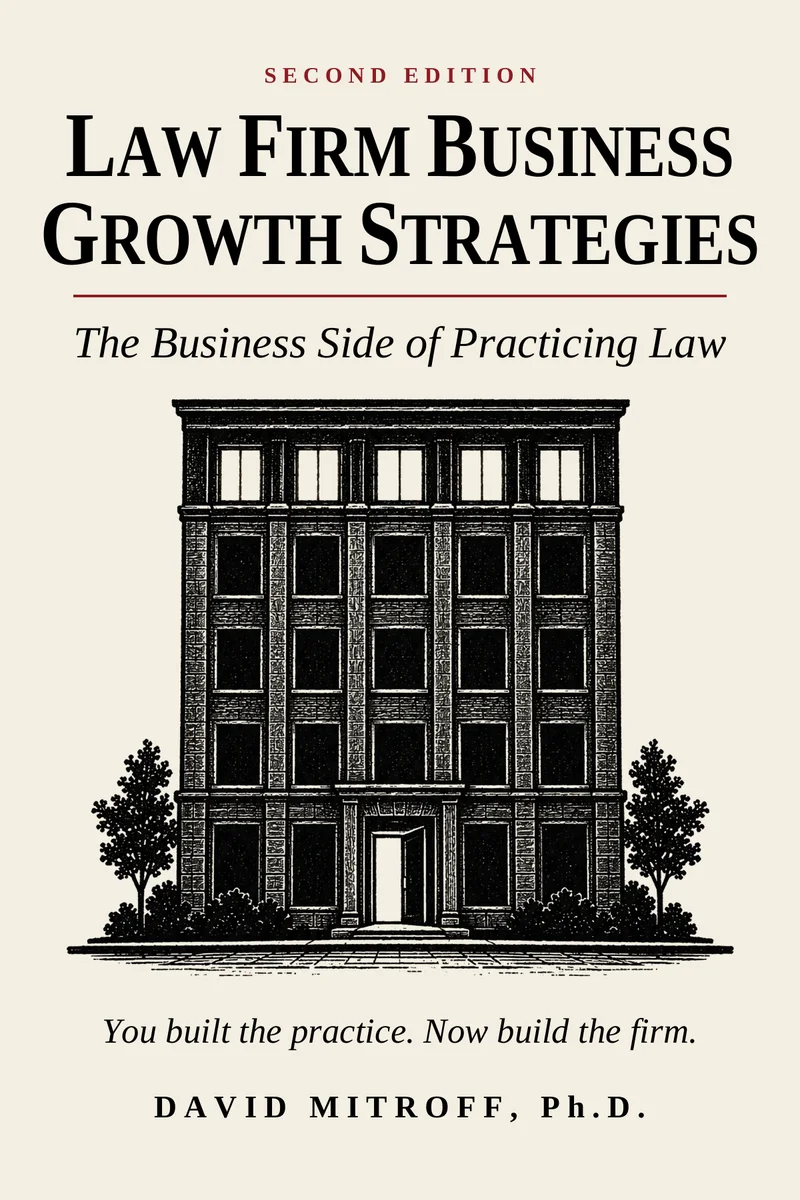
From the book
From the chapter
In the chapter titled “Mapping the Client Journey”, David Mitroff, Ph.D. writes:
“The attorney-client relationship ended at the third line. The relationship with the person did not have to, and the firms that grow are the ones that understand the difference.”
From Law Firm Business Growth Strategies, Second Edition, the playbook we bring to every firm we work with.
How a potential client finds and contacts a law firm
Someone hears a firm’s name from a friend, from a billboard or from a search. They look the firm up. They decide whether to call. When they do call, they are usually afraid: of the problem, of the cost and of the language. In the book, David describes this as the start of the client journey, and he notes that the journey starts before the firm knows it has started.
Then he asks partners a simple question. When did anyone at the firm last call its own number and time the answer, fill out its own web form, or try to book a consultation from a phone? Most partners have not, and most are unpleasantly surprised when they do. How hard it is to hire the firm is measured in hours and clicks, and a firm can reduce it in a week. A firm whose intake person speaks plainly, explains what happens next and tells the caller what to bring has already done more than most of its competitors.

The first line: not yet a client
A phone call, a web form, a consultation or a talk at a workshop does not make someone a client. The relationship begins when the firm and the client agree in writing. Until then the person is a prospective client. What a prospective client tells the firm can be confidential even if the firm does not take the matter, so intake gathers only what it needs to check conflicts and decide. The firm also makes the line visible, in the intake script, on the web form and at the opening of the consultation.
The second line: the engagement letter
Rules on written fee agreements differ by state. The book tells readers to check their own state’s rule and then do more than it requires. A good letter explains in plain English what the firm will do, what it will not do, what it will cost, how the client will hear from the firm, and what the client is responsible for. Most complaints a firm receives are about things the letter could have said.
During the matter, the client is mostly waiting. A firm that has mapped this step keeps a promise about how often the client hears from it, even when there is nothing to report. That one habit produces more reviews, more referrals and fewer complaints.
The third line: the matter ends
A closing letter tells the client that the representation has ended and what happens to the file. That protects the client, protects the firm, and clears the way for what comes next.
After the third line
Former clients go on the newsletter list. They are invited to workshops, office hours and the open house, and they get the holiday card. In the book, an estate planning firm hosts a shredding party, where clients bring old papers and the firm brings the truck and the coffee. Each invitation makes clear that it is an invitation and not legal advice, and none of it asks for anything. This is how a firm becomes the first call before there is a matter.
Draw the map
Put every step on one page, from the first encounter to the invitation five years later, with the three lines across it. For each step, write who owns it, how long it takes, what the person experiences, and how the firm knows it happened. The map usually shows the firm losing people at the first line, in the minutes after the phone rings, and after the third line.
In the first ninety days of working together, our job is to find our fee, which means making or saving you more than you pay us. We start with an initial consultation and a paid assessment, then build a ninety-day plan and a twelve-month marketing calendar.
Why firms work with David
David’s law firm work at LexisNexis.
Inside the largest firms
For six years at LexisNexis, David Mitroff, Ph.D. worked with some of the largest law firms in the world and met attorneys across the San Francisco Bay Area. Many of them told him the same thing: I want to start my own firm. They knew how to practice law. What they wanted was everything else: what to offer, how to price, and above all, where the right clients come from. So he helped them open their doors, and he has been growing firms ever since.
Teaching lawyers
David has been an approved California MCLE provider and has delivered more than 300 MCLE workshops, webinars and presentations through Piedmont Avenue Consulting, Inc., LexisNexis, Continuing Education of the Bar (CEB) and the San Francisco Bar Association. He has been featured in California Lawyer magazine.
Wherever you practice
We work with law firms in New York, Los Angeles, Arizona, Orange County and the San Francisco Bay Area, and wherever your firm is located. Our main office is on Piedmont Avenue in Oakland, and we meet by video everywhere else.
Personal injury or patent, a solo office or a large partnership, the business side works the same way. We work with:
- Personal injury
- Patent and intellectual property
- Estate planning
- Elder law
- Family law
- Business and corporate
- Employment
- Real estate
- Bankruptcy
- Criminal defense
- Immigration
- Litigation
“David was extremely helpful, and the most responsive consultant I’ve ever worked with. If he didn’t know something, he had no problem acknowledging that, and calling in an expert. His follow-up was absolutely impeccable.”


Quick self-assessment
Score your law firm
Nine questions on the nine keys from David Mitroff, Ph.D.’s book Online Business Growth Strategies. Tap an answer for each one and watch your score move.
On the blog
Articles that go deeper on this chapter
Questions
Questions firms ask.
When does a prospective client become a law firm client?
In the book, a phone call, web form or consultation does not make someone a law firm client. The relationship begins when the firm and the client agree in writing. Until then the person is a prospective client, and the firm says so.
What does a good law firm engagement letter explain?
A good law firm engagement letter explains in plain English what the firm will do, what the firm will not do, what the work will cost, how the client will hear from the firm, and what the client is responsible for.
How does a law firm stay in touch with former clients?
Former clients go on the law firm newsletter list and are invited to workshops, office hours, the open house and events such as a shredding party. Each invitation says plainly that the invitation is not legal advice, and the invitation asks for nothing.
How often does a law firm update clients during a matter?
During the matter, the client is mostly waiting. A law firm that has mapped this step keeps a promise about how often the client hears from the firm, even when there is nothing to report. According to the chapter, that one habit earns more reviews, brings more referrals and leads to fewer complaints.
How does a law firm draw a client journey map?
Put every step on one page, from the first encounter to the invitation five years later, with three lines across it: not yet a client, the engagement letter, and the end of the matter. For each step, write who owns it, how long it takes, what the person experiences, and how the firm knows it happened. The map usually shows the firm losing people at the first line and after the third.

Take the next step
Schedule a call with David.
Creative strategies, hands-on implementation, and the personal commitment of a partner invested in your success.
Quotes on this page are from Law Firm Business Growth Strategies, Second Edition by David Mitroff, Ph.D. Header photo: Tony Webster, CC BY 2.0, via Wikimedia Commons.