

Law Firm Growth Guide
How law firm partners grow a firm by saying things out loud
Piedmont Avenue Consulting, Inc. works with partners at law firms in New York, Los Angeles, Arizona, the San Francisco Bay Area and wherever you practice. In this chapter, David Mitroff, Ph.D. covers titles, who owns growth, pay, and the hard conversations. Every partnership is a set of relationships first.
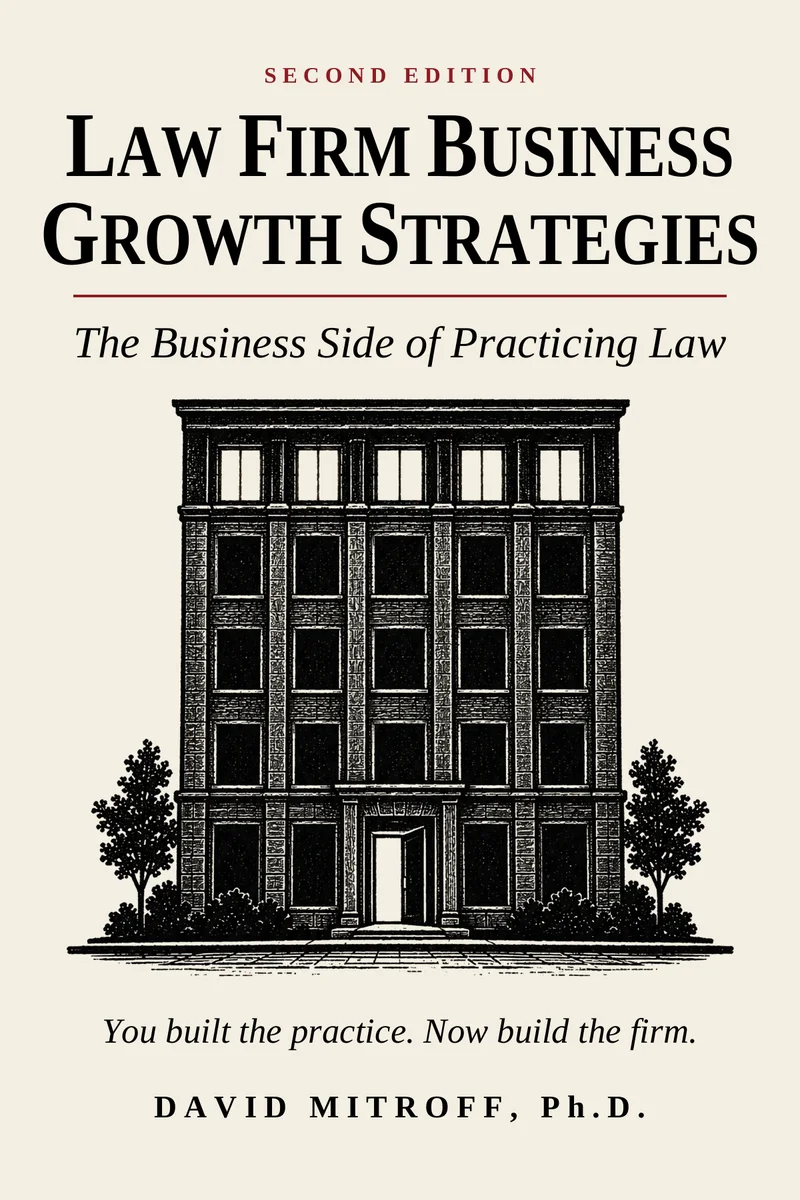
From the book
From the chapter
In the chapter titled “Partners”, David Mitroff, Ph.D. writes:
“Most partnership problems I am brought into are, underneath, a story one partner has been telling about another for years, and the fastest progress comes from checking the story against the facts.”
From Law Firm Business Growth Strategies, Second Edition, the playbook we bring to every firm we work with.
Common questions about law firm partners
Why do partnerships get stuck?
In David’s experience, a stuck partnership is rarely short of good intentions. People want to do well, and they want the firm to do well. A partnership usually gets stuck because some things have gone unsaid for a long time. The way through is to say them, kindly, with a plan.
Does the history between partners matter?
Yes. Partners may be law school friends, former associates from a big firm, spouses, parents and children, siblings, or people who met at a bar association meeting. That history is in the room at every partner meeting. David does not treat it as a problem to fix. It is the material the firm is made of, and growing firms talk about it and build their structure around it.

What does the title partner mean?
The answer depends on the firm. The title can mean an equity owner who shares profit and votes, or a senior lawyer with a salary and no ownership. Firms also use terms such as non-equity partner, income partner, shareholder, member and of counsel. What matters is that each person knows, in writing, what they own, what they vote on, what they are paid for, and the path to the next step. Confusion here causes more resentment than pay itself, and it is the easiest thing in the chapter to fix.
Who owns growth in a partnership?
One partner, chosen by the others, given the authority to act and backed when they do. That partner does not do all the business development. They make sure it happens: the calendar exists, the twenty lists exist, the lunches have names, the events are scheduled, and every partner has an agreed part. They report the numbers monthly. In a family firm, letting the next generation own growth can be one of the healthiest choices a founder makes.
How does compensation connect to growth?
Pay produces behavior. Whatever the system rewards, the firm gets more of. Many small partnerships set pay years ago and have not reopened it. David suggests starting from what the firm wants more of, such as new matters, mentoring associates into partners, or introductions across practice groups. Credit three or four of those things in writing and review them every year.
What about the partner who does not bring in work?
Start with the facts. Most lawyers were taught to practice, not to build relationships. Give that partner the twenty list, the calendar and a colleague for the first three lunches. In David’s experience, most partners who get the method and a little company produce work within a year. If the partner then decides business development is not for them, the firm can build a role at pay that reflects it, or help them move on well.
How does a firm handle a difficult partner?
Make a plan with dates: what the firm needs, what it has been getting, what will change, and how everyone will know. An outside person in the room, who is not a partner and not a lawyer, can ask the question the partners have been circling. Most people, told plainly what is expected, will meet it.
When is the right time to add a partner?
When the firm wants that person as an owner: they bring in work or will, they carry the firm’s standard, they can be trusted to decide, and the other partners want to sit in the room with them for twenty years. Keeping an associate or rewarding years are reasons to pay more, not reasons to make someone an owner. Write the criteria down.
In the first ninety days of working together, our job is to find our fee, which means making or saving you more than you pay us. We start with an initial consultation and a paid assessment, then build a ninety-day plan and a twelve-month marketing calendar.
Why firms work with David
David’s law firm work at LexisNexis.
Inside the largest firms
For six years at LexisNexis, David Mitroff, Ph.D. worked with some of the largest law firms in the world and met attorneys across the San Francisco Bay Area. Many of them told him the same thing: I want to start my own firm. They knew how to practice law. What they wanted was everything else: what to offer, how to price, and above all, where the right clients come from. So he helped them open their doors, and he has been growing firms ever since.
Teaching lawyers
David has been an approved California MCLE provider and has delivered more than 300 MCLE workshops, webinars and presentations through Piedmont Avenue Consulting, Inc., LexisNexis, Continuing Education of the Bar (CEB) and the San Francisco Bar Association. He has been featured in California Lawyer magazine.
Wherever you practice
We work with law firms in New York, Los Angeles, Arizona, Orange County and the San Francisco Bay Area, and wherever your firm is located. Our main office is on Piedmont Avenue in Oakland, and we meet by video everywhere else.
Personal injury or patent, a solo office or a large partnership, the business side works the same way. We work with:
- Personal injury
- Patent and intellectual property
- Estate planning
- Elder law
- Family law
- Business and corporate
- Employment
- Real estate
- Bankruptcy
- Criminal defense
- Immigration
- Litigation
“I have known and worked with David for over 15 years, across numerous companies and ventures. He helped us build and promote Clark Meyers. He is my go-to marketing guru and has introduced me to the resources I need to grow.”


Quick self-assessment
Score your law firm
Nine questions on the nine keys from David Mitroff, Ph.D.’s book Online Business Growth Strategies. Tap an answer for each one and watch your score move.
Questions
Questions firms ask.
What does the title partner mean at a law firm?
At a law firm, the title partner can mean an equity owner who shares profit and votes, or a salaried senior lawyer with no ownership. David recommends that every partner have in writing what the title means: ownership, vote, pay and the path forward.
Who owns growth in a law firm partnership?
In a law firm partnership, one partner owns growth, chosen and backed by the others. That partner makes sure the calendar, the twenty lists, the lunches and the events happen, gives every partner an agreed part, and reports the numbers monthly.
How can a law firm help a partner who does not bring in work?
A law firm can start by giving the partner the twenty list, the calendar and a colleague for the first three lunches. In the book, most partners given the method and some company produce work within a year.
How can a law firm partnership tie compensation to growth?
Pay produces behavior: whatever the system rewards, the firm gets more of. Many small partnerships set pay years ago and have not reopened it. David Mitroff, Ph.D. suggests starting from what the firm wants more of, such as new matters, mentoring associates into partners or introductions across practice groups, then crediting three or four of those things in writing and reviewing them every year.
When is the right time to make a lawyer a partner?
The right time is when the law firm wants that person as an owner: they bring in work or will, they carry the firm’s standard, they can be trusted to decide, and the other partners want to sit in the room with them for twenty years. Keeping an associate or rewarding years of service are reasons to pay more, not reasons to make someone an owner. Write the criteria down.

Take the next step
Schedule a call with David.
Creative strategies, hands-on implementation, and the personal commitment of a partner invested in your success.
Quotes on this page are from Law Firm Business Growth Strategies, Second Edition by David Mitroff, Ph.D. Header photo: Tony Webster, CC BY 2.0, via Wikimedia Commons.