
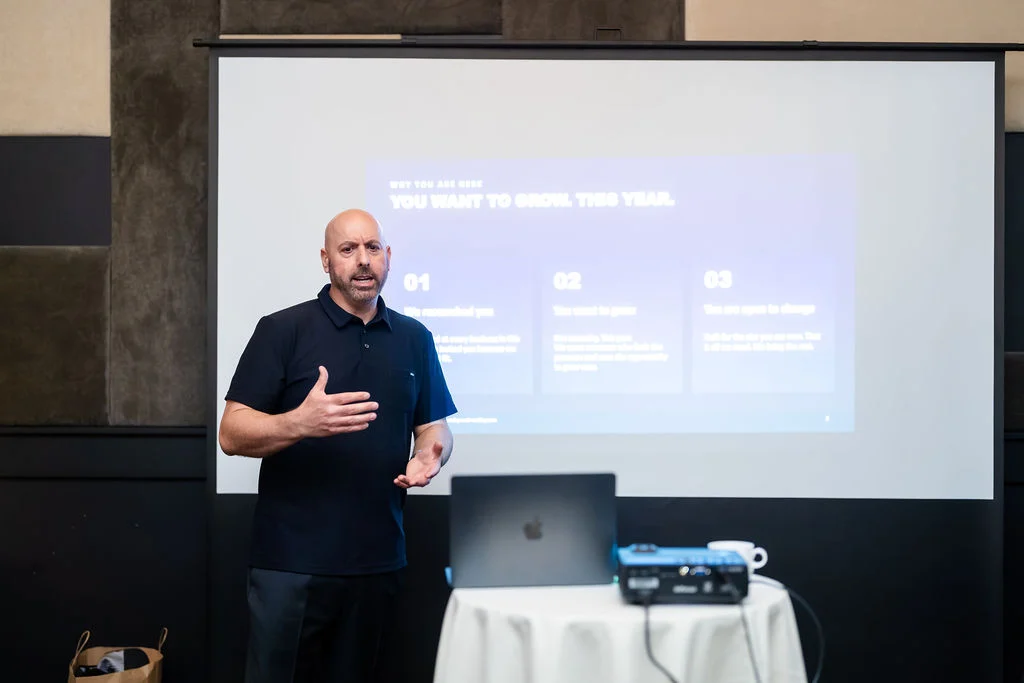


A call with David Mitroff, Ph.D.
Talk through your business with David
Quick answer
A speaking business lasts when it is run as a business. Learn the seasons of the keynote calendar, book engagements many months ahead, price talks to carry you through the quiet months, build backup income from consulting, books and content, and keep marketing all year. Piedmont Avenue Consulting, Inc. works with speakers, consultants and business owners in the San Francisco Bay Area, Los Angeles, Orange County and New York on speaking, events and growth.
Key takeaways
- Keynote speaking is seasonal, with two prime seasons each year and quiet stretches in summer and at the end of the year.
- Speaking income arrives in lumps, so price engagements to carry you through the slow months.
- Backup revenue from consulting, coaching, books and digital content turns speaking into one branch of a steady business.
- Booking well ahead, tracking engagements year over year and marketing in the off months keep the calendar full.
A speaking business is more than a list of talks. It is a business with seasons, pricing, marketing and a calendar that has to be built every year. At Piedmont Avenue Consulting, Inc., we are a business and marketing consulting firm that works with consultants, speakers and business owners in the San Francisco Bay Area, Los Angeles, Orange County and New York to start, grow and scale their businesses. David Mitroff, Ph.D., our founder, is a keynote speaker himself, and he is often asked how to build a steady flow of paid engagements.
Building your speaking calendar?
Schedule a call with David Mitroff, Ph.D. We look at your topics, your audiences and the seasons, and plan the year around them.
Or call David at 510-761-5895, 8 AM to 8 PM, seven days a week.
Why so many speakers struggle
In The 45 Day Consultant, David writes that people often tell him they want to be a speaker, or that they would love to do two speaking engagements a month. It sounds great in theory: speak often, earn well and build a brand. What most do not understand is how the rhythm of the year actually works.
They assume the work arrives evenly. In reality, keynote speaking is highly seasonal. The bulk of the engagements are concentrated into a few windows, and a speaker who is not prepared for the slow periods finds them hard, both financially and emotionally.
“The speaking business is as much about preparation as performance.”
David Mitroff, Ph.D., in The 45 Day Consultant, Chapter 15: Twelve-Month Marketing Calendar
The seasons of the keynote calendar
David describes a typical keynote speaking year like this:
- Early January: very little activity, as organizations return from the holidays and finalize budgets.
- February to May: one of the prime seasons, with conferences, corporate events, summits, trade shows and association meetings.
- Summer, from June until the fall conferences begin: the quiet months, when many people are on vacation and many organizations do not host large events.
- September to early November: the second peak season, with fall conferences, annual meetings and year-end planning events.
- Mid-November to December: activity slows again, and few events are held or booked.
Once you see the pattern, you can plan for it. The peak seasons are for delivering talks. The quiet months are for building the next season. Our article on the keynote speaking calendar goes month by month.
Price for the quiet months
David puts the financial reality plainly.
“Another key reality that many overlook: Speaking income is lumpy.”
David Mitroff, Ph.D., in The 45 Day Consultant, Chapter 15: Twelve-Month Marketing Calendar
A speaker might earn well in one month and then go two or three months with nothing, in summer and again at the end of the year, and sometimes longer if an engagement falls through or a budget changes. That means three things:
- Price your engagements to carry you through the dry months, not only the month you deliver them.
- Build backup revenue streams, such as consulting, coaching, books and digital content.
- Budget and forecast with discipline, so the slow months are planned and not a surprise.
Unlike long-term consulting clients, speaking engagements are often one-time. Even with credibility and introductions, a speaker is rebuilding the calendar every year. David notes that a speaker who is not booking six to twenty-four months ahead is already behind.
What to do in the off months
The quiet months are when the next peak season is built. David’s list of what successful speakers do then:
- Develop new content and new keynote topics.
- Refine slide decks and the flow of each story.
- Travel to build relationships, or speak at unpaid events that serve a clear strategy.
- Reach out to conference organizers with a targeted list.
- Build lead sources with content, books, podcasts or newsletters.
- Negotiate contracts and prepare for the seasons ahead.
Our article on choosing a speaking topic covers the first step on that list.
Run speaking like a business
Whether speaking is your main income or one branch of your work, David’s advice is to treat it like a business:
- Track your bookings year over year, so you see which audiences and seasons pay.
- Understand the seasonal rhythm of the industries you speak to.
- Keep a solid back office for contracts, travel and billing.
- Prepare for downtime and make the most of the peak months.
- Update your materials and your online presence on a schedule.
- Keep marketing, networking and positioning for the next season.
“The best speakers are also great marketers and connectors. They understand the calendar.”
David Mitroff, Ph.D., in The 45 Day Consultant, Chapter 15: Twelve-Month Marketing Calendar
Let speaking feed the rest of the business
The steadiest speaking businesses use the stage to start relationships that continue after the talk. A keynote leads to a workshop. A workshop leads to a consulting engagement. A talk leads to a book sale, a newsletter subscriber or an introduction to the next event organizer.
David has seen this from the stage many times. He has given two TEDx talks, How Leaders Create Luck at TEDx PurdueU and When Are You Good Enough to Become an Industry Expert? at TEDx Andrews. He has also delivered more than three hundred MCLE workshops for attorneys. Those workshops made him a familiar face inside law firms, and attorneys who had seen him teach later called him when they wanted to grow their firms.
The lesson for any speaker: plan what happens after the talk before you give it. Know what you will offer the audience, how they can stay in touch and what the next step is.
Build credibility before the big stages
New speakers often wait for an invitation to a large conference. The faster path is usually smaller: chamber events, association meetings, workshops you host yourself, panels and webinars. Each one sharpens the talk, adds a line to your speaker sheet and puts you in front of people who book speakers.
Our articles on public speaking myths for business owners and how to host a business event cover how to start with the rooms you can fill yourself.
Keep the long game in view
Speaking is a powerful platform. It builds visibility and credibility and opens doors to opportunities you did not expect. It also takes long-term thinking, consistent outreach and planning.
“If you’re serious about speaking, treat it like a real career. Know the rhythm. Do the work. Embrace both the spotlight and the silence.”
David Mitroff, Ph.D., in The 45 Day Consultant, Chapter 15: Twelve-Month Marketing Calendar
The Field Guide chapter on the twelve-month marketing calendar shows how speaking fits into a year of marketing.

How we work with owners on speaking and events
We work with business owners and professionals on marketing plans, speaking, events and business development. In the first ninety days of working together, our job is to find our fee, which means making or saving you more than you pay us. We start with an initial consultation and a paid business assessment, then build a ninety-day plan and a twelve-month marketing calendar. Learn more about our business consulting services.
From David’s books

The 45 Day Consultant Field Guide
This is also in David’s book, in Chapter 15, “Plan the Year, Then Work the Plan” and Chapter 12, “When Are You Good Enough to Become an Industry Expert?”. Each chapter page sums up the idea, the story behind it and what to do next.
Read Chapter 15Read Chapter 12See all 22 chaptersGet the book on Amazon

The Event Effect
David wrote the book on events that grow a business. The Event Effect, now in its second edition, covers how to plan, fill, host and follow up on them.
Take action
Your next three steps
- Mark the two prime speaking seasons on a twelve-month calendar, and list the conferences and associations that book speakers in each one.
- Write down the backup revenue streams your talks could lead to, such as consulting, a workshop series or a book.
- Schedule a call with Piedmont Avenue Consulting, Inc. to plan your speaking calendar and the business around it.
In their own words
What clients say about working with us
“David was extremely helpful, and the most responsive consultant I’ve ever worked with. If he didn’t know something, he had no problem acknowledging that, and calling in an expert. His follow-up was absolutely impeccable.”
 Judith Szepesi, J.D.Partner, Blakely Sokoloff Taylor & Zafman

“We’ve worked with David and his team for over 8 years. They created our branding and marketing, designed our bar menu, consulted on our bar program and private events, and helped us expand to multiple locations and launch our own brewery line. David and his team have been invaluable.”
 Neil RamarapuFounder, The Oxford, Sunnyvale and Lodi

Read more client stories or see our case studies.
Frequently asked questions
Frequently asked questions
How do you build a speaking business?
Learn the seasons of the keynote calendar, book many months ahead, price engagements to carry you through quiet months, build backup income from consulting, books and content, and keep marketing all year.
When is the busiest season for keynote speakers?
February to May and September to early November are the prime seasons. Early January, the summer months and mid-November to December are usually quiet.
How far ahead do speakers book engagements?
Many engagements are booked six to twenty-four months ahead, so a speaker who is only looking at the next few months is already behind.
How do professional speakers earn money in the slow months?
Most build backup revenue streams, such as consulting, coaching, workshops, books and digital content, and price their engagements to carry them through the dry months.
Does Piedmont Avenue Consulting, Inc. work with speakers?
Yes. David Mitroff, Ph.D., is a keynote speaker who has given two TEDx talks and more than three hundred MCLE workshops. Schedule a call with David to plan your speaking business.
Let’s grow together.
Schedule a call with David. Tell us about your expertise, and we will look at where speaking could bring in the right clients.
Or call David at 510-761-5895, 8 AM to 8 PM, seven days a week.
About the author
David Mitroff, Ph.D. wrote this article. He is the founder of Piedmont Avenue Consulting, Inc., a business and marketing consulting firm serving the San Francisco Bay Area, Los Angeles, Orange County and New York. Meet David or read more articles by David.
- Founder and Business Growth Strategist at Piedmont Avenue Consulting, Inc.
- Doctorate in clinical psychology, with additional coursework in business administration, law and culinary arts; bachelor’s and master’s degrees.
- Taught marketing and entrepreneurship at the University of California, Berkeley for more than seven years.
- Author of several books, including The 45 Day Consultant, The 45 Day Consultant Field Guide, Online Business Growth Strategies, The Event Effect: Invite, Don’t Sell, and Law Firm Business Growth Strategies (Second Edition).
- Started seven companies; previously owned and ran a recruiting and staffing company.
David works with a small team of consultants and specialists on every engagement. Meet our team or read about Piedmont Avenue Consulting, Inc.