
Field Guide, Chapter Twelve
How to become an industry expert sooner
Most people become experts near the end of long careers. David asked a different question: what does an expert look like without the wait?
The short answer
You become an industry expert by helping people solve problems and delivering value again and again, not by counting years. Knowledge, belief and action, kept up for roughly three years, move you from worker to ally to consultant. Piedmont Avenue Consulting, Inc. helps owners and professionals in the San Francisco Bay Area, Los Angeles, Orange County and New York build that reputation.
From The 45 Day Consultant Field Guide
In the chapter titled “When Are You Good Enough to Become an Industry Expert?,” David Mitroff, Ph.D. writes:
“The traditional view of an expert is someone with twenty or more years in a field, multiple degrees, or a high-ranking title. However, in today’s world, expertise is about impact, not just tenure.”
Clients care whether you can solve their problem. Years in a field matter less than the value you deliver each time you show up.
 (opens in a new tab)
Get the book on Amazon (opens in a new tab)
See every chapter
Questions David answers
Your questions about becoming an expert
Do I need twenty-five years before I can call myself an expert?
No. David writes that many people do it the long way, twenty-five or thirty years at one place before they consult, mentor and sit on boards. Their expertise is real, and it arrives late. He kept asking if he had to wait too, and decided to find out what an expert looks like without the long wait.
Is there a faster path?
Yes, and David calls it legitimate. Pick something new. In a field that is two years old there is less to know, so you can close the gap with the best-informed people in months, not decades. The other path is an old field where nothing is secret. There, consistency wins: doing the work, following up and showing up again next month. Most people do not do the work, and that is your advantage.
Who gives me permission to start consulting?
Nobody. There is no license for consulting, no board that reviews you and no certificate that arrives in the mail. The first engagement is what makes you a consultant. The one exception is a licensed profession, such as law, medicine, dentistry, accounting or engineering. There, the word expert may be regulated in your advertising, so check your own rules before you print the claim.
What do experts actually do?
Three things, and they keep doing them. Knowledge: experts keep learning after the point where they could stop. Belief: you have to believe you belong on the client’s side of the table before you move there. Action: you keep showing up. David says roughly three years of doing all three is what it takes. That is not three years of waiting. That is three years of doing.
How do I keep up with follow-up?
Stop relying on memory. Early on, David kept follow-ups in his head, and the ones he forgot were the expensive ones. Use a CRM with a reminder on every conversation, a calendar entry for each check-in you promised, and a template for the note you send after meeting someone. Start simple. A spreadsheet and a recurring calendar block will carry you a long way.
“Phase Two is the moment you stand up, walk around the end of the table, and sit down beside them. Now you are both looking at the same problem from the same side.”
Which side of the table
The three phases: worker, ally, consultant
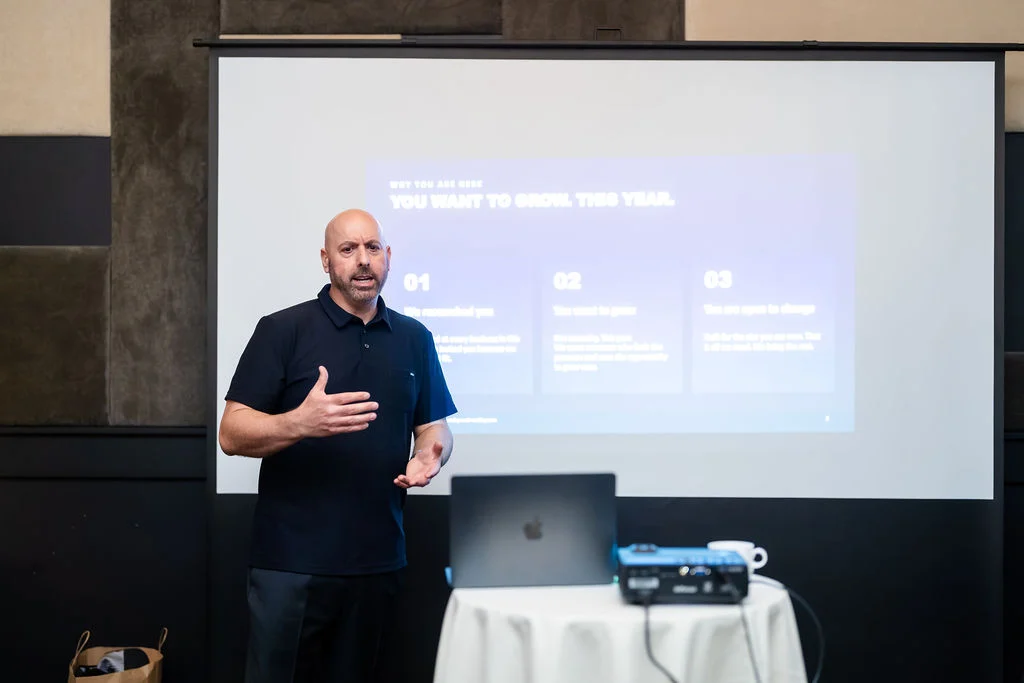
David explains the phases with a meeting room and a long table. The same idea is the heart of his TEDx Andrews talk.
The worker
You sit across the table from the client or your boss. They tell you what they want, and you do the work well. This phase builds the credibility that everything later needs.
The ally
You stand up, walk around the end of the table and sit beside them. People ask what you think before the decision, and your pay starts to reflect value instead of hours.
The consultant
You are still on the same side of the table. What changes is the room. They bring other people in to hear you, and you end up advising a whole leadership team.
From the chapter
How a mastermind event showed David his strength
Early in his career, David took part in a mastermind event. About fifty people broke into groups of six. Each person had thirty minutes to present what they did, then thirty minutes of feedback. David volunteered to go last. As each person presented, he offered insights, questions and constructive feedback.
When his turn came, he told the group that all the comments and analysis he had given them was what he does. They said he was the best one there at that. Then they helped him shape his message. One person said he was good at strategy and asked the right questions. Another said he saw things clearly and quickly. He still uses those phrases today.
David also built a personal advisory board. Once a month, he hosted a Saturday brunch with dim sum in a friend’s office, and each advisor could bring a guest. He ran that Business Brunch for two years. Later, he used AI to build a virtual advisory board inspired by his mentors. The AI does not speak for them. The tool helps him look at a decision from several sides, and he still makes the decision.
Sometimes other people see what you are best at before you can say the words yourself.
Put the chapter to work
Your next moves toward expert
Start with one or two of these this week.
- Decide which phase you are in today: the worker, the ally or the consultant.
- Document your wins and collect what people say about your work.
- Name the people on your personal advisory board, and the question each one would ask you.
- Follow up with three people you have let go quiet.
- At your next event, look for a few people you like instead of trying to meet everyone.
- Put every follow-up in a system, even a simple spreadsheet and a calendar block.
- If you practice a licensed profession, read your rules on words like expert and specialist before you use them.
From the full book
What The 45 Day Consultant adds
The Field Guide builds on David’s full book, The 45 Day Consultant. In the chapter titled “Becoming the Expert”, he writes:
“If you do not leave the house, nothing happens. Some mornings I do not feel like going to the networking event either. I go, because things only happen where people are.”
Watch David
Two TEDx talks on growth and leadership
David Mitroff, Ph.D. gives this chapter as a talk. Watch both of his TEDx talks below. Each video loads only when you press play.
How Leaders Create Luck
TEDx PurdueU, Purdue University. Watch on TED (opens in a new tab) Read the transcript
When Are You Good Enough to Become an Industry Expert?
TEDx Andrews, South Carolina. Watch on TED (opens in a new tab) Read the transcript
David can speak on this topic
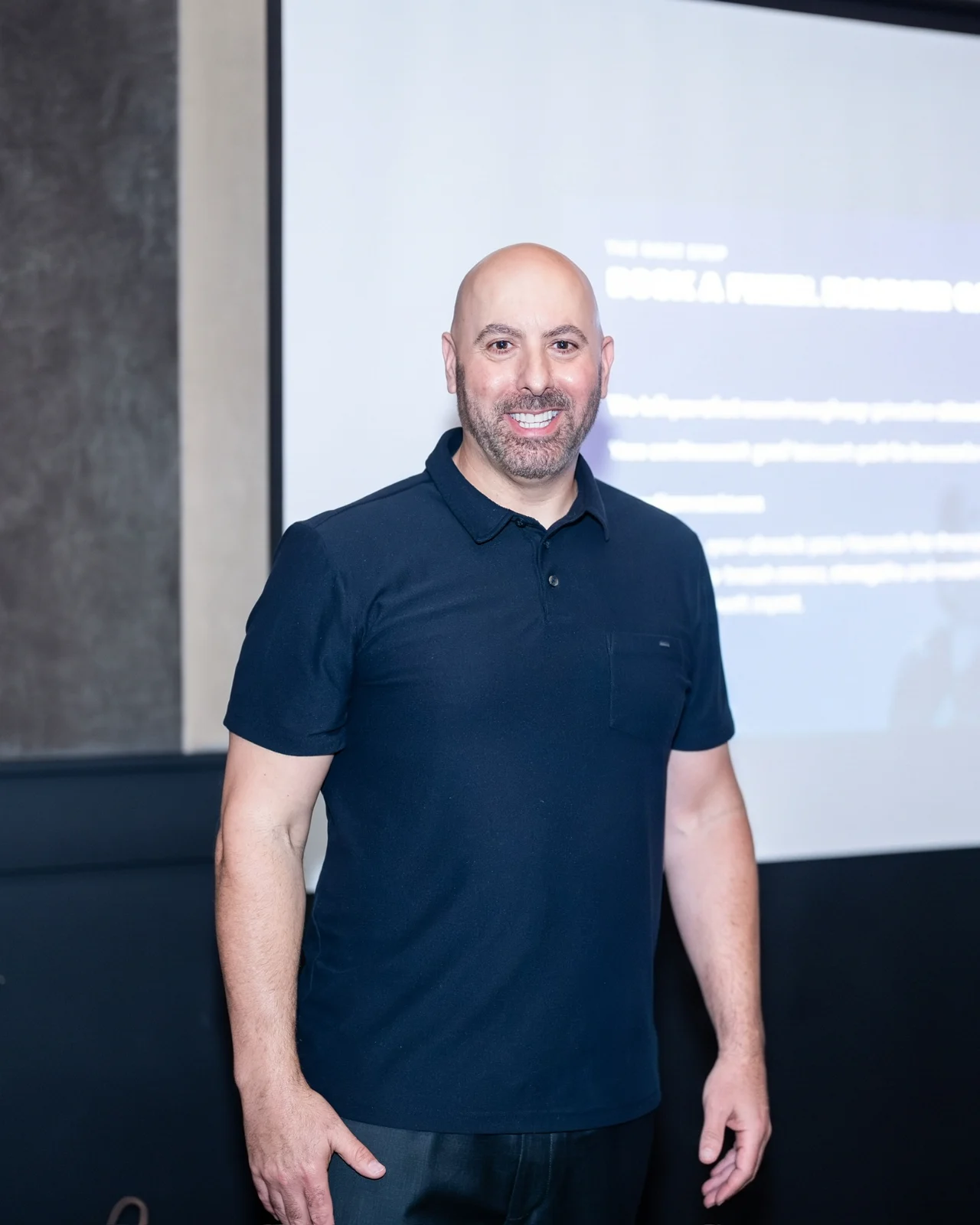
A keynote talk based on this chapter
When Are You Good Enough to Become an Industry Expert? is also a keynote talk David gives, and the subject of his TEDx Andrews talk. Audiences take home the three phases and a clear next step to reach the one after theirs.
Every chapter of The 45 Day Consultant Field Guide is also a keynote talk. David gives these talks to companies, associations, conferences and leadership teams.
David also gives a related keynote, Branding Through Authenticity: How Being You Is Becoming the Best Way to Market, on building a brand that sounds like you, finding your target market and how long it takes to become known as an expert. See his keynote programs (opens in a new tab)
A real result
How this idea worked for a client
At Granite Wellness Centers, our team wrote the application for a new $2 million grant, trained the executive leadership team and led an all-staff training. That is the third phase at work: advising a whole leadership team, not one person.
 NonprofitA new $2 million grant
Granite Wellness Centers won a new $2 million grant. We wrote the grant application, trained the executive leadership team and led an all-staff training.
Read the case studyTestimonials
What our clients say
“Right away things started to happen. We have managed to fill up our seminar rooms again, he has found us great new staff, and business is booming. More than a marketing consultant, he is also a business confidant […]”

“David was very helpful with structuring online marketing for my business. He presented clear ideas and strategy that was totally relevant for my dental office. His innovative thinking helps me to think outside the box.”
“We worked with Piedmont Avenue Consulting to implement new sales processes and launch a successful customer loyalty program. As a result, we have dramatically increased revenues from catering events and ‘front of mind’ sales.”

How it works
How we work: call, assessment, plan.
Schedule a call
Tell us where the business is today and where you want it to be.
Assessment
We look at your numbers, marketing, team and operations.
90-day plan
Three to five initiatives with owners and dates, plus a 12-month marketing calendar.
Ongoing initiatives
We stay on as a long-term partner and keep the plan moving.
We start with an assessment, agree on the priorities that matter most, and define what success looks like, then build a 90-day plan for ongoing work.
On the blog
Articles that go deeper on this chapter
Keep reading
More chapters from the Field Guide



Questions
Questions owners ask
How long does becoming an industry expert take?
David Mitroff, Ph.D. says roughly three years of knowledge, belief and action. The time is three years of doing, not three years of waiting.
What are the three phases of becoming an expert?
David Mitroff, Ph.D. names three phases: the worker, the ally and the consultant. Each phase moves you closer to the client’s side of the table and closer to the decisions.
Can licensed professionals call themselves experts?
Rules differ by profession and by state. David Mitroff, Ph.D. advises attorneys, physicians, dentists and other licensed professionals to read their rules on words like expert and specialist before using those words in advertising.
What is a personal advisory board?
A personal advisory board is a small group of trusted people who give you feedback on ideas and decisions. David Mitroff, Ph.D. ran a monthly Business Brunch for two years with his own advisors.
Where can I watch the TEDx talk on becoming an industry expert?
David Mitroff, Ph.D. gave the talk When Are You Good Enough to Become an Industry Expert? at TEDx Andrews. Watch the talk on the TEDx talk page.
Does networking help someone become an industry expert?
Yes, when the goal is meeting people you like, not selling. David Mitroff, Ph.D. counted three good business cards from an event as a success, because people connect you to people like themselves.
How can Piedmont Avenue Consulting, Inc. help a professional build a reputation?
Piedmont Avenue Consulting, Inc. starts with a call, then a paid assessment, then a 90-day plan with three to five initiatives and a twelve-month marketing calendar that grows visibility and trust.
Work with us
Schedule a call about building your expertise
Every engagement starts with an assessment and a shared definition of success. We start with an initial consultation and a paid assessment, then build a ninety-day plan and a twelve-month marketing calendar.
One conversation and a clear next step.