
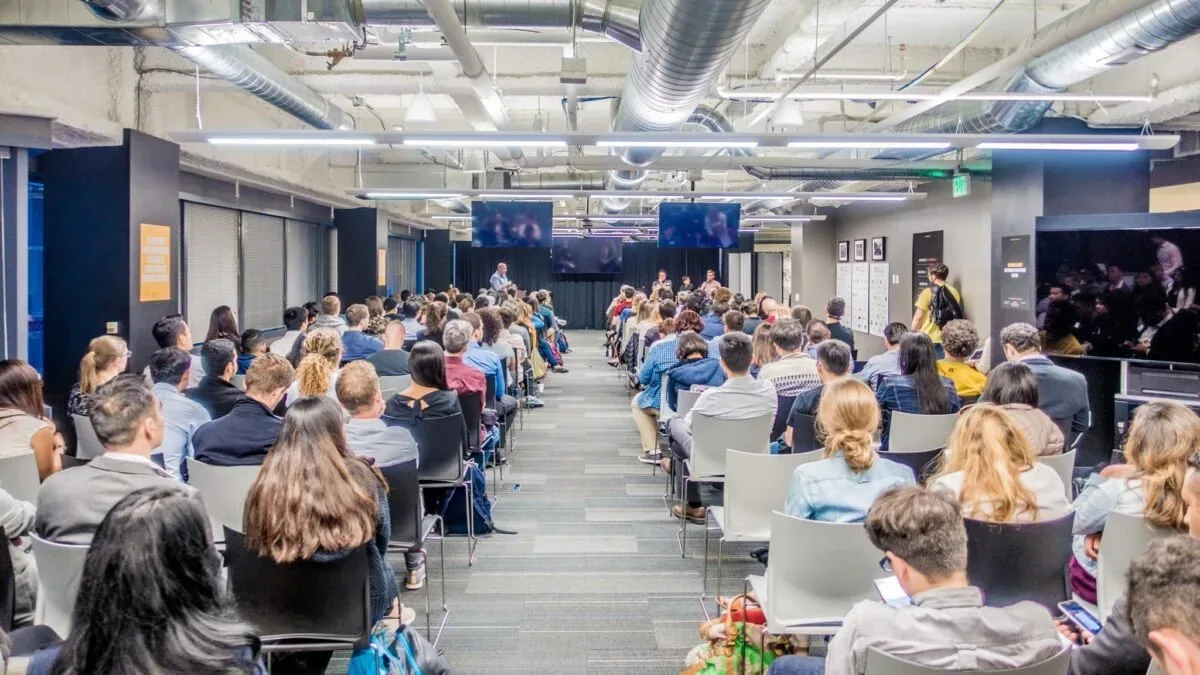


A call with David Mitroff, Ph.D.
Talk through your business with David
Quick answer
Leaders create luck by being prepared, being proactive about where they show up and staying connected, so more good chances find them and they are ready when one does. Piedmont Avenue Consulting, Inc. works with owners in the San Francisco Bay Area, Los Angeles, Orange County and New York on networking, events and growth.
Key takeaways
- In his TEDx talk, David Mitroff, Ph.D., explains that luck is manufactured through momentum and steady action.
- The luckiest people are often the most prepared, the most proactive and the most connected, and each one can be practiced.
- Most lucky breaks come through people, so months of staying in touch can open a door you would not find alone.
- Leaders buried in tasks miss opportunities, so systems and delegation leave room to say yes when the right moment comes.
The business owners who seem luckiest are usually the ones who have put themselves in the most places where good things can happen. At Piedmont Avenue Consulting, Inc., we work with owners in the San Francisco Bay Area, Los Angeles, Orange County and New York to start, grow and scale their businesses. David Mitroff, Ph.D., gave a TEDx talk on this idea, titled “How Leaders Create Luck,” and it shapes how we work with clients every day.
Luck is manufactured
Most people talk about luck as if it simply happens. A big client calls out of nowhere. A chance meeting leads to a partnership. A friend of a friend makes an introduction. Those moments feel random, and they rarely are. In The 45 Day Consultant, David describes the core idea of his TEDx talk:
“Luck is manufactured through momentum. You have to consistently put yourself in situations where ”coincidences“ can happen.”
David Mitroff, Ph.D., in The 45 Day Consultant, Chapter 6: How to Attract Customers
He also sums up who tends to get lucky:
“In essence, the luckiest people are often the most prepared, the most proactive, and the most connected.”
David Mitroff, Ph.D., in The 45 Day Consultant, Chapter 18: Putting Your Ideas into Action
Prepared, proactive and connected. Each one is something a leader can work on.
Visibility, trust and timing
In The Event Effect, David breaks luck down into three parts you can actually work on:
“From the outside, luck looks random. Up close, it is usually three things: visibility, trust and timing.”
David Mitroff, Ph.D., in The Event Effect, Chapter 3: How Leaders Create Luck
- Visibility: people cannot invite you, hire you or introduce you if they do not know you exist. Every invitation, article and talk puts your name in front of someone new.
- Trust: people trust the person who brings good people together and follows through. Useful events and real follow-up build it, one contact at a time.
- Timing: you cannot control when someone needs what you do. You can make sure that when the moment comes, you are the one they remember.
Here is how the three work together in a real business. A bookkeeper writes a short monthly note for local restaurant owners. That is visibility. She answers every reply and sends one useful idea each time. That is trust. When a restaurant owner’s bookkeeper retires in the middle of tax season, the owner already has her name in the inbox. That is timing, and from the outside it looks like luck.
If you want to hear David tell it in his own words, you can watch the TEDx talk on how leaders create luck.
Be prepared when the moment comes
Opportunities often show up with little warning: an introduction to a decision-maker, a request for a proposal due Friday, a reporter looking for a quote. The leaders who benefit are the ones ready to move.
- Know your story. A clear, short description of what you do and who you serve, ready to share in any setting.
- Keep your materials current. An up-to-date website, a one-page overview, a bio and a few case studies you can send the same day.
- Have a simple next step ready. A booking link or a short call you can offer on the spot.
- Know your numbers. If an opportunity needs a quick decision, you know what you can take on.
Preparation turns a lucky break into business. Without it, the moment passes.
David uses a story from the river to make the point:
“My friends and I kayak, and we rarely hit rocks. That isn’t luck. We check the app, we know the stretch ahead is called the toilet bowl, and we go around it. Anybody watching from the bank would say we were having a lucky run.”
David Mitroff, Ph.D., in The Event Effect, Chapter 3: How Leaders Create Luck
Study the list before you walk in
The same habit works before any event, meeting or call. The host who seems to make the perfect introduction at the perfect moment usually looked at the guest list the night before. Before your next event:
- Read the list of who is coming, if the host shares one, and pick three people you want to meet.
- Look each one up so you know what they do and what they care about.
- Think of one person you could introduce them to, in the room or later.
- Know your own next step, so a good conversation can turn into a coffee on the spot.
Be proactive about where you show up
You cannot control who calls you. You can control how many rooms you walk into and how many conversations you start. David’s early approach to networking was simple:
“When I was starting out, I went to every event I could. I didn’t go to sell. I went to meet people I liked. If I got three business cards of people I wanted to follow up with, I considered it a success and left.”
David Mitroff, Ph.D., in The 45 Day Consultant, Chapter 3: Becoming an Expert
That habit, repeated week after week, created the network that later became The Professional Connector®. Over hundreds of events, those small, steady actions added up.
A few practical ways to be more proactive:
- Attend one event a week where your future clients or partners gather.
- Host your own event each month or quarter, so people come to you.
- Say yes to speaking. A talk puts you in front of many people at once.
- Reach out first. Congratulate people on news, share an article or make an introduction.
Put your ideas where the right people can find them
Events are one way to be seen. Writing and speaking are others. In The Event Effect, David tells how he set out to get to know people in the yacht world. He connected with brokers and dealers on LinkedIn and wrote articles about yachts where those people would see them. Then the owner of a large yacht brokerage called and hired him as a consultant. He sums up what happened:
“From the outside, it looked lucky. It was not. I put myself where the right people could see me, I gave them something worth reading, and the invitation came back.”
David Mitroff, Ph.D., in The Event Effect, Chapter 3: How Leaders Create Luck
You can do the same in your own field:
- Pick one group you would like to know better, such as general contractors, dentists or hotel managers.
- Connect with a handful of them on LinkedIn this week.
- Write one short article about a problem they face, and share it where they gather.
- Offer a talk at their association or a local group they attend.
- Hold open office hours once a month, so people have an easy reason to stop by. Our guide on how to host open office hours covers the simplest version.
Every article, talk and open door is an invitation that keeps working after you send it. Over time, that is also how people become known as the expert in their field. Our guide on how to become the expert people call covers the rest of that path.
Be connected, and stay connected
Most lucky breaks come through people. The more people who know what you do and remember you well, the more often opportunities find you.
David tells a story in The Event Effect about one such moment:
“I met someone at an event in San Francisco who added me on LinkedIn afterward. We stayed in touch, and I kept inviting them to things. Months later, they introduced me to their sister-in-law’s restaurant group. That one introduction opened a door I wouldn’t have found on my own. That’s not luck.”
David Mitroff, Ph.D., in The Event Effect, Chapter 14: Follow-Up Is Where the Value Is
From the outside, that introduction looks like luck. In reality, it came from months of staying in touch with someone who had no reason to hire him.
- Follow up after every meeting with a short note.
- Keep a list of your most important relationships and check in regularly.
- Invite people to things, even when you expect they cannot come.
- Make introductions for others. People remember who connected them.
Host the room
The most connected person at any event is the host, because the host made the room. You do not need a big event to be the host. Invite three people to coffee and you are the host. Bring a guest to a conference reception and introduce them around, and you are the host. When you host, people follow up with you, which turns the usual networking problem on its head. Our point of view on why to host the room instead of working the room explains how to start.
Staying connected also depends on what happens after the first meeting. Our guide to a follow-up system that wins more business lays out a simple rhythm you can keep.
Invite the people who probably cannot come
One of David’s habits shows how small gestures build relationships. When he has access to something special, such as great seats at a game or a private tasting, he invites people who will probably say no. He explains why:
“I keep a list of high-level people for exactly these moments, and I invite them knowing most of them will not be able to go. They text me back: ”Thank you so much for thinking of me.“ That is the whole point.”
David Mitroff, Ph.D., in The Event Effect, Chapter 2: It Works Even If Nobody Comes
The invitation itself builds goodwill. The next time that person needs someone you know, they think of you.
Want more good breaks for your business?
Schedule a call with David Mitroff, Ph.D. We look at where your next clients, partners and opportunities are likely to come from, and how to put yourself in front of them more often.
Or call David at 510-761-5895, 8 AM to 8 PM, seven days a week.
Find out what you are good at in front of other people
Luck also comes from being clear about your strengths. Early in his career, while he still had a corporate job, David attended a mastermind where each person presented their business. He asked to go last. After a day of offering feedback to everyone else, he described what he had been doing all day and said it was what he wanted to do more of. The group agreed: he asked the best questions, he knew something about every business in the room and he knew someone who could move each of them forward.
That moment shaped the work he still does today. Sometimes other people see your strengths more clearly than you do, and you only find out by showing up and contributing.
What luck looks like in different businesses
The habits are the same in every industry. What changes is where you show up and whom you invite.
- A restaurant owner invites the office managers from nearby companies to a tasting on a slow night. A few months later, one of them books the private room for a holiday party and tells the story as a lucky find.
- A general contractor takes architects on a site tour of a finished job. When one of them has a client ready to build, the contractor is the first call.
- An accountant teaches a short workshop on year-end planning at the local chamber. The questions afterward turn into three new conversations.
- A boutique owner hosts a small evening for neighboring shop owners. Those owners start sending customers her way, because now they know what she carries.
In each case, the break came through a person who already knew the owner, and the owner had made that possible weeks or months earlier.
Consistency is the real advantage
None of these habits is a secret. Most people know they work. The difference is who keeps doing them. David writes about this in The 45 Day Consultant:
“What separates people on that path is consistency: doing the work, following up, and showing up again next month. Most people do not do the work, and that is the whole advantage.”
David Mitroff, Ph.D., in The 45 Day Consultant (2026 edition), Chapter 3: Becoming the Expert
Momentum takes time. Picture a new business with a booth at the same community fair every year. The first year, the owner spends the day explaining who they are. The second year, people say they have seen the booth before. By the third year, people stop by because they are already customers. Nothing about the booth changed. Three years of showing up did.
That is why a weekly habit beats a burst of effort. One coffee invitation a week adds up to dozens of conversations a year, and some of those conversations lead to the breaks that look lucky later.
Protect your time so you can say yes
Time is the one resource you cannot get more of. David makes this point in the same TEDx talk:
“You can pay to skip the line on the freeway, at the airport, and at Disneyland, and people do it for one reason. Time is the only thing you cannot get more of.”
David Mitroff, Ph.D., in The 45 Day Consultant, Introduction
Leaders who are buried in tasks miss opportunities because they have no room to act on them. Building systems, delegating and clearing the low-value work off your calendar is part of creating luck, because it leaves you free to say yes when the right moment comes. You can read more about how we approach streamlining operations.
What do you do with a bad break?
Leaders who create luck also handle setbacks differently. A lost client, a cancelled event or a slow quarter can feel like bad luck. The same habits that create good breaks soften the bad ones.
- Ask what the setback reveals. A lost client may point to a gap in service that, once fixed, keeps others from leaving.
- Tell your network. People cannot send opportunities your way if they do not know you are looking.
- Use the extra time. A slow month is a chance to write, call past clients and attend more events.
- Stay visible. Leaders who disappear during hard times are forgotten. Those who keep showing up are remembered when things turn around.
Habits that push luck away
Some habits quietly shut the door on good breaks. Watch for these:
- Going quiet when work is good. The best time to stay visible is when you do not need anything.
- Only reaching out to sell. People stop opening messages that only ever ask for something.
- Skipping the follow-up. A great conversation with no next step fades within a week.
- Saying no to every invitation. You cannot meet new people from behind your desk.
- Keeping your work to yourself. If nobody knows what you are good at, nobody can send you the right opportunity.
How to measure it
Luck sounds hard to measure. The habits behind it are easy to count. Each month, write down:
- Invitations sent, to coffees, events, calls and dinners.
- Introductions made between other people.
- New conversations started.
- Opportunities that came in, and where each one started.
Then try an exercise from The Event Effect. Write down one lucky break you have had in your career and trace it back. Who introduced you? Where did you meet them? Most owners find the trail starts with an invitation, a follow-up or a room they almost skipped. Once you see that pattern in your own history, it gets much easier to repeat on purpose.
A weekly luck plan
Turn the idea into a habit with a short weekly checklist:
- Meet one new person at an event, a meeting or online.
- Follow up with three people you have met recently.
- Make one introduction between two people who would benefit from knowing each other.
- Share one useful idea in an article, a post or a newsletter.
- Invite someone to something, whether a coffee, an event or a call.
- Block one hour to work on the business instead of in it.
None of these takes long. Done every week for a year, they create hundreds of new chances for good things to happen.

How we work with owners on growth
We work with owners on the systems, relationships, events and marketing that keep opportunities coming. In the first ninety days of working together, our job is to find our fee, which means making or saving you more than you pay us. We start with an initial consultation and a paid assessment, then build a ninety-day plan and a twelve-month marketing calendar. Learn more about our business consulting, event marketing and lead generation work, and read more about David.
If you want to see how that first step works, read what happens in a business assessment and what comes after it.
From David’s books

The 45 Day Consultant Field Guide
This is also in David’s book, in Chapter 14, “How Leaders Create Luck”. Each chapter page sums up the idea, the story behind it and what to do next.
Take action
Your next three steps
- Keep a short description of what you do, a current bio and a booking link ready to share.
- Meet one new person, follow up with three and make one introduction every week.
- Schedule a call with Piedmont Avenue Consulting, Inc. to map where your next opportunities are likely to come from.
In their own words
What clients say about working with us
“Right away things started to happen. We have managed to fill up our seminar rooms again, he has found us great new staff, and business is booming. More than a marketing consultant, he is also a business confidant […]”
 David RosenbaumPartner, McDowall Cotter, APC

“I have known and worked with David for over 15 years, across numerous companies and ventures. He helped us build and promote Clark Meyers. He is my go-to marketing guru and has introduced me to the resources I need to grow.”
 Conor MeyersCo-Founder, Clark Meyers PC

Read more client stories or see our case studies.
Frequently asked questions
Frequently asked questions
Can you create your own luck in business?
Yes. Much of what looks like luck comes from preparation, steady action and strong relationships. Leaders who show up often, stay in touch and are ready to act get more good breaks.
What is the TEDx talk “How Leaders Create Luck” about?
In the talk, David Mitroff, Ph.D., explains that luck is manufactured through momentum: people who consistently put themselves in the right situations, prepared and connected, create more chances for good things to happen.
How does networking create luck?
Every relationship is a path to an opportunity you cannot see yet. Following up, staying in touch and making introductions for others keep those paths open.
How do owners with full calendars make time for this?
Start small: one new contact, three follow-ups and one introduction a week. Building simple systems and delegating routine work frees up the time to act on opportunities.
Does Piedmont Avenue Consulting, Inc. work on networking and growth plans?
Yes. Piedmont Avenue Consulting works with owners on events, introductions, outreach, operations and marketing plans that bring in new opportunities. Schedule a call with David to talk about your business.
What are the three parts of luck in business?
In The Event Effect, David Mitroff, Ph.D., describes luck as visibility, trust and timing. People need to know you exist, believe in you and remember you at the moment they need what you do.
How soon do these habits pay off?
Some pay off next week, with a single introduction or follow-up. Most build over months and years, which is why a small weekly habit kept for a long time works better than a burst of effort.
Let’s grow together.
Schedule a call with David. We will look at where your next opportunities are likely to come from and how to meet them more often.
Or call David at 510-761-5895, 8 AM to 8 PM, seven days a week.
About the author
David Mitroff, Ph.D. wrote this article. He is the founder of Piedmont Avenue Consulting, Inc., a business and marketing consulting firm serving the San Francisco Bay Area, Los Angeles, Orange County and New York. Meet David or read more articles by David.
- Founder and Business Growth Strategist at Piedmont Avenue Consulting, Inc.
- Doctorate in clinical psychology, with additional coursework in business administration, law and culinary arts; bachelor’s and master’s degrees.
- Taught marketing and entrepreneurship at the University of California, Berkeley for more than seven years.
- Author of several books, including The 45 Day Consultant, The 45 Day Consultant Field Guide, Online Business Growth Strategies, The Event Effect: Invite, Don’t Sell, and Law Firm Business Growth Strategies (Second Edition).
- Started seven companies; previously owned and ran a recruiting and staffing company.
David works with a small team of consultants and specialists on every engagement. Meet our team or read about Piedmont Avenue Consulting, Inc.