


A call with David Mitroff, Ph.D.
Talk through your business with David
Quick answer
In Walnut Creek, know whether your customers come for downtown, work at an office district or live in the surrounding Contra Costa County towns, then meet them where they already gather. Claim every listing with the same details, name your part of town, join the groups that meet in person and pair evening events with learning. Piedmont Avenue Consulting, Inc. works with Walnut Creek owners on marketing, events, partnerships and growth.
Key takeaways
- Walnut Creek holds three markets in one city: downtown shoppers, office district professionals and customers from the surrounding towns.
- Customers from nearby towns search by town name, so a business that serves them names those towns on its website and listings.
- Mixers paired with short workshops let guests meet people and leave with something they can use the next morning.
- Downtown businesses compete with well-known brands, so local service, real photos and a strong review profile matter.
Growing a business in Walnut Creek means serving a downtown shopping destination, a business park and the commuters who pass through two BART stations every day. At Piedmont Avenue Consulting, Inc., we are a business and marketing consulting firm that works with owners in the San Francisco Bay Area, Los Angeles, Orange County and New York to start, grow and scale their businesses. David Mitroff, Ph.D., has hosted workshops and mixers in Walnut Creek over the years, and this guide brings together what we see there and the city facts that shape a plan.
Walnut Creek at a glance
- A city of 70,127 people at the 2020 census, in Contra Costa County in the East Bay.
- A long history: first settled in 1849 and incorporated in 1914 as the eighth city in Contra Costa County. Railroad service arrived in 1891 and spurred its growth.
- A retail center: Broadway Plaza opened downtown in 1951 as the county’s first major shopping center.
- Local headquarters, including Central Garden & Pet and CSE Insurance Group.
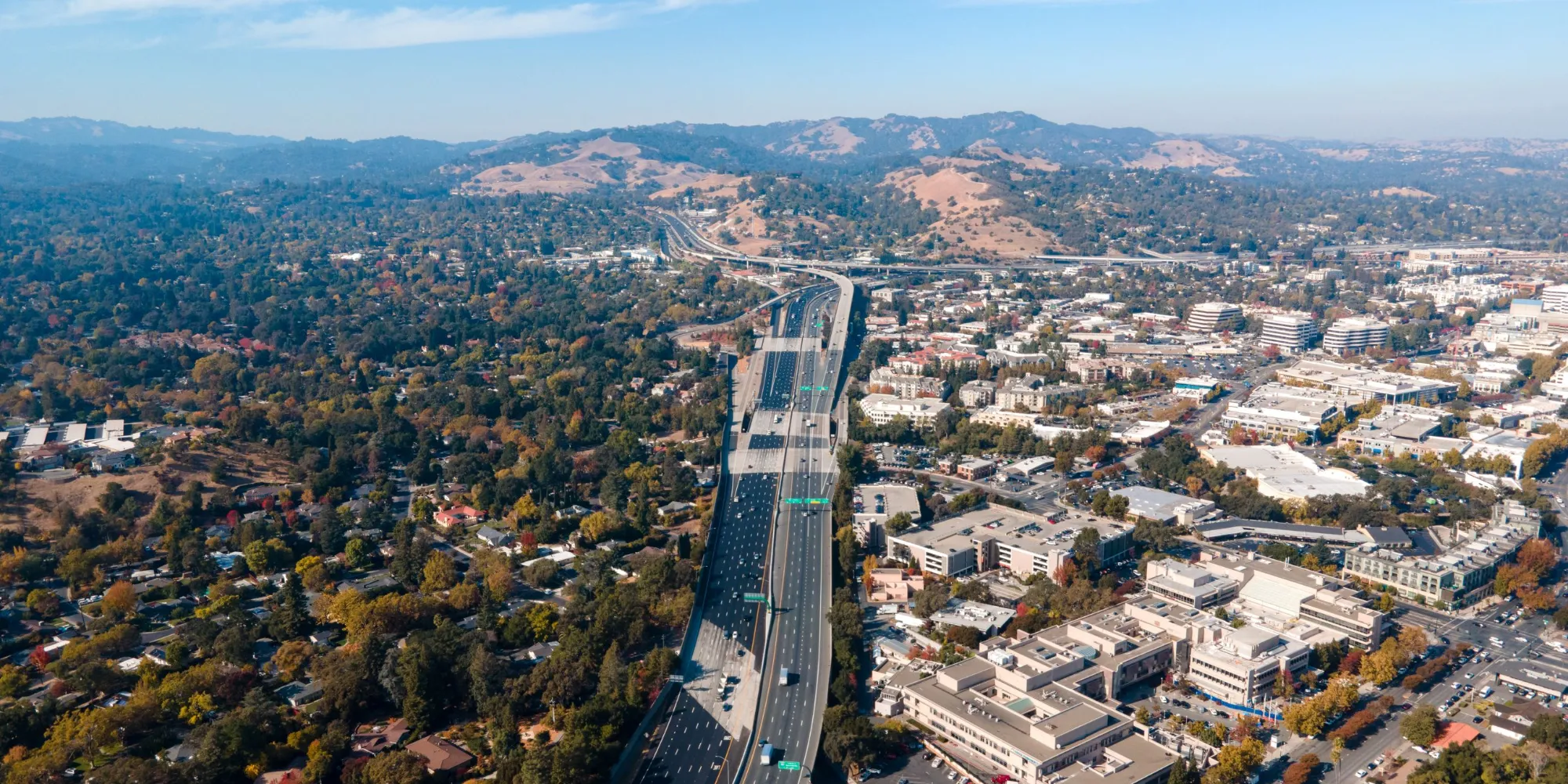
- Well connected: two BART stations, Walnut Creek and Pleasant Hill/Contra Costa Centre, at the junction of Interstate 680 and State Route 24, with County Connection buses and city shuttles.
- Landmarks: Broadway Plaza, the Lesher Center for the Arts, the Iron Horse Trail and nearby Mount Diablo State Park.
City figures are from public sources read on Nov 23, 2026.
Three markets in one city
Downtown. Broadway Plaza and the streets around it draw shoppers and diners from across the county. A downtown business competes for attention with well-known brands, so local service, real photos and a strong review profile matter.
The office districts. Shadelands Business Park and the offices near the BART stations bring professionals in during the day. They are customers for lunch, services and business-to-business work, and they are the guests for breakfast meetings and after-work events.
The surrounding towns. Many Walnut Creek customers live in Lafayette, Danville, Pleasant Hill, Concord and the towns along Interstate 680. They search by town name, so a business that serves them names those towns on its website and listings.
What it means for an owner: decide which of the three you serve first. Our definition of a target market shows how to narrow the focus.
A playbook for each market
Once you know which market you serve first, the plan gets much simpler. Here is what we work on with owners in each one.
If you serve downtown
Downtown shoppers decide quickly, often on a phone, often while they are already walking nearby. Your job is to be easy to find, easy to trust and easy to visit.
- Make your listing match the street. Hours, photos and the entrance in your photos match what a shopper sees on arrival.
- Use real photos. Show your own space, your own team and your own products. Shoppers can tell the difference from stock images.
- Ask for reviews in person. The moment a customer thanks you is the moment to ask. Make the link easy with a card at the register.
- Give people a reason to stop in this week. A tasting, a demonstration or a short class turns foot traffic into a visit.
That last idea is one David writes about in The Event Effect. A shop already doing tastings or demonstrations can simply announce them as open hours and invite people in:
“You are already there. Now you are inviting people to join you.”
David Mitroff, Ph.D., in The Event Effect, Chapter 2: It Works Even If Nobody Comes
Our guide on how to host open office hours shows how to set one up for a shop, studio or office.
If you serve the office districts
Professionals at Shadelands Business Park and near the BART stations have short windows of time: before work, at lunch and right after.
- Plan around the workday. Breakfast meetings, lunch-and-learns and after-work events fit their calendars.
- Speak to the office manager. The person who orders lunch and books the team outing is often the one who decides.
- Offer business-to-business value. A short talk on a problem their company faces earns more attention than a flyer.
- Make the location easy. Mention the nearest BART station and parking on every invitation.
If you serve the surrounding towns
Customers in Lafayette, Danville, Pleasant Hill, Concord and the towns along Interstate 680 search by the name of their own town. Your website and listings need to meet them there.
- Give each town you serve its own mention, in a sentence on your service pages, in your listings and in your photo file names.
- Show work from those towns, with the customer’s permission, such as a finished kitchen in Danville or an event in Lafayette.
- Partner with businesses based there, so a trusted local name introduces you.
- Hold some events closer to them, or make the trip to Walnut Creek worth it with a talk or workshop.
Our local guides for Danville, Concord and Pleasant Hill go deeper into each of those towns.
Where we have worked in Walnut Creek
Workshops. David has led business workshops in Walnut Creek, including a workshop on growing a consulting business at Walnut Creek City Hall, a business event marketing workshop downtown and a networking and social media policy workshop for attorneys. He has also been the featured speaker at a business workshop presented by a local firm.
Mixers with a lesson. The Professional Connector® has paired after-work networking mixers in Walnut Creek with short workshops on business growth and search engine optimization. Guests come to meet people and leave with something they can use the next morning.
An ongoing group. David organizes a Walnut Creek social and business networking group on Meetup, which keeps a steady calendar of local gatherings.
Where the events started: a café table
Walnut Creek holds a special place in how David’s events began. In The Event Effect, he describes the very first gatherings, long before the larger rooms and the regular crowds:
“I would sit at a café in Walnut Creek and let people know: “I’ll be here talking about business and marketing. Come by.” Nobody came. Then one person came. Then another.”
David Mitroff, Ph.D., in The Event Effect, Chapter 2: It Works Even If Nobody Comes
The lesson for any Walnut Creek owner is the same one he took from that table. Pick a regular time and place, tell people you will be there and keep showing up. A small room on the third try is still a room, and the people who come early often become the ones who bring others.
Each city has its own rhythm, which is why we plan Walnut Creek events on their own calendar:
“What fills a room in San Francisco on a Tuesday may not work in Irvine.”
David Mitroff, Ph.D., in The Event Effect, Chapter 18: What Events Cost
Growing a business in Walnut Creek?
Schedule a call with David Mitroff, Ph.D. We look at where your customers come from and the first steps that bring in more of them.
Or call David at 510-761-5895, 8 AM to 8 PM, seven days a week.
Five ways to grow in Walnut Creek
- Claim and match every listing. Your Google Business Profile, Yelp page and directories carry the same name, address, phone number and hours. Shoppers downtown often search on their phones while they walk.
- Name your town and your neighbors. Use “Walnut Creek” plus the nearby towns you serve on your website, in your listings and in photo file names. Our guide on how to measure marketing results shows how to see which towns your customers come from.
- Teach something. A short workshop gives people a reason to come on a weeknight. Pair it with time to talk afterward. Our guide on how to host a panel discussion covers one format.
- Partner with the businesses your customers already use. A downtown retailer, an insurance office and a financial planner can all serve the same families. Our definition of a strategic partner shows how to start.
- Show up in person, consistently. Walnut Creek has active chambers, professional groups and networking events. Pick two and attend regularly. Our guide on business networking tips covers how to work a room without selling.
Planning an event in Walnut Creek
Walnut Creek is easy to reach, with two BART stations, two highways and County Connection buses. That makes it a natural meeting point for guests from across Contra Costa County. A few things make an event here work.
Pick the right format
- The mixer with a lesson. A short talk on one useful topic, followed by time to talk. This is the format The Professional Connector® has used in Walnut Creek.
- The breakfast or lunch briefing. For professionals in the office districts who cannot stay late.
- The in-store evening. For downtown shops that want customers to see the space, meet the team and bring a friend.
- The workshop for one profession. Like the policy workshop for attorneys, a room of people in the same field gives everyone something in common to talk about.
Invite from the whole region
Your guest list does not end at the city limits. Invite customers and partners from the towns your business serves, and mention how to get there by BART and by car.
Follow up the next morning
Send a short thank-you, share the key points from the talk and include the date of the next gathering. A guest who leaves with something useful and hears from you the next day is far more likely to return.
Four Walnut Creek businesses, four different plans
Here is how the same city looks from four different kinds of business.
- A downtown boutique. Competes for attention with well-known brands nearby. Its plan centers on a strong review profile, real photos, a monthly in-store evening and a partnership with a nearby salon or café that serves the same shoppers.
- An accounting firm near a BART station. Serves owners and professionals across the county. Its plan centers on lunch briefings at tax time, partnerships with financial planners and attorneys, and service pages that name the towns its clients come from.
- A home services company. Works in homes along Interstate 680 more than in Walnut Creek itself. Its plan centers on town-by-town pages, photos of finished work in each town and introductions from real estate agents and property managers.
- A restaurant downtown. Full on weekends and quieter early in the week. Its plan centers on weeknight events, catering for the office districts and a calendar that fills slow nights months in advance.
Show up long enough to be recognized
The fifth way to grow, showing up in person, takes the longest to pay off and lasts the longest once it does. David describes a new business with a booth at a community event. The first year, they explain who they are. The second year, people say they have seen them. By the third year, people walk up as customers.
“Nothing changed about the booth. What changed was three years of showing up.”
David Mitroff, Ph.D., in The Event Effect, Chapter 3: How Leaders Create Luck
Choose your two groups, put their meetings on the calendar for the whole year and treat them as appointments.
A year on the calendar
A Walnut Creek business does well with a simple twelve-month plan that names what happens each quarter. Here is one way to lay it out:
- First quarter: clean up every listing, refresh photos and plan the year’s events and partner meetings.
- Second quarter: host a workshop or mixer, and start one new partnership with a business that serves the same customers.
- Third quarter: reach into one of the surrounding towns with a town page, a local partner and an event closer to those customers.
- Fourth quarter: host a year-end gathering for customers and partners, ask for reviews and set next year’s plan.
Our guide on how to build a marketing calendar walks through each month.
Common mistakes Walnut Creek owners make
- Trying to serve all three markets at once. A message for downtown shoppers, office professionals and families in five towns ends up speaking to none of them.
- Listings that disagree. Different hours or phone numbers across Google, Yelp and directories cost calls from shoppers who are standing nearby.
- Leaving out the surrounding towns. A website that only says “Walnut Creek” misses customers who search by their own town name.
- Showing up once. One mixer is a start. A year of the same two groups builds the relationships.
- Events with no reason to come. A weeknight invitation needs a topic, a guest speaker or a clear benefit.
How to tell what is working
Ask every new customer where they live and how they found you, and write it down. After three months, you will see which towns and which sources bring in your best customers. Our guide on getting found on Google, Yelp and directories shows how to use those listings to see calls, direction requests and website visits by month.
Track a short list:
- New customers by town.
- New customers by source, such as search, a partner, an event or a walk-in.
- Reviews received each month.
- Guests at each event, and how many came back.
- Introductions from partners.
What to do this week
- Decide which of the three markets you serve first.
- Check that your name, address, phone and hours match on every listing.
- Add the surrounding towns you serve to your website and listings.
- Choose two local groups and put their next meetings on your calendar.
- Sketch one event for the next quarter: format, topic and guest list.
Nearby cities to reach
Walnut Creek owners often serve customers across the East Bay:
- Lafayette and Orinda to the west along State Route 24.
- Danville and San Ramon to the south along Interstate 680.
- Pleasant Hill and Concord to the north.
- Oakland over the hills. Our story on growing a small business in Oakland shows where we started.
A business that serves several of these cities works best with a clear order: the home market first, then one nearby town at a time. Add a town to your website, listings and partner list only when you can serve it well.

How we work with Walnut Creek owners
We look at which part of the city and the surrounding towns a business serves, then build the listings, website, events, partnerships and calendar that bring in more of the right customers. We start with an assessment, agree on the priorities that matter most, and define what success looks like, then build a 90-day plan for ongoing work. We start with an initial consultation and a paid assessment, then build a ninety-day plan and a twelve-month marketing calendar. Learn more about our business consulting services.
Take action
Your next three steps
- Decide whether you serve downtown, the office districts or the surrounding towns first.
- Use Walnut Creek plus the nearby towns you serve in your listings and photo file names.
- Pick two local chambers or professional groups and attend them regularly.
In their own words
What clients say about working with us
“McDowall Cotter started working with David Mitroff and right away things started to happen. We have managed to fill up our seminar rooms again, he has found us great new staff to run our marketing department, and business is booming. More than a marketing consultant, he is also a business confidant, helping us keep course on our goal to growth.”
 David RosenbaumPartner, McDowall Cotter, APC

“I have known and worked with David for over 15 years, across numerous companies and ventures. He helped us build and promote Clark Meyers. He is my go-to marketing guru and has introduced me to the resources I need to grow.”
 Conor MeyersCo-Founder, Clark Meyers PC

Read more client stories or see our case studies.
Frequently asked questions
For local events, programs and how we work with owners there, see our business consulting page for Walnut Creek.
Frequently asked questions
What drives the Walnut Creek economy?
The Walnut Creek economy is driven by downtown retail around Broadway Plaza, office districts such as Shadelands Business Park, local headquarters such as Central Garden & Pet and CSE Insurance Group, and customers from the surrounding Contra Costa County towns.
How does a small business stand out in Walnut Creek?
A small business stands out in Walnut Creek by choosing which local market to serve first, naming Walnut Creek and the nearby towns in the business listings and website, partnering with businesses that serve the same customers and showing up at local groups in person.
Where do Walnut Creek business owners network?
Walnut Creek business owners network through chambers of commerce, professional groups, Meetup groups and evening events, and The Professional Connector® has hosted mixers and workshops in Walnut Creek.
Is Walnut Creek easy to reach for events?
Walnut Creek is easy to reach for events because the city has two BART stations, sits at the junction of Interstate 680 and State Route 24, and has County Connection bus service.
How does a Walnut Creek business reach customers in nearby towns?
Name each town you serve on your website, listings and photo file names, show work from those towns with permission, partner with businesses based there and invite customers from those towns to your events.
What kind of business event works in Walnut Creek?
After-work mixers paired with a short workshop work well, along with breakfast or lunch briefings for professionals in the office districts and in-store evenings for downtown shops.
Does Piedmont Avenue Consulting, Inc. work with Walnut Creek businesses?
Yes. Piedmont Avenue Consulting, Inc. works with Walnut Creek businesses on marketing, events, partnerships and growth. Schedule a call with David to talk about your business.
Let’s grow together.
Schedule a call with David. Tell us which part of Walnut Creek you serve, and we will look at how to win more of it.
Or call David at 510-761-5895, 8 AM to 8 PM, seven days a week.
About the author
David Mitroff, Ph.D. wrote this article. He is the founder of Piedmont Avenue Consulting, Inc., a business and marketing consulting firm serving the San Francisco Bay Area, Los Angeles, Orange County and New York. Meet David or read more articles by David.
- Founder and Business Growth Strategist at Piedmont Avenue Consulting, Inc.
- Doctorate in clinical psychology, with additional coursework in business administration, law and culinary arts; bachelor’s and master’s degrees.
- Taught marketing and entrepreneurship at the University of California, Berkeley for more than seven years.
- Author of several books, including The 45 Day Consultant, The 45 Day Consultant Field Guide, Online Business Growth Strategies, The Event Effect: Invite, Don’t Sell, and Law Firm Business Growth Strategies (Second Edition).
- Started seven companies; previously owned and ran a recruiting and staffing company.
David works with a small team of consultants and specialists on every engagement. Meet our team or read about Piedmont Avenue Consulting, Inc.