
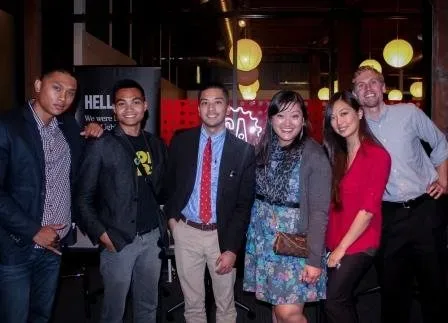


A call with David Mitroff, Ph.D.
Talk through your business with David
Quick answer
To promote an event, send personal invitations by name first, build one event page that every partner, sponsor and team member points to, send a short email invitation from your own name and add a simple Q&A for first-time guests. Piedmont Avenue Consulting, Inc. plans and promotes events for owners across the San Francisco Bay Area, Los Angeles, Orange County and New York.
Key takeaways
- The guests who show up usually came because someone asked them directly, not because they saw a post or a newsletter blast.
- One event page with many people inviting guests to it creates momentum, since repeated invitations make the event feel like the place to be.
- A short Q&A on the event page makes a first networking event easier for guests who want to come and feel a little nervous.
- Repeating the same event with the same care builds recognition, because a first event rarely fills the room.
Learning how to promote an event starts with one idea: people come because someone they know invited them. At Piedmont Avenue Consulting, Inc., we are a business and marketing consulting firm that works with owners in the San Francisco Bay Area, Los Angeles, Orange County and New York to start, grow and scale their businesses. Through The Professional Connector®, we have promoted hundreds of mixers, panels, tastings and dinners, and the approach below is the one that keeps those rooms full.
Why do personal invitations work best?
Owners often start event promotion with a social media post and a newsletter blast. Those reach plenty of people. The guests who actually show up usually came because someone asked them directly.
David Mitroff, Ph.D., promotes his events on many channels. In The Event Effect, he explains which one matters most:
“Thousands of people see it. And yet the most powerful promotion I do is still the oldest one. I invite people, one at a time, by name.”
David Mitroff, Ph.D., in The Event Effect, Chapter 10: Promotion That Feels Like an Invitation
Before anything goes to a list, he writes to his top contacts, best clients and partners one at a time. The note is two sentences long: the person’s name, the reason they came to mind, the event and a link.
“Two sentences, their name, a reason I thought of them and a link. That message gets more yeses than any newsletter I have ever sent.”
David Mitroff, Ph.D., in The Event Effect, Chapter 10: Promotion That Feels Like an Invitation
A simple way to start is to send ten personal invitations before any public announcement goes out.
Build one event page that everyone points to
The second step makes the rest of the promotion simple: one event page, many people inviting guests to it. You, your team, your sponsors, your venue and your partners all send their invitations to the same page.
When a guest hears about the event from three different people, the event starts to feel like the place to be. David describes it this way:
“When five different people invite the same person, that’s not annoying. That’s momentum.”
David Mitroff, Ph.D., in The Event Effect, Chapter 10: Promotion That Feels Like an Invitation
What goes on the event page?
A good event page answers every question before a guest has to ask. Include:
- The name and the reason to come, in one or two lines.
- Date, time and place, with parking or transit details.
- Who the event is for. “Restaurant owners and operators” is clearer than “professionals.”
- A big photo of the host, so guests recognize you at the door.
- Speakers, sponsors and partners, with logos and short bios.
- One clear button to register, with as few questions on the form as possible.
- Terms in one checkbox, including photography and refunds.
For a monthly event, list one or two dates at a time. When people see six future dates, many decide to come some other month, and the event loses its sense of occasion.
Put a big photo of the host everywhere
Guests follow up with the host, so make the host easy to find. David puts his photo on every event page, newsletter and invitation, and he describes what happens at the door:
“So when guests walk in, many of them come straight over. ”You’re David, right? I looked you up. You’re the host. Thank you so much for putting this together.“”
David Mitroff, Ph.D., in The Event Effect, Chapter 3: How Leaders Create Luck
Answer the first-timer’s questions
Some of the people reading your event page are going to their first networking event. They want to come, and they are a little nervous. A short Q&A on the page makes the first visit easier:
- What is the event like? A relaxed evening of conversation with no hard pitch.
- Who will be there? Business owners, professionals and people new to the area, many coming alone.
- What do I wear? Business casual.
- What do I bring? Business cards if you have them, a pen and a phone.
- What can I expect? A warm welcome at the door and a few introductions from the host.
Some guests still call before they come. David welcomes those calls:
“I walk them through the evening, tell them where to find me when they arrive, and promise to introduce them to someone in the first ten minutes. Then I do it. That person usually becomes a regular.”
David Mitroff, Ph.D., in The Event Effect, Chapter 10: Promotion That Feels Like an Invitation
How do you write an event email people notice?
Email is still one of the strongest event promotion tools a small business has. A few habits make the difference:
- Send from your own name, not from “Events Team” or “Newsletter.”
- Make the subject line an invitation. “You’re Invited” often beats a clever headline.
- Keep the email short: one event, one reason, one button.
- Write to one person, and read the email out loud before you send.
- Send midweek. Tuesday, Wednesday and Thursday tend to work well for invitations.
- Respect the inbox: one invitation, one reminder and one thank-you.
Many people on your list will not open the email, and that is normal. Your name next to an invitation in the inbox keeps you in their mind either way. As David puts it:
“You don’t send a newsletter to get it read. The from line and the subject line are the invitation.”
David Mitroff, Ph.D., in The Event Effect, Chapter 10: Promotion That Feels Like an Invitation
Planning an event and worried about the turnout?
Schedule a call with David Mitroff, Ph.D. We look at who you want in the room, who can invite them and how to get the word out.
Or call David at 510-761-5895, 8 AM to 8 PM, seven days a week.
Where else do you post an event?
Go where your guests already spend time, and invite them there:
- LinkedIn, to post the event, invite connections and send personal messages to the people you want most.
- Meetup groups built around a specific topic, with events held on a regular schedule.
- Event registration platforms, which handle check-in and reminders and are searched by people looking for things to do.
- Local event calendars from newspapers, magazines and business journals.
- Partners’ newsletters and media sponsors, which reach people you have not met yet.
- A short press release to local business reporters for openings, launches and events with a cause.
Every listing points back to the one event page, so the guest list lives in one place. When you announce to several groups, spread the posts through the day, since many people belong to more than one group.
Promoting a sponsor’s or partner’s event
Sponsors and partners sometimes ask you to promote their events to your audience. Keep the invitation in your own voice. In The Event Effect, David describes his approach:
“Companies like Zoho and FreshBooks have paid me to promote their events to my audience. My one rule: I rewrite their copy in my own voice, then send it back for their approval before anything goes out. My audience trusts my invitations because they sound like me.”
David Mitroff, Ph.D., in The Event Effect, Chapter 10: Promotion That Feels Like an Invitation
Events keep working after the night ends
Events do two jobs at once. The invitation is active marketing: you choose who to reach and go to them. The event page, the photos and the recap stay online, where people searching for that topic find them months later.
Measure what each event brings in. Each time a new client or partner arrives, ask how they found you and write the answer down. After a quarter, you will know which events lead to business. Our article on the follow-up system that wins more business covers the steps after the event.
Give a new event time to grow
A first event rarely fills the room. Repeating the same event, with the same care in the invitations, builds recognition. David describes how this works for a business at a community event:
“The second year, people walk by and say, ”Oh, I’ve seen you.“ The third year, they say, ”I’ve been to your restaurant,“ or ”You’re our dentist,“ or ”My sister shops at your store.“ Nothing changed about the booth. What changed was three years of showing up.”
David Mitroff, Ph.D., in The Event Effect, Chapter 3: How Leaders Create Luck
Write the personal invitation: three examples
The personal note is the part owners put off, because it feels slow. It is the part that fills the room. David’s rule for it is simple:
“A good invitation sent today beats a perfect one sent next week.”
David Mitroff, Ph.D., in The Event Effect, Chapter 10: Promotion That Feels Like an Invitation
Each note has the same four parts: the person’s name, the reason they came to mind, the event and a link. Here is how that reads for three different businesses.
- A restaurant owner inviting a regular to a wine dinner: “Hi Sam, we are pouring the winemaker’s new releases next Thursday, and you came to mind because you ask what is new on the list every visit. I would love to save you a seat. Here are the details.”
- An accountant inviting a client’s business partner to a workshop: “Hi Priya, I am teaching a short workshop for owners on planning next year’s numbers, and I thought of you after our talk last month. You would add a lot to the room. Here is the page.”
- A boutique owner inviting a neighbor to an open house: “Hi Jordan, we are opening the shop after hours on Friday to show the new season, with a few neighbors and a glass of something. I hope you can stop by. Here is the link.”
Write ten of these before anything goes to a list. Keep a short list of who you wrote to, and mark each reply as it comes in.
A promotion timeline you can run for every event
Most promotion trouble comes from squeezing every step into the last week. David plans each event from its date backward.
“Pick the date, then work backward from it.”
David Mitroff, Ph.D., in The Event Effect, Chapter 11: The Timeline
For most events of twenty to two hundred guests, the timeline in The Event Effect looks like this:
- Ninety to sixty days out: lock the date, the venue and the budget, line up partners and speakers in writing, and build the one event page.
- Forty-five days out: send the personal invitations first, then the first email and the posts, and ask every partner and sponsor to invite their people.
- Thirty days out: answer every reply, review registrations and confirm the menu and the room.
- Fifteen days out: send one reminder, confirm with the venue and speakers and announce anything new, such as a speaker or a sponsor.
- The week of the event: send personal notes to the guests you most want there.
- The day before: send a warm reminder by first name, with parking and what to expect.
- One or two days after: thank everyone who registered, whether they came or not, and invite them to the next one.
Our questions and answers on how far ahead to plan a business event go deeper on each stage.
Make it easy for everyone else to invite
The one event page works only if your partners, sponsors, speakers and team actually send people to it. Most of them want to. What stops them is the work of writing the message. Hand them a small kit:
- A short note they can copy and change, written in a friendly voice, with the reason their people would enjoy the evening.
- The link to the one event page, so every registration lands in the same place.
- One image sized for a phone, with the name, the date and the place in large type.
- A suggested day to send it, so the invitations from different people arrive over a few days, not all at once.
David has a note in the book about that image:
“Make the text on the event banner big enough to read on a phone. That’s where most people will see it first.”
David Mitroff, Ph.D., in The Event Effect, Chapter 10: Promotion That Feels Like an Invitation
Thank each partner after the event with the number of guests who came through their invitation. A partner who sees the result invites again next time. Our guide to event sponsors and venue partners covers how to choose the right ones.
What to do with every reply
Every reply deserves an answer, including every “can’t make it.” A decline is still a good outcome. The person read your invitation, thought about the event and took the time to write back. Thank them, tell them you will let them know about the next one and mean it.
David writes that he sometimes invites his most senior contacts to rare experiences knowing most of them will not be able to go.
“They text me back: ”Thank you so much for thinking of me.“ That is the whole point.”
David Mitroff, Ph.D., in The Event Effect, Chapter 2: It Works Even If Nobody Comes
Our story Invite, don’t sell shows why “I can’t make it” still moves a relationship forward.
Three scenarios: how the same plan fits different events
The steps stay the same from one event to the next. What changes is how much weight each one carries.
- A monthly mixer at a restaurant. List one or two dates at a time, send the personal notes to the regulars first and ask the restaurant to invite its own guests to the same page. Repeat the format every month so people know what to expect.
- A one-time workshop at an office. Name exactly who it is for, such as “owners of service businesses with a small team.” Send the personal notes to clients and partners, then post on LinkedIn and two or three local calendars. Hold the reminder for fifteen days out.
- A small dinner for a dozen guests. Skip the megaphone. Every seat comes from a personal invitation, every registration gets a personal reply and every guest gets a calendar invitation the week of the event.
How to measure your promotion
Count where each guest came from, not only how many came. On the registration form, or at the door, ask one question: “How did you hear about this?” Then sort the answers:
- Personal invitations from you, and which ones turned into a yes.
- Invitations from each partner, sponsor and team member.
- Email, LinkedIn, Meetup and each event calendar.
- Walk-ins and friends of guests.
After two or three events, you will see which inviters fill the room and which channels only add noise. Put more effort into the first group next time. Our guide on how to tell whether a business event worked covers the numbers that matter after the night is over.
What to do this week
- Pick the date of your next event and write the timeline backward from it.
- Write ten personal invitations, using the four parts: name, reason, event and link.
- Build or update the one event page, with a big photo of the host and one button.
- Send your partners a small kit with a note, the link and one image sized for a phone.
- If you would like an outside view of where events fit in your marketing, read what happens in a business assessment.
Common event promotion mistakes
- Starting with the megaphone before sending any personal invitations.
- Several pages for one event, so guests register in different places.
- A vague audience, such as “professionals,” instead of naming who the event is for.
- Too many reminders, which trains people to stop opening your emails.
- No host photo, so guests do not know who to look for at the door.
- Skipping the follow-up after the event ends.
You can read more in our articles on hosting a business event and business networking tips.

How we work with owners on event promotion
We work with owners on event strategy, invitation lists, event pages, email invitations, partner outreach and follow-up, and promotes The Professional Connector® events across the San Francisco Bay Area and Southern California. In the first ninety days of working together, our job is to find our fee, which means making or saving you more than you pay us. We start with an initial consultation and a paid assessment, then build a ninety-day plan and a twelve-month marketing calendar. Learn more about our event marketing, public relations consulting and restaurant consulting work.
From David’s books
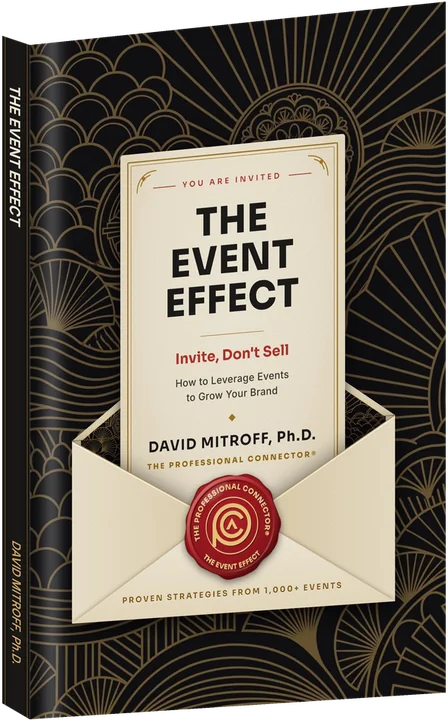
The Event Effect
David wrote the book on events that grow a business. The Event Effect, now in its second edition, covers how to plan, fill, host and follow up on them.
Take action
Your next three steps
- Send ten personal invitations by name, with a reason and a link, before any public announcement goes out.
- Build one event page with the reason, date, place, audience, host photo and one clear registration button.
- Send event emails from your own name, with one invitation, one reminder and one thank-you.
In their own words
What clients say about working with us
“McDowall Cotter started working with David Mitroff and right away things started to happen. We have managed to fill up our seminar rooms again, he has found us great new staff to run our marketing department, and business is booming. More than a marketing consultant, he is also a business confidant, helping us keep course on our goal to growth.”
 David RosenbaumPartner, McDowall Cotter, APC

“I have known and worked with David for over 15 years, across numerous companies and ventures. He helped us build and promote Clark Meyers. He is my go-to marketing guru and has introduced me to the resources I need to grow.”
 Conor MeyersCo-Founder, Clark Meyers PC

Read more client stories or see our case studies.
Frequently asked questions
Frequently asked questions
How do I promote an event as a small business?
Send personal invitations by name to your top contacts first, build one event page with every detail, ask partners, sponsors and your team to invite their people to that page, send a short email invitation from your own name and post the event on LinkedIn and local calendars.
How far ahead do I start promoting an event?
Promotion works best when spread over several weeks, with personal invitations going out first and the public announcement after. The Event Effect lays out a full timeline that starts about three months before the event.
What goes on an event page?
The event name and reason to come, the date, time and place with parking details, who the event is for, a big photo of the host, speakers and sponsors, one clear registration button and the terms in a single checkbox.
How many reminder emails do I send for an event?
One invitation, one reminder and one thank-you is a good rule. More reminders than that can train people to stop opening your emails.
How do I get first-time guests to attend a networking event?
Add a short Q&A to the event page that explains what the evening is like, who will be there, what to wear and what to bring, and offer to introduce first-time guests to someone soon after they arrive.
Does Piedmont Avenue Consulting, Inc. promote events for clients?
Yes. Piedmont Avenue Consulting works with owners on event strategy, invitations, event pages, partner outreach and follow-up, and hosts The Professional Connector® events. Schedule a call with David to talk about your next event.
What do I say in a personal event invitation?
Keep it to a few sentences: the person’s name, the reason they came to mind, what the event is and a link to the one event page. Send it from your own name before any public announcement goes out.
What do I do when someone says they can’t make it?
Thank them, tell them you will let them know about the next one and keep them on your list. A decline still means they read the invitation and thought of you, which keeps the relationship moving.
How do I know which promotion worked?
Ask every guest how they heard about the event, on the form or at the door, and sort the answers by inviter and channel. After a few events, you will see which ones fill the room.
Let’s grow together.
Schedule a call with David. Tell us about the event you are planning, and we will look at who to invite first and how to fill the room.
Or call David at 510-761-5895, 8 AM to 8 PM, seven days a week.
About the author
David Mitroff, Ph.D. wrote this article. He is the founder of Piedmont Avenue Consulting, Inc., a business and marketing consulting firm serving the San Francisco Bay Area, Los Angeles, Orange County and New York. Meet David or read more articles by David.
- Founder and Business Growth Strategist at Piedmont Avenue Consulting, Inc.
- Doctorate in clinical psychology, with additional coursework in business administration, law and culinary arts; bachelor’s and master’s degrees.
- Taught marketing and entrepreneurship at the University of California, Berkeley for more than seven years.
- Author of several books, including The 45 Day Consultant, The 45 Day Consultant Field Guide, Online Business Growth Strategies, The Event Effect: Invite, Don’t Sell, and Law Firm Business Growth Strategies (Second Edition).
- Started seven companies; previously owned and ran a recruiting and staffing company.
David works with a small team of consultants and specialists on every engagement. Meet our team or read about Piedmont Avenue Consulting, Inc.