



A call with David Mitroff, Ph.D.
Talk through your business with David
Quick answer
A European government delegation asked David Mitroff, Ph.D., to bring them together with senior fintech leaders in San Francisco over lunch. Their first worry was that the right people would not come. David’s answer was that a “can’t make it” is still a good outcome, because it tells you the topic matters, and it turns into a call or a meeting at a better time. The lunch is the reason to reach out. Piedmont Avenue Consulting, Inc. plans invitations and events with owners across the San Francisco Bay Area, Los Angeles, Orange County and New York.
Key takeaways
- An executive who writes back to say they cannot make it has shown the topic matters, and that reply often becomes a call or meeting.
- A sales message asks for something while an invitation offers something, which lowers the wall people keep up against selling.
- An invitation tells someone they were chosen, and whether they come or not, they remember who chose them.
- Inviting respectfully means researching the right people, writing as a person, making it easy to say no and being honest about the event.
Invite, don’t sell. That idea is the heart of invitation marketing, it is the first idea in The Event Effect, and it starts with a lunch. At Piedmont Avenue Consulting, Inc., we are a business and marketing consulting firm that works with owners in the San Francisco Bay Area, Los Angeles, Orange County and New York to start, grow and scale their businesses. Many of the owners we meet lean on sales emails that nobody answers. An invitation is the alternative, and it changes who writes back.
The lunch
A European government delegation came to David with a clear request. They wanted to meet senior fintech leaders in San Francisco. The format they had in mind was a lunch: fifteen to twenty people around one table, a candid conversation and follow-up meetings with the companies that mattered most to them.
Then they asked the question everyone asks before an event.
“What if the right people can’t come?”
The answer
David’s answer surprised them. That is still a good outcome.
An executive who cannot make the date, and takes the time to write back and say so, has just told you something valuable. The topic matters to them. They want to be part of it. That reply becomes a phone call, or a meeting with the delegation at a better time.
“The lunch is the reason to reach out. The meetings are the result.”
David Mitroff, Ph.D., in The Event Effect, Chapter 1: Invite, Don’t Sell
A sales email to the same executive would have asked for a meeting. Most would have deleted it before the second line. The invitation offered them a seat at a table with people worth meeting, and an executive who could not come still had a reason to write back.
Invite the people who probably can’t come
The fintech lunch shows a habit David uses far beyond delegations. In The Event Effect, he writes that when he gets access to something special, like courtside seats or a very exclusive tasting, he keeps a list of high-level people to invite, knowing most of them will not be able to go.
“They text me back: “Thank you so much for thinking of me.” That is the whole point.”
David Mitroff, Ph.D., in The Event Effect, Chapter 2: It Works Even If Nobody Comes
The invitation did its job before anyone said yes. It told a senior person that they were on your mind, and it gave them an easy reason to reply. Keep a short list of those people and invite them often. Our article on your top twenty list shows how to build it.
Why invitations work
“A sales message asks for something. An invitation offers something.”
David Mitroff, Ph.D., in The Event Effect, Chapter 1: Invite, Don’t Sell
Most people have a wall up against selling. Every day brings cold calls, sales emails and messages from strangers who want a meeting or a demo. We learn to hit delete before we finish the first line.
Now think about the last time someone invited you to something: a dinner, a panel, a launch party or a coffee. Even if you could not go, you probably felt a little good about it. Someone thought of you. A sale puts the other person on defense. An invitation lowers the wall, because nobody is asking them to buy. They are being asked to join.
In the book, David points to a well-known restaurant study. Servers who left a piece of candy with the check received bigger tips, and when the server made it clear the candy was especially for that table, the tips went up even more.
“The candy was small. Being chosen was not.”
David Mitroff, Ph.D., in The Event Effect, Chapter 1: Invite, Don’t Sell
An invitation tells someone they were chosen. Whether they come or not, they remember who chose them.
Inviting vs. selling
| Inviting | Selling |
|---|---|
| Offers something | Asks for something |
| Makes people feel included | Puts people on defense |
| “Can’t make it” starts the next conversation | “No” ends the conversation |
| Welcome when repeated | Annoying when repeated |
| Remembered as generosity | Remembered as pressure |
Sending outreach nobody answers?
Schedule a call with David Mitroff, Ph.D. We look at your outreach, and turn it into invitations people reply to.
Or call David at 510-761-5895, 8 AM to 8 PM, seven days a week.
What the invitation looked like
The invitations for a lunch like this one are short and personal. Here is the kind of note David shares in the book:
Hi Maria, we’re hosting a small lunch for fintech founders on the 14th, about a dozen people around one table, and I immediately thought of you. No presentations, just a good conversation about what’s working right now. Would you like a seat? If the date doesn’t work, I’d still love to grab coffee.
One clear question, and a second option built in. A “no” to the lunch is a “yes” to coffee.
The invitations for a lunch come from several places at once: from David, from his team and from partners and sponsors. Sometimes a guest hears from two of them. Nobody minds, because an invitation from two people starts a conversation. Try sending the same sales pitch from two people at the same company and see how that goes.
What makes that note work
Look at the pieces of the note:
- The person’s name, first, and nothing generic.
- A specific event, with a date and a sense of size: about a dozen people around one table.
- Why them. “I immediately thought of you” tells the reader they were chosen.
- What it is and what it is not. No presentations, just a good conversation.
- One clear question. Would you like a seat?
- A second option. Coffee if the date does not work.
The whole note fits on a phone screen. That matters, because many people will read it on one.
Subject lines that read like an invitation
The subject line decides whether the note gets opened. Keep it plain and personal.
- “A seat for you at our fintech lunch” names the event and the reader.
- “Saving you a seat next Thursday” gives a date and a reason to open it.
- “Small dinner, and I thought of you” tells the reader they were chosen.
- “Would you join us for breakfast?” asks one clear question.
Avoid subject lines that sound like a campaign, such as “Exclusive offer inside” or “Last chance to register.” They tell the reader the note went to thousands of people.
Turn a sales email into an invitation
Here is the kind of shift we make with owners. A sales email from an accounting firm might read like this.
The sales version: “We keep the books for small businesses and can save you money. Can I set up a call to walk you through our services?”
The invitation version: “We’re hosting a small breakfast next month for restaurant owners on what we are seeing in food costs this year, and I thought of you. A few owners, one table, no pitch. Would you like a seat? If the date doesn’t work, I’d be glad to send you the notes afterward.”
The first email asks for the reader’s time. The second offers a seat, a topic worth hearing and a backup that still delivers value. Even a “no” to the breakfast is a reason to send the notes, and the notes are a reason to talk.
What to invite people to
You do not need a fintech delegation to have a reason to reach out. Good reasons include:
- A small lunch or dinner around one topic.
- A panel with speakers your guests want to hear.
- A workshop that teaches something useful.
- Open office hours at your shop, studio or office. Our guide on how to host open office hours shows the simplest version.
- A seat at someone else’s event, such as a conference session or a reception where you can make introductions.
- A coffee with someone they want to meet.
Our comparison of the types of business events covers which format fits which goal.
The meal is not the reason
Senior people get invited to things constantly. A meal alone will not move them.
“A free dinner is not a reason. The conversation is.”
David Mitroff, Ph.D., in The Event Effect, Chapter 6: The Executive Dinner
In the book, David writes that senior executives get invited by vendors, banks, recruiters and conferences, and that they come for the room. That is why the fintech lunch worked. The delegation offered something the executives wanted: a candid conversation with peers and a seat with people worth meeting. The food was the setting. Our page on executive dinners describes how we build those rooms.
Give first, then get the next meeting
Two teachers shaped how David thinks about this. Jeffrey Gitomer taught him to give value first. Stephan Schiffman taught him that the job of a salesperson is to get the next meeting.
“Nobody wants to be sold to. Everybody likes to be invited.”
David Mitroff, Ph.D., in The Event Effect, Chapter 1: Invite, Don’t Sell
An invitation does both at once. It gives first: a seat at the table, a useful conversation and people worth meeting. And it creates the next meeting without a pitch. When a guest leaves a lunch and says, “Let’s talk next week,” that is not a sale. It is a relationship moving forward.
Invite respectfully
Inviting is not a license to blast people. The rules David holds his team to in The Event Effect:
- Invite the right people. Research who the room is for, and invite them on purpose.
- Send it as a person. Personal emails and LinkedIn messages, in a plain, friendly tone.
- Make it easy to say no, and easy to unsubscribe. A “no” today is often a “yes” next time.
- Keep it about them: what they will get from the room, not what you want to sell them.
- Respect the list. People who give you their email address are trusting you.
And be honest about what the event is. If there is a sales presentation, say so. People respect a clear invitation. They do not forgive being misled.
“If you are selling, do not tell people you are not.”
David Mitroff, Ph.D., in The Event Effect, Chapter 1: Invite, Don’t Sell
In the book, David puts the rule plainly: say what the event is, what to expect and what you hope happens next. An invitation that hides a sales presentation wins one evening and loses the relationship.
Write it in your own voice
Invitations work because they sound like a person. In the book, David writes that when he shares another company’s event with his audience, he rewrites the copy in his own voice before anything goes out.
“My audience trusts my invitations because they sound like me.”
David Mitroff, Ph.D., in The Event Effect, Chapter 10: Promotion That Feels Like an Invitation
Write the way you talk. Use the person’s name, mention why you thought of them and keep it short. Our article on why your communication style is your brand goes further.
Invitations across different businesses
- A dental office invites patients to a community open house, and patients bring neighbors who are looking for a new dentist.
- A commercial real estate broker invites a few business owners to a breakfast on the local market, and the owners who cannot come ask for the notes.
- A boutique hotel invites event planners to a tour and tasting, and the planners who cannot make it ask for a private visit.
- A law firm invites clients and referral partners to a workshop on a change in the law, and every guest becomes a chance for the next conversation.
- A consultant invites five owners from different industries to a small lunch, and each owner meets four new people.
In each case, the invitation gives people a reason to reply, and the reply starts the relationship.
Common invitation mistakes
- Sending a pitch dressed up as an invitation. If the main event is a sales presentation, say so.
- Inviting everyone. A mass invitation reads like an ad. Choose the people the room is for.
- Burying the question. End with one clear ask.
- Ignoring the “no” replies. Answer every one, and offer the second option.
- Inviting once. People who cannot come this time are often the ones who come next time, as long as the invitations keep arriving.
- Forgetting the follow-up. Thank everyone who replied, whether they came or not. Our look at event follow-up myths covers what to send.
How often to invite
One invitation is a gesture. A steady rhythm is a relationship. The people on your list come to expect your invitations, and the ones who say no today often say yes later. A simple rhythm works for most owners:
- Every month, invite a few people from your top list to something specific.
- Every quarter, host or co-host one gathering of your own.
- Every time you get access to something special, think of who would enjoy it, and invite them even if they probably cannot come.
How to measure your invitations
Attendance is only one number. Track these too:
- Replies, including every “can’t make it.”
- Calls and meetings that came from replies, whether or not the person attended.
- Repeat guests, the people who come to a second or third event.
- Introductions guests make to other people.
- New clients and partners who trace back to an invitation.
A month where few people came and many wrote back can be a very good month. The replies are the start of the next meetings.
Try it this month
- Write down five people you have been meaning to reach out to. Instead of a sales message, invite each of them to something this month.
- Read your last three outreach emails out loud. Do they ask for something, or offer something? Rewrite one as an invitation.
- Find one event you already plan to attend, and invite one person to join you.
- The next time someone says “I can’t make it,” reply with an offer to meet another time.
- Add one line to your email signature or LinkedIn profile inviting people to your next event.
Our story on why it works even if nobody comes shows what happens to the invitations people decline, and our guide on how to host an executive dinner covers the most focused version of this lunch.

How we work with owners on invitations
We pick the event that gives you a reason to reach out, build the list of people you want in the room, write the invitations in your voice and turn every reply, including the “can’t make it” replies, into the next meeting. In the first ninety days of working together, our job is to find our fee, which means making or saving you more than you pay us. We start with an initial consultation and a paid assessment, then build a ninety-day plan and a twelve-month marketing calendar. Learn more about our business consulting services.
From David’s books

The 45 Day Consultant Field Guide
This is also in David’s book, in Chapter 7, “Selling Without Selling”. Each chapter page sums up the idea, the story behind it and what to do next.

The 45 Day Consultant
This is also in David’s book, The 45 Day Consultant, in the chapter “What Do You Offer? Call to Action”.
Read the topic guideAll topics from the bookGet the book on Amazon
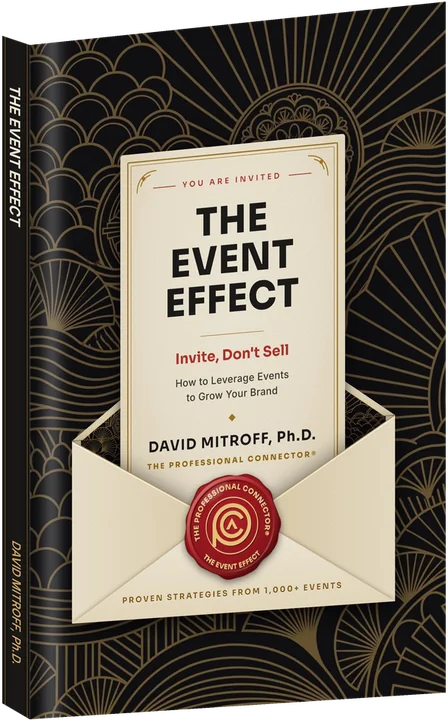
The Event Effect
David wrote the book on events that grow a business. The Event Effect, now in its second edition, covers how to plan, fill, host and follow up on them.
Take action
Your next three steps
- Write down five people you have meant to reach out to and invite each of them to something this month.
- Rewrite one of your last three outreach emails so it offers something instead of asking for something.
- Reply to the next person who says they cannot make it with an offer to meet another time.
In their own words
What clients say about working with us
“McDowall Cotter started working with David Mitroff and right away things started to happen. We have managed to fill up our seminar rooms again, he has found us great new staff to run our marketing department, and business is booming. More than a marketing consultant, he is also a business confidant, helping us keep course on our goal to growth.”
 David RosenbaumPartner, McDowall Cotter, APC

“David was extremely helpful, and the most responsive consultant I’ve ever worked with. If he didn’t know something, he had no problem acknowledging that, and calling in an expert. His follow-up was absolutely impeccable.”
 Judith Szepesi, J.D.Partner, Blakely Sokoloff Taylor & Zafman

Read more client stories or see our case studies.
Frequently asked questions
Frequently asked questions
What does invite, don’t sell mean?
Invite, don’t sell means reaching out with an invitation to something worth attending, such as a lunch, a dinner or a panel, instead of a sales message, because an invitation offers something while a sales message asks for something.
Is a declined event invitation a bad sign?
No. A guest who writes back that they cannot attend has shown the topic matters to them, and that reply can become a phone call or a meeting at a better time.
Why do invitations work better than sales emails?
Invitations work better than sales emails because people feel chosen instead of pitched, which lowers the wall most people keep up against selling and makes them likely to reply even when they say no.
How do I write a good business invitation?
A good business invitation is short and personal, names the event and why the person came to mind, asks one clear question and offers a second option such as coffee if the date does not work.
What can a business invite people to besides a dinner?
Good reasons to reach out include a small lunch around one topic, a panel, a workshop, open office hours at your shop or office, a seat at someone else’s event or a coffee with someone the person wants to meet.
How do you measure whether invitations are working?
Track replies, including every “can’t make it,” the calls and meetings that came from replies, repeat guests, the introductions guests make and the new clients and partners who trace back to an invitation.
Does Piedmont Avenue Consulting, Inc. plan invitation campaigns and events?
Yes. Piedmont Avenue Consulting, Inc. plans invitations, executive lunches and events with owners in the San Francisco Bay Area, Los Angeles, Orange County and New York. Schedule a call with David to talk about your business.
Let’s grow together.
Schedule a call with David. Tell us who you want to meet, and we will plan the invitation.
Or call David at 510-761-5895, 8 AM to 8 PM, seven days a week.
About the author
David Mitroff, Ph.D. wrote this article. He is the founder of Piedmont Avenue Consulting, Inc., a business and marketing consulting firm serving the San Francisco Bay Area, Los Angeles, Orange County and New York. Meet David or read more articles by David.
- Founder and Business Growth Strategist at Piedmont Avenue Consulting, Inc.
- Doctorate in clinical psychology, with additional coursework in business administration, law and culinary arts; bachelor’s and master’s degrees.
- Taught marketing and entrepreneurship at the University of California, Berkeley for more than seven years.
- Author of several books, including The 45 Day Consultant, The 45 Day Consultant Field Guide, Online Business Growth Strategies, The Event Effect: Invite, Don’t Sell, and Law Firm Business Growth Strategies (Second Edition).
- Started seven companies; previously owned and ran a recruiting and staffing company.
David works with a small team of consultants and specialists on every engagement. Meet our team or read about Piedmont Avenue Consulting, Inc.