
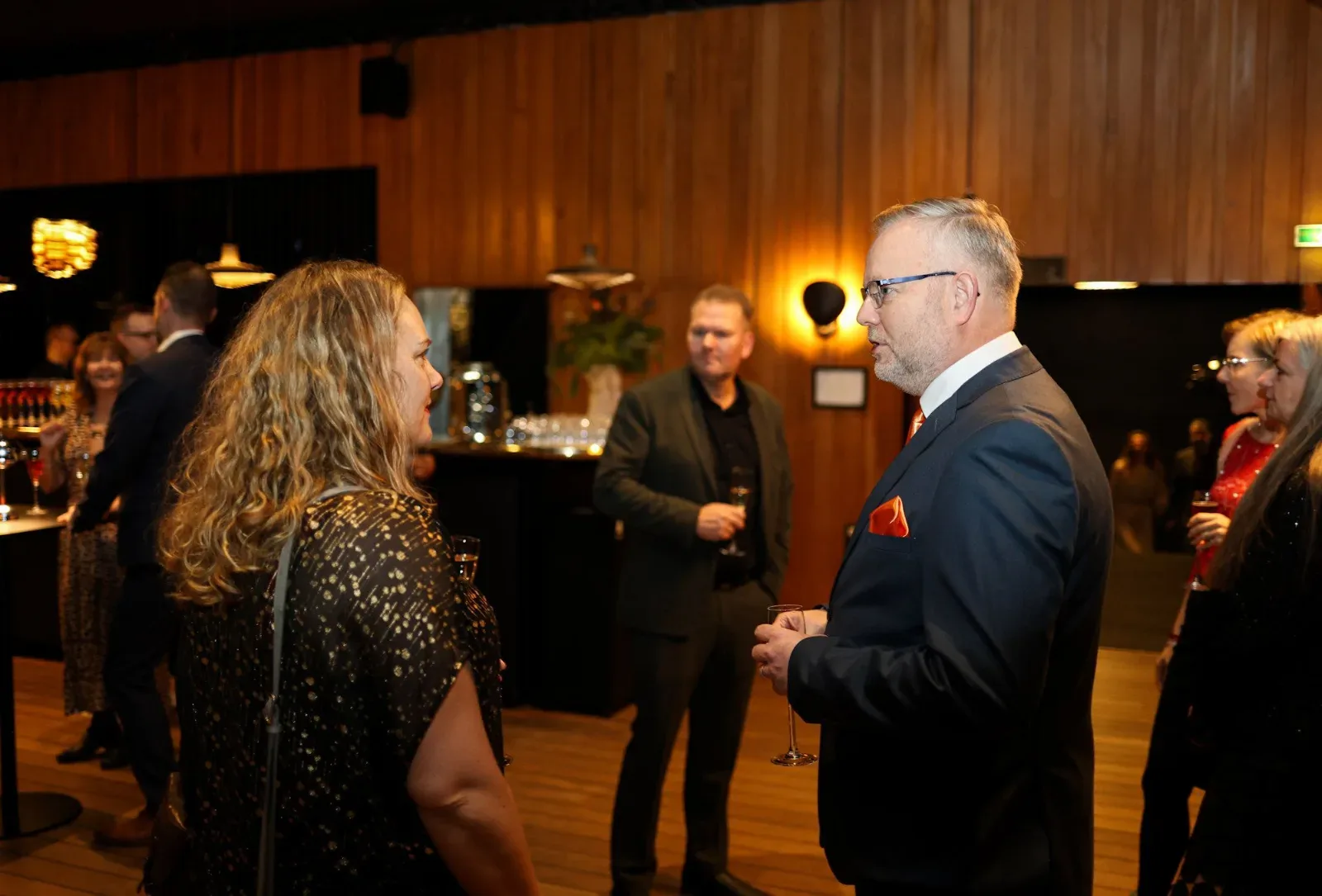


A call with David Mitroff, Ph.D.
Talk through your business with David
Quick answer
A series of small, regular events builds more relationships, more trust and more follow-up than a single large one, for less money and less stress. A big event earns its place when there is a milestone to mark, such as a grand opening, a launch or an anniversary, and when there is a plan for the months after the room empties. Most owners do best with a steady series, and a big moment once in a while. Piedmont Avenue Consulting, Inc. works with owners across the San Francisco Bay Area, Los Angeles, Orange County and New York on choosing and planning both.
Key takeaways
- A series of small, regular events builds more relationships, trust and follow-up than a single large one, for less money.
- After a big event the host is tired and the guest list is long, while a small event allows a note to every guest.
- Opportunities come from consistency, and a track record of past events does much of the inviting for the host.
- A big event earns its place for a milestone such as a grand opening or launch, with the follow-up already planned.
One big event vs. a series of small ones is a choice most owners face the first time they decide to host. At Piedmont Avenue Consulting, Inc., we are a business and marketing consulting firm that works with owners in the San Francisco Bay Area, Los Angeles, Orange County and New York to start, grow and scale their businesses. David Mitroff, Ph.D., has hosted events that cost the price of two cups of coffee and produced events for clients on a much larger scale, and in The Event Effect he writes that both worked. The question is what each one does for the business.
The two options at a glance
- One big event: a gala, a conference, a launch party or a grand opening. Large guest list, large budget, months of planning and one night to get everything right.
- A series of small events: a monthly mixer, a quarterly dinner, a coffee hour or open office hours. Small guest list, small budget, a few weeks of planning and many chances to get better.
In The Event Effect, David puts the trade-off plainly.
“A full calendar of small, clear, well-defined events beats one giant, stressful production you’re too busy to follow up on.”
David Mitroff, Ph.D., in The Event Effect, Chapter 4: Start With Why
Cost
A big event concentrates the spending in one night. In the chapter on what events cost, David lays out formats by budget: coffee for two and open office hours at the low end, a mixer at a venue that wants to fill a slow night or a brunch in the middle, and a conference, a gala or a party people talk about for years at the top. His advice is to pick the format your budget can carry.
A series spreads a smaller amount across the year. A venue that wants to fill a slow weeknight, a sponsor who wants to reach your guests or a co-host who shares the work can cover much of each one. Our guide on how to budget for a business event walks through the math David uses.
Edge: the series, for most small businesses.
Reach
A big event can put hundreds of people in one room on one night. That is real reach, and for a launch or an opening it matters.
A series reaches people more slowly and more often. Every invitation, attended or not, tells someone your name and what you care about. Over a year of monthly events, the total number of people who hear from you can match or pass a single gala, and many of them hear from you more than once.
Edge: even, depending on the goal.
Relationships
This is where the series pulls ahead. One night with three hundred people gives each guest a few minutes with the host. Twelve nights with twenty people give the regulars a dozen conversations, and the newcomers a reason to come back.
In The Event Effect, David describes the people who started as guests at his events, came again and again and became regulars who brought friends and introduced others. That kind of relationship rarely forms in a single evening.
Edge: the series.
Follow-up
David’s line about the giant production ends with the real risk: a host with no energy left to follow up. After a big event, the host is tired, the guest list is long and the thank-you notes pile up. After a small event, the host can write to every guest the next morning. Our follow-up system covers the steps.
Edge: the series.
Planning your next event?
Schedule a call with David Mitroff, Ph.D. We look at what you want the event to do, and which format gets you there.
Or call David at 510-761-5895, 8 AM to 8 PM, seven days a week.
Trust and reputation
“The opportunities come from consistency.”
David Mitroff, Ph.D., in The Event Effect, Chapter 19: It’s Not as Easy as It Looks
In the same chapter, David writes that the person who could not come in March comes in April, the sponsor who watched your first three events signs on for the fourth and the executive who said no five times says yes the sixth time, because you kept inviting. He also notes that his Eventbrite page shows more than four hundred past events at real venues, and that the track record does half the inviting for him.
A single big event, however good, leaves one data point. A series leaves a history people can see before they register.
Edge: the series.
Room to learn
The first event is rarely the best one. David says so directly.
“The first event is the hardest one. Fewer people come than you hoped, and something goes wrong. Do it again anyway.”
David Mitroff, Ph.D., in The Event Effect, Chapter 19: It’s Not as Easy as It Looks
With a series, each event improves the next: the invitation, the venue, the timing and the introductions. With one big event, the lessons arrive after the money is spent.
Edge: the series.
Partners and sponsors
Partners like a good idea that keeps happening. In the book, David writes that venues offer their space, sponsors offer to cover the dinner, associations and chambers offer to co-host and media partners offer to promote, once an event proves itself.
“Those strategic partnerships are how a small event becomes a series, and how a series becomes something people talk about.”
David Mitroff, Ph.D., in The Event Effect, Chapter 19: It’s Not as Easy as It Looks
A big event can attract sponsors too, usually with a longer sales effort and higher expectations. Our guide on how to get event sponsors covers both.
Edge: the series, with a big event as the occasional reward.
When one big event is the right call
- A milestone. A grand opening, a groundbreaking, an anniversary or a product launch. In The Event Effect, David writes that each milestone is an invitation list.
- A story the press will cover. A ribbon cutting with city officials or a launch with a clear headline gives media a reason to show up.
- A series that has earned a bigger night. An annual party for the regulars of a monthly mixer rewards the people who kept coming.
- A plan for the day after. A big event pays off when the follow-up, the next small event and the next invitation are already on the calendar.
Our grand opening checklist covers the most common big night for a new location.
What a series looks like in different businesses
“You do not need a big event to be the host.”
David Mitroff, Ph.D., in The Event Effect, Chapter 3: How Leaders Create Luck
A series fits almost any business, as long as the format matches the guest. A few examples of how owners shape one:
- A restaurant: a tasting on the same quiet weeknight each month, with the chef at the table. In The Event Effect, David describes a restaurant that plans a holiday tasting in November, a quiet-season brunch series in January and a patio opening in April. Our list of restaurant event ideas has more formats.
- A law firm or accounting firm: a quarterly workshop on a question clients ask every year, followed by coffee and introductions.
- A fitness studio or wellness practice: a monthly open house where members bring a friend and meet the coaches.
- A contractor or architect: a quarterly lunch for the people who send each other work, with a short tour of a finished job.
- A consultant or advisor: a monthly coffee or open office hours, where anyone can bring a question. Our guide on how to host open office hours covers the simplest version.
None of these takes a ballroom. Each one gives the same people a reason to come back, and new people a low-pressure way in.
How to build a series, step by step
Pick one format you can repeat
Choose something you could host twelve times without dreading it. A format that needs a new idea, a new venue and a new speaker every month burns out the host. A format with a steady shape and a fresh topic keeps going.
Pick a date pattern, not a date
“The second Tuesday of every month” is easier for guests to remember than a list of dates. It also makes booking the venue simple, and it lets regulars plan around you.
“Choose a rhythm you can keep, such as one event a month, and put the next twelve on your calendar.”
David Mitroff, Ph.D., in The Event Effect, Chapter 15: Events That Build a Brand
Our article on the best time to host a business event compares seasons, months and days of the week.
Book the venue for the year
A venue that knows it has a steady group on a slow night has a reason to give you a good room and a good price. Ask for the same room each time, so regulars know where to go.
Write one invitation, then keep it fresh
Build an invitation you can reuse: the name of the series, the date, the place, the topic for this month and who will be there. Change the topic and the guest list each time, and keep the rest the same.
“One more tip: don’t post the next six months of the same monthly event at once.”
David Mitroff, Ph.D., in The Event Effect, Chapter 10: Promotion That Feels Like an Invitation
Posting one date at a time gives you a fresh announcement each month, instead of one long list people scroll past.
Keep one list
Every guest, every registration and every person who said “next time” goes on one list, with the date you last invited them. That list is the real asset of a series. By the end of the first year, it holds more people who know your name than any single night could gather.
Follow up after every one
A thank-you note the next morning, with a photo, one takeaway and the next date, keeps the series moving between events.
A first year, in four seasons
Picture a bookkeeper who starts a monthly coffee for owners of small shops. Here is how a first year of a series tends to unfold.
- The first three months: a handful of guests, most of them people the host already knows. Something goes wrong each time, such as a late venue or a missing name tag, and each event runs a little smoother than the last.
- Months four to six: the first regulars appear. One of them brings a friend. A neighboring business asks whether it can co-host.
- Months seven to nine: the list is long enough that the host no longer worries about filling the room. The conversations get better, because the regulars know one another and welcome the newcomers.
- Months ten to twelve: people start to say “I saw your invitation” when they meet the host anywhere else. A venue offers a better room. The host plans one bigger night for the regulars at the end of the year.
Nothing in that year depends on one perfect evening. It depends on showing up on the same date, month after month.
How to tell whether the series is working
A series wins slowly, so count what grows from month to month.
“The people who keep coming become your regulars. The regulars become your friends, your partners, your clients and your best promoters.”
David Mitroff, Ph.D., in The Event Effect, Chapter 14: Follow-Up Is Where the Value Is
- Returning guests: how many people came back from a past event.
- New names: how many first-time guests joined the list.
- Guests who brought someone: the clearest sign a regular is now inviting for you.
- Meetings booked afterward: coffee, calls and visits that came out of the room.
- Partner offers: venues, sponsors and co-hosts who ask to be part of the next one.
Head count alone tells you very little. Our article on how to tell whether a business event worked explains what to count instead.
Common mistakes with an event series
- Moving the date every month, so regulars cannot plan around you.
- Skipping the slow months, which tells the list the series has stopped.
- Growing the room too fast, until the regulars no longer get a word with the host.
- Selling from the front of the room, which turns a welcome into a pitch.
- Hosting without a list, so each event starts from zero.
- Dropping the follow-up because the next event is already coming.
Can you do both?
Yes, and the strongest calendars do. A steady series builds the list, the trust and the partners. Once a year, a bigger night rewards the regulars and gives the press, the sponsors and the newcomers a reason to show up.
Each one feeds the other. The series fills the big night with people who already know you. The big night brings in new names, and the series is where you catch them the month after. Without the series, a big event ends when the room empties. With it, the big event becomes the start of a new year of invitations.
Our comparison of event types covers which formats suit a series and which suit a milestone.
What to do this week
- Pick one format you could host every month or every quarter.
- Choose a date pattern, such as the second Tuesday, and write it on next year’s calendar.
- Call one venue that is quiet on that night, and ask about a standing booking.
- Start one list with every past guest, client and contact you would invite.
- Write the first invitation, and send it to ten people by name.
The verdict
For most owners, a steady series wins: lower cost, deeper relationships, easier follow-up and a reputation that grows each month. A big event is worth hosting when there is a milestone to mark and a series to catch the guests afterward. David’s action item at the end of the chapter is simple: pick a recurring date, and keep it.

How we work with owners on events
We look at what you want your events to do, choose the format and the rhythm you can keep, plan the guest list, the venue and the partners and build the follow-up that turns guests into clients. In the first ninety days of working together, our job is to find our fee, which means making or saving you more than you pay us. We start with an initial consultation and a paid assessment, then build a ninety-day plan and a twelve-month marketing calendar. Learn more about our business consulting services.
From David’s books
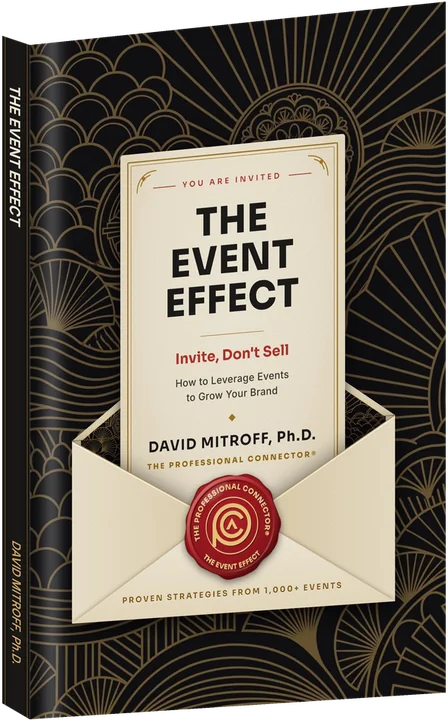
The Event Effect
David wrote the book on events that grow a business. The Event Effect, now in its second edition, covers how to plan, fill, host and follow up on them.
Take action
Your next three steps
- Pick a recurring date for a small event, and keep it for at least a year.
- Choose an event format your budget can carry, and look for a venue, sponsor or co-host to share the cost.
- Schedule a call with Piedmont Avenue Consulting, Inc. to choose the best format for the event you have in mind.
In their own words
What clients say about working with us
“Right away things started to happen. We have managed to fill up our seminar rooms again, he has found us great new staff, and business is booming. More than a marketing consultant, he is also a business confidant […]”
 David RosenbaumPartner, McDowall Cotter, APC

Read more client stories or see our case studies.
Frequently asked questions
Frequently asked questions
Is one big event or a series of small events better for a small business?
For most small businesses, a series of small, regular events builds more relationships, trust and follow-up than one big event, at a lower cost and with less stress.
When does a big event make sense?
A big event makes sense for a milestone such as a grand opening, a groundbreaking, an anniversary or a product launch, especially when the follow-up and the next event are already planned.
How often does a business host a recurring event?
In The Event Effect, David Mitroff, Ph.D., suggests choosing a rhythm the host can keep, such as one event a month or one a quarter, and committing to that rhythm for at least a year.
What if the first event in a series is small?
David Mitroff, Ph.D., writes that the first event is the hardest one, with fewer guests than hoped, and advises hosting the next one anyway, because the opportunities come from consistency.
What is a good format for a first event series?
A good first event series is simple to repeat, such as a monthly coffee, open office hours or a small quarterly dinner, held on a set date pattern at the same venue so regulars can plan around it.
How do you promote a recurring event?
Promote a recurring event one date at a time, with a fresh topic and guest list each month, because David Mitroff, Ph.D., advises against posting the next six months of the same monthly event at once.
Does Piedmont Avenue Consulting, Inc. work with owners on events?
Yes. Piedmont Avenue Consulting, Inc. works with owners in the San Francisco Bay Area, Los Angeles, Orange County and New York on event series, milestone events and the follow-up behind them. Schedule a call with David to talk about your business.
Let’s grow together.
Schedule a call with David. Tell us about the event you have in mind, and we will look at the best format for it.
Or call David at 510-761-5895, 8 AM to 8 PM, seven days a week.
About the author
David Mitroff, Ph.D. wrote this article. He is the founder of Piedmont Avenue Consulting, Inc., a business and marketing consulting firm serving the San Francisco Bay Area, Los Angeles, Orange County and New York. Meet David or read more articles by David.
- Founder and Business Growth Strategist at Piedmont Avenue Consulting, Inc.
- Doctorate in clinical psychology, with additional coursework in business administration, law and culinary arts; bachelor’s and master’s degrees.
- Taught marketing and entrepreneurship at the University of California, Berkeley for more than seven years.
- Author of several books, including The 45 Day Consultant, The 45 Day Consultant Field Guide, Online Business Growth Strategies, The Event Effect: Invite, Don’t Sell, and Law Firm Business Growth Strategies (Second Edition).
- Started seven companies; previously owned and ran a recruiting and staffing company.
David works with a small team of consultants and specialists on every engagement. Meet our team or read about Piedmont Avenue Consulting, Inc.