
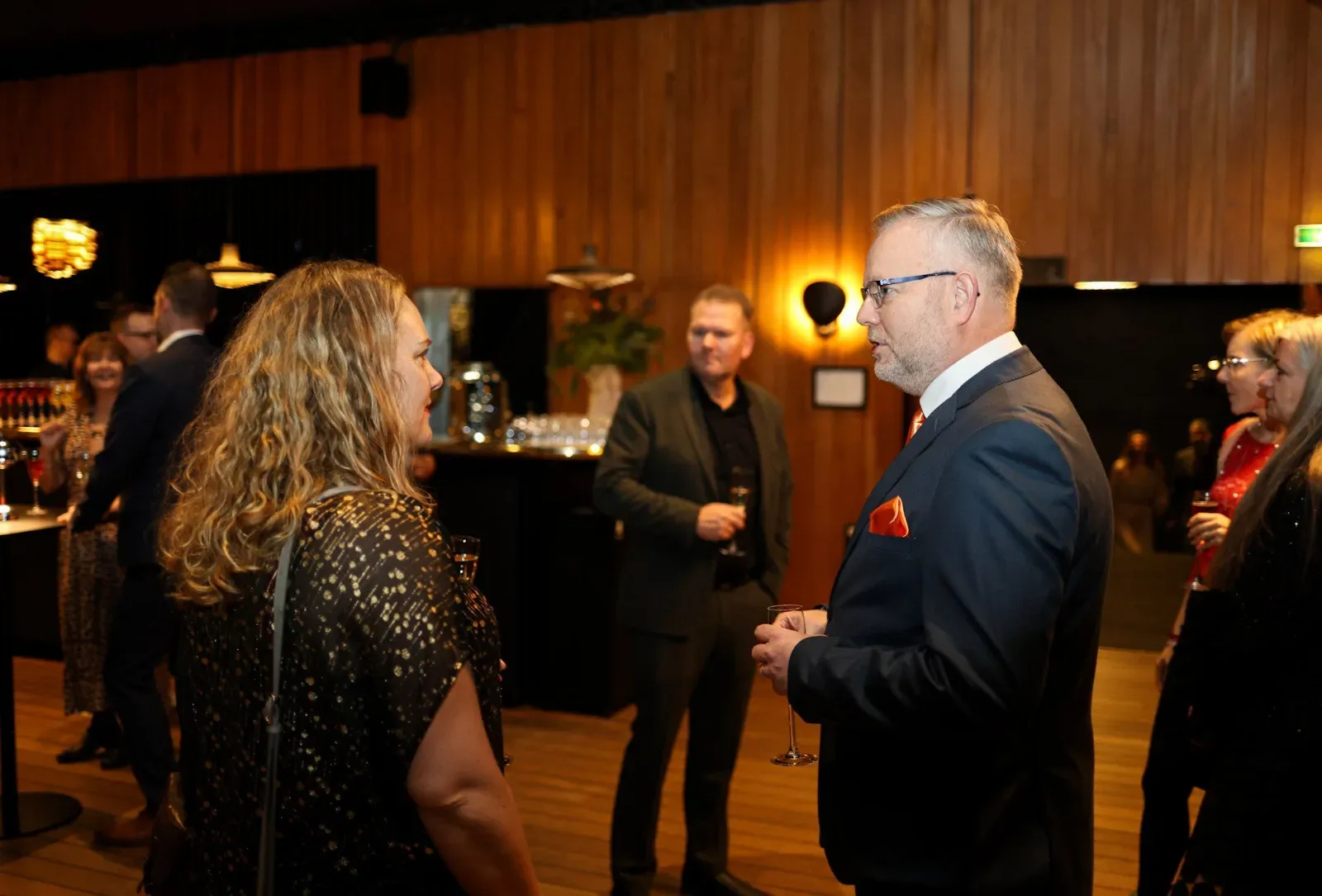


A call with David Mitroff, Ph.D.
Talk through your business with David
Quick answer
Yes. Research shows that asking in person is far more effective than asking by email, and that most executives say in-person meetings build stronger business relationships. Email and video reach more people for less time and money, so the best approach uses digital tools to start and keep relationships and in-person meetings to deepen them. Piedmont Avenue Consulting, Inc. plans events and outreach that combine both for owners across the San Francisco Bay Area, Los Angeles, Orange County and New York.
Key takeaways
- Research from the University of Waterloo found that asking in person was far more effective than asking by email.
- People expected email requests to work better, partly because senders trust their own email while recipients may see an unfamiliar message.
- In a Forbes Insights survey, ninety-one percent of executives said face-to-face meetings are best for persuading someone.
- Virtual events can reach people far beyond your city, and work best as a way to build relationships before meeting in person.
Do face-to-face meetings still matter when almost everything can happen by email or video? At Piedmont Avenue Consulting, Inc., we are a business and marketing consulting firm that works with owners in the San Francisco Bay Area, Los Angeles, Orange County and New York to start, grow and scale their businesses. We host business mixers, panels and executive dinners every month, and we also run webinars, so we wanted to see what the research says about the difference.
Asking in person beats asking by email
The study most often cited on this question comes from Vanessa Bohns and Mahdi Roghanizad, who did the work while Roghanizad was a doctoral student at the University of Waterloo. Their findings were published in the Journal of Experimental Social Psychology and featured in the Harvard Business Review.
Participants asked other people to complete a survey, either in person or by email. According to the University of Waterloo’s summary of the research, asking in person was significantly more effective, and the summary’s headline puts a face-to-face request at thirty-four times more successful than an email.
The more surprising finding is that people expected the opposite. The summary notes that “most people are likely to believe the text-based approach is more effective.” One reason for the gap: the sender trusts their own email, while the person receiving it may see an unfamiliar message asking them to click a link.
What it means for an owner: when the request matters, such as an introduction, a partnership or a first meeting, ask in person or by phone instead of relying on a cold email.
Why an email gets ignored and a person does not
The research names one reason for the gap, and in our experience a few others travel with it. An email arrives without a face, a voice or a handshake. The reader cannot see that you mean well, so the message has to prove itself in a few lines, often next to a pile of others asking for something too.
A request made in person carries context the email leaves out. The other person sees your expression, hears your tone and can ask a quick question before deciding. Saying yes feels easy because the whole picture is in front of them. Saying no to a person standing in front of you also takes more effort than leaving an email unread, which is one more reason in-person asks tend to land.
None of this means email is weak. It means email is better at some jobs than others. It is a strong tool for confirming a time, sending a link or following up on a conversation you already had. It is a weak tool for asking a stranger to trust you.
Executives say in-person meetings build stronger relationships
A second study, Business Meetings: The Case for Face-to-Face from Forbes Insights, surveyed 760 business executives in June 2009. Half worked at small businesses with fewer than one hundred employees, and nearly half of all respondents were owners or C-level executives.
- Preference: more than eight in ten said they prefer in-person contact to virtual meetings.
- Relationships: of those who prefer face-to-face, eighty-five percent said in-person meetings build stronger, more meaningful business relationships.
- Reading the room: seventy-seven percent of that group valued the ability to “read” another person.
- Persuasion: ninety-one percent of all respondents said face-to-face meetings are best for persuading someone.
- Attention: fifty-eight percent admitted they frequently browse the web, check email or do other work during virtual meetings.
The survey is older and was taken during a recession, when business travel was falling, so read the exact figures with that in mind. Its main point holds up in our experience: people trust the people they have met.
What changes when you meet in person
The survey numbers point to something owners feel without needing a study. A lot happens in person that a screen leaves out.
- You read the room. You notice the pause before an answer, the question someone almost asked, the look between two partners when a number comes up.
- The small talk does real work. A comment about a restaurant around the corner or a shared hometown builds trust faster than a polished pitch.
- Follow-up questions come naturally. In person you can ask “what do you mean by that?” without scheduling a second call.
- The time before and after counts. The walk to the door, the coffee line and the last five minutes after the meeting ends are often where the real conversation happens.
- People remember faces. Months later, the person you met at a dinner recognizes your name in their inbox and opens the email.
That last point is the one we see most. Meeting in person once makes every digital message afterward work harder.
Want more of your best conversations in person?
Schedule a call with David Mitroff, Ph.D. We look at who you need to meet and the right room to meet them in.
Or call David at 510-761-5895, 8 AM to 8 PM, seven days a week.
Digital still has a place
The same Forbes Insights survey found real reasons executives choose virtual meetings: saving time (ninety-two percent of those who prefer them), saving money (eighty-eight percent) and flexibility on location (seventy-six percent).
David Mitroff, Ph.D., moved his own events and workshops online when he had to, and some of his largest audiences were on a screen. In The Event Effect, he describes how to use both:
“A virtual event can reach people far beyond your city. Use it to build the relationship, and then invite people to meet in person.”
David Mitroff, Ph.D., in The Event Effect, Chapter 5: Pick the Right Event
He also warns against treating a webinar as a broadcast:
“A webinar where nobody talks to anybody is just a video.”
David Mitroff, Ph.D., in The Event Effect, Chapter 5: Pick the Right Event
Which conversations belong in person
Not every conversation needs a table and a handshake. Here is how we sort them with owners.
- In person: first meetings with a potential client or partner, asking for an introduction and hard conversations with a client or employee. Add a thank-you to someone who sent you business, and anything where trust is the main question.
- Phone: a quick decision, a follow-up after an in-person meeting, a check-in with a regular client, or an ask that cannot wait for the next time you see someone.
- Video: a planning session with someone in another city, a group update, a workshop or webinar for people spread across a region.
- Email: confirming a time and place, sending a document, a short thank-you note, and invitations to the next event.
If a conversation could change the relationship, move it up the list. If it only moves information, move it down.
Four businesses, four ways to use face time
The same research applies differently depending on what you sell. A few short scenarios show the range.
A general contractor and the architects who refer work. Architects decide which builders to recommend, and they recommend the ones they trust. A contractor who invites a handful of architects to walk a finished job, then takes them to lunch, gives them something an email brochure cannot: a look at the work and a reason to remember the person who did it.
A dental office and the specialists nearby. Referral relationships between dentists and specialists tend to run on habit. A short visit to a specialist’s office with a thank-you and a quick conversation about shared patients does more than a referral pad left in a waiting room.
A restaurant and the offices around it. The office manager who books team lunches is easier to win over across a table than through a flyer. An invitation to a tasting for the managers in a few nearby buildings turns strangers into regulars who send their teams.
A law firm and the professionals who send clients. Accountants, financial planners and other attorneys refer people they have met and liked. A quarterly dinner or a small workshop puts the firm’s attorneys in front of those people often enough to stay top of mind. Our guide to executive dinners covers how we plan those rooms.
How to make in-person time count
Face-to-face meetings take more time and money than email, so the goal is to get the most from each one. We break it into before, during and after.
Before: choose who and why
Start with a short list of the people who could change your business: clients you want more of, partners who serve the same customers and people who know everyone in your field. Our guide to building your top twenty list walks through how to choose them.
“Then I make it a habit: two or three meetings a month with people on that list, plus lunch with three of them every month. That’s thirty-six lunches a year with the people most likely to change your business. Most people have zero.”
David Mitroff, Ph.D., in The Event Effect, Chapter 9: Your Invitation List
Then give each meeting a reason. A new idea to share, an introduction to offer, a question you want their view on or a simple thank-you all count. People say yes to a meeting with a clear purpose.
During: listen more than you talk
- Arrive a few minutes early so you are not rushing in.
- Ask about them before you talk about you.
- Take a short note right after, such as a name they mentioned or a goal they shared.
- Offer something before you ask for anything: an introduction, a resource or an invitation.
- End with a clear next step, even if the next step is “let’s talk again in a month.”
If you host the room yourself, you get to do this with many people at once. Our article on why we tell owners to host the room instead of working the room explains the approach.
After: follow up while it is fresh
The meeting is only half the value. A short note within a day or two, with the introduction or resource you promised, shows you were listening. Then put the next touch on your calendar. Our guide to a follow-up system for small business lays out a simple routine.
Blend the two, and let each do its job
The strongest relationships we see use both. Digital tools start a conversation and keep it going. In-person time turns it into trust. The pattern often looks like this:
“I met someone at an event in San Francisco who added me on LinkedIn afterward. We stayed in touch, and I kept inviting them to things. Months later, they introduced me to their sister-in-law’s restaurant group.”
David Mitroff, Ph.D., in The Event Effect, Chapter 14: Follow-Up Is Where the Value Is
Notice the order. A meeting in person came first, a digital connection kept it alive, invitations kept bringing the person back into the room, and an introduction followed. No single step did the work alone.
A webinar fits the same pattern. It reaches people in other cities, and the best ones end with an invitation to meet in person. Our guide on how to host a webinar covers how to make one feel like a conversation.
Show up more than once
One meeting rarely builds a relationship. A rhythm does. People start to recognize you, then trust you, then send others your way.
“Nothing changed about the booth. What changed was three years of showing up.”
David Mitroff, Ph.D., in The Event Effect, Chapter 3: How Leaders Create Luck
That is why we tell owners to pick a rhythm they can keep. A monthly breakfast, a quarterly dinner or a yearly open house all work, as long as people know when the next one is.
Common mistakes with face-to-face meetings
- Treating every meeting as a pitch. People can tell, and they stop saying yes to the next one.
- Meeting once and disappearing. The first meeting starts a relationship. The second and third build it.
- Skipping the follow-up. A great conversation with no note afterward fades within a week.
- Saving in-person time for strangers only. Your current clients and referral partners often deserve the table first.
- Moving everything to video for convenience. Video saves time, and some conversations lose too much on a screen.
- Going to rooms full of people who cannot send you business. Choose events by who will be there, not by how many.
How to tell whether face time is paying off
You can measure in-person work the same way you measure marketing. Track a few simple numbers for a season:
- Meetings held with people on your list each month.
- Introductions received after those meetings.
- Second meetings booked, since a second meeting signals real interest.
- New clients or partners you can trace back to an in-person conversation.
- Repeat guests at the events you host.
Our article on how to measure event success goes deeper on what to count and what to ignore.
How to put the research to work
- Ask in person for what matters most: introductions, partnerships and first meetings.
- Use email and social media to stay in touch between meetings, and to invite people to the next one.
- Host a small room on a regular rhythm, such as a monthly mixer or a quarterly dinner, so people know when they will see you.
- Make virtual events interactive, with names in the chat, a poll and real time for questions.
- Follow up within a day or two of every meeting, in person or online.
Our guides on business networking tips, how to host an executive dinner and traditional vs. digital marketing go further.
What to do this week
- Write down five people you have only emailed who you would rather meet in person.
- Invite one of them to coffee or lunch, with a clear reason.
- Pick one email request you were about to send and make it a phone call instead.
- Choose a rhythm for a small gathering you could host, monthly or quarterly.
- Send a short thank-you note to the last person who sent you business.
Small moves add up. A few more in-person conversations each month change who knows you and who thinks of you first.

How we work with owners on events and relationships
We plan mixers, panels, executive dinners and webinars, and we host The Professional Connector® events across the San Francisco Bay Area and Southern California, so owners meet the right people in person. In the first ninety days of working together, our job is to find our fee, which means making or saving you more than you pay us. We start with an initial consultation and a paid assessment, then build a ninety-day plan and a twelve-month marketing calendar. Learn more about our event marketing work.
From David’s books

The 45 Day Consultant Field Guide
This is also in David’s book, in Chapter 6, “The Psychology Behind Connecting”. Each chapter page sums up the idea, the story behind it and what to do next.
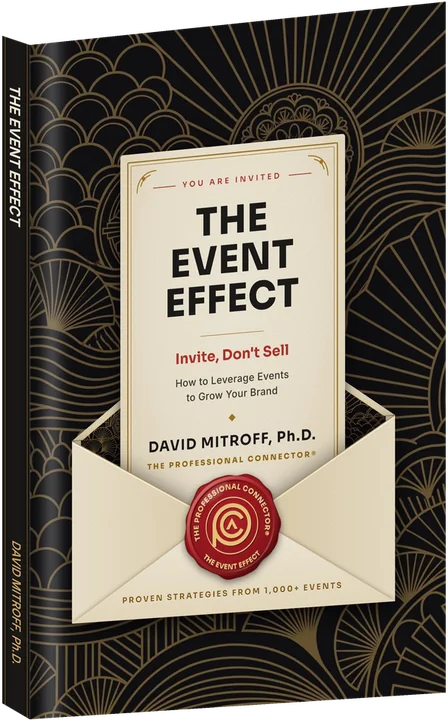
The Event Effect
David wrote the book on events that grow a business. The Event Effect, now in its second edition, covers how to plan, fill, host and follow up on them.
Take action
Your next three steps
- Ask in person or by phone for what matters most, such as introductions, partnerships and first meetings.
- Host a small room on a regular rhythm, such as a monthly mixer or a quarterly dinner.
- Make virtual events interactive with names in the chat, a poll and real time for questions.
In their own words
What clients say about working with us
“Right away things started to happen. We have managed to fill up our seminar rooms again, he has found us great new staff, and business is booming. More than a marketing consultant, he is also a business confidant […]”
 David RosenbaumPartner, McDowall Cotter, APC

“I have known and worked with David for over 15 years, across numerous companies and ventures. He helped us build and promote Clark Meyers. He is my go-to marketing guru and has introduced me to the resources I need to grow.”
 Conor MeyersCo-Founder, Clark Meyers PC

Read more client stories or see our case studies.
Frequently asked questions
Frequently asked questions
Are face-to-face requests more effective than email?
Yes. Research by Vanessa Bohns and Mahdi Roghanizad, published in the Journal of Experimental Social Psychology, found that asking people in person to complete a survey was significantly more effective than asking by email, with the University of Waterloo’s summary putting the difference at thirty-four times.
Why do email requests fail more often?
Senders tend to trust their own emails, while recipients may see an unfamiliar message asking them to click a link. People also overestimate how persuasive their emails are.
Do executives prefer in-person meetings?
A Forbes Insights survey of 760 executives found that more than eight in ten preferred in-person contact, and eighty-five percent of that group said face-to-face meetings build stronger, more meaningful business relationships.
Are virtual meetings still useful for a small business?
Yes. Virtual meetings and webinars save time and money and reach people in other cities. Many owners use them to start relationships and in-person meetings to deepen them.
Does Piedmont Avenue Consulting, Inc. plan in-person business events?
Yes. Piedmont Avenue Consulting, Inc. plans mixers, panels, executive dinners and webinars and hosts The Professional Connector® events. Schedule a call with David to talk about your next event.
How often is it worth meeting key contacts in person?
A steady rhythm works best. Many owners meet two or three people from their key list each month and host a small gathering monthly or quarterly, using email and phone to stay in touch between meetings.
Which requests are best made face to face?
First meetings, requests for introductions, partnership conversations, hard conversations and thank-yous to people who send you business are best made in person, because each one depends on trust.
Let’s grow together.
Schedule a call with David. Tell us who you most want to meet this year, and we will plan the room.
Or call David at 510-761-5895, 8 AM to 8 PM, seven days a week.
About the author
David Mitroff, Ph.D. wrote this article. He is the founder of Piedmont Avenue Consulting, Inc., a business and marketing consulting firm serving the San Francisco Bay Area, Los Angeles, Orange County and New York. Meet David or read more articles by David.
- Founder and Business Growth Strategist at Piedmont Avenue Consulting, Inc.
- Doctorate in clinical psychology, with additional coursework in business administration, law and culinary arts; bachelor’s and master’s degrees.
- Taught marketing and entrepreneurship at the University of California, Berkeley for more than seven years.
- Author of several books, including The 45 Day Consultant, The 45 Day Consultant Field Guide, Online Business Growth Strategies, The Event Effect: Invite, Don’t Sell, and Law Firm Business Growth Strategies (Second Edition).
- Started seven companies; previously owned and ran a recruiting and staffing company.
David works with a small team of consultants and specialists on every engagement. Meet our team or read about Piedmont Avenue Consulting, Inc.