

Field Guide, Chapter Six
How psychology helps you sell
What does a five-day workshop in Las Vegas have to do with winning clients? Quite a lot, as David Mitroff, Ph.D. found out.
The short answer
The psychology of sales is about understanding people: their timing, where they are, and what they truly want, which may differ from what they first say. Piedmont Avenue Consulting, Inc. helps owners in the San Francisco Bay Area, Los Angeles, Orange County and New York build marketing, sales and client relationships around those real goals.
From The 45 Day Consultant Field Guide
In the chapter titled “The Psychology Behind Connecting,” David Mitroff, Ph.D. writes:
“People do not remember what you sold them. They remember how you made the decision feel.”
Customers forget the details of a sale. They remember whether they felt heard, respected and sure of their choice.
 (opens in a new tab)
Get the book on Amazon (opens in a new tab)
See every chapter
Questions owners ask
What psychology has to do with selling
How is a doctorate in clinical psychology relevant to sales?
For years people asked David that question. His answer was another question: why are you asking? Psychology is sales. To sell anything, or to consult, you have to understand people. That means their timing, where they are, what they are willing to do, and the fact that saying you want something is not the same as wanting it.
Which words should you listen for?
From Albert Ellis, the psychologist who developed Rational Emotive Behavior Therapy, David learned to listen for five words: should, must, always, never, and the phrase “I can’t stand it.” Should and must are judgments. Always and never ignore that life changes. When you catch one, swap it for could, however, or it might be. When a client says they cannot stand something, ask what they can do.
What if the client wants less than you could give them?
Then give them what they asked for. David tells of a dentist who wanted to work three full days a week with the right patients, and a limousine company that wanted high-end charters, such as a day around Napa, instead of airport runs. Many advisors say they could fill the whole week. The client did not ask for a whole week. So line up the marketing plan, the calendar, the website and the customer experience to bring in that work.
Why does knowing yourself matter in a client meeting?
When David starts to feel a certain way in a meeting, he asks: is that me, or is that them? Often the feeling comes from the client, and that is useful information. The feeling shows how the client affects the people around them, which the client may not know. The more you know yourself, the more you can help other people, and the better advisor you become.
“Trouble in a business relationship usually starts when two people want different things from it and neither one says so.”
Five days with Albert Ellis
What David learned at a workshop with Albert Ellis
In the book, David tells about a small, five-day workshop in Las Vegas with Albert Ellis, the psychologist behind Rational Emotive Behavior Therapy, or REBT. The group practiced therapy on each other. The lesson reached far past psychology: listen for rigid assumptions, question them directly, and keep asking until you understand what is really driving the other person’s position.
The Ellis method worked. But when David tried to copy the method exactly, something was off, and the results were not quite the same. Real success came only when he made the approach his own, filtering the approach through his own personality and way of talking. He carried that lesson into consulting, negotiation, coaching and client conversations.
Today he gives the same advice to new consultants and keynote speakers: do not copy me. Use the techniques as a foundation and adapt them to your style. David uses humor and stories because that is who he is. For someone else, a more structured or data-driven style might work better. The goal is to find what works for you, and own it.
Borrow a proven method, then make the method your own.

Levels of relationships
Know what kind of relationship you are in
David uses ideas from Terence T. Gorski, author of Addictive Relationships and Getting Love Right, in business every day.
Superficial
This is the first level, as Gorski describes the levels. You deal with each other, and that is all there is to the relationship.
Activity partners
The activity matters most and the person is secondary. Most business relationships are this kind, and that is healthy. A strategic partner or a client is an activity partner.
Friendship
Here the person matters most and the activity is secondary. Some clients become friends over the years, and those are the ones who think of you first and stay for a decade.
The loving relationship
The fourth level stays out of the office. David says to make that clear to yourself and to everybody who works for you.
Watch for mismatched levels
Trouble starts when one person thinks the relationship is a friendship and the other sees a golf partner. Nobody did anything wrong. They were on different levels, and nobody said so.
Keep the relationship healthy
In a compulsive relationship, people expect too much. In an apathetic one, they expect too little. In a healthy one, two people choose each other and both keep investing.
Say the point again
Using humor and stories in business talks
David brings humor and storytelling into tense business talks because that is who he is. He enjoys comedy shows and magic performances, and a little lightness helps him ease tension and connect with people. Clients sometimes get frustrated when he repeats the same point in slightly different ways. One client told him that was the seventh time he had said the same thing.
His answer was yes, and he would keep saying the point until the client heard it. Repeating the message is how he makes sure the message lands. He is not giving up, because that is why the client hired him. For an owner or a sales leader, the lesson is simple: when a point truly matters, one mention is rarely enough.
From the full book
What The 45 Day Consultant adds
The Field Guide builds on David’s full book, The 45 Day Consultant. In the chapter titled “What Is a Consultant?”, he writes:
“You learn an enormous amount, constantly, from people who are delighted to teach you. Nobody is guarded about the thing they love. Ask about the main job and you get a polite answer. Ask about the other thing and you get the person.”
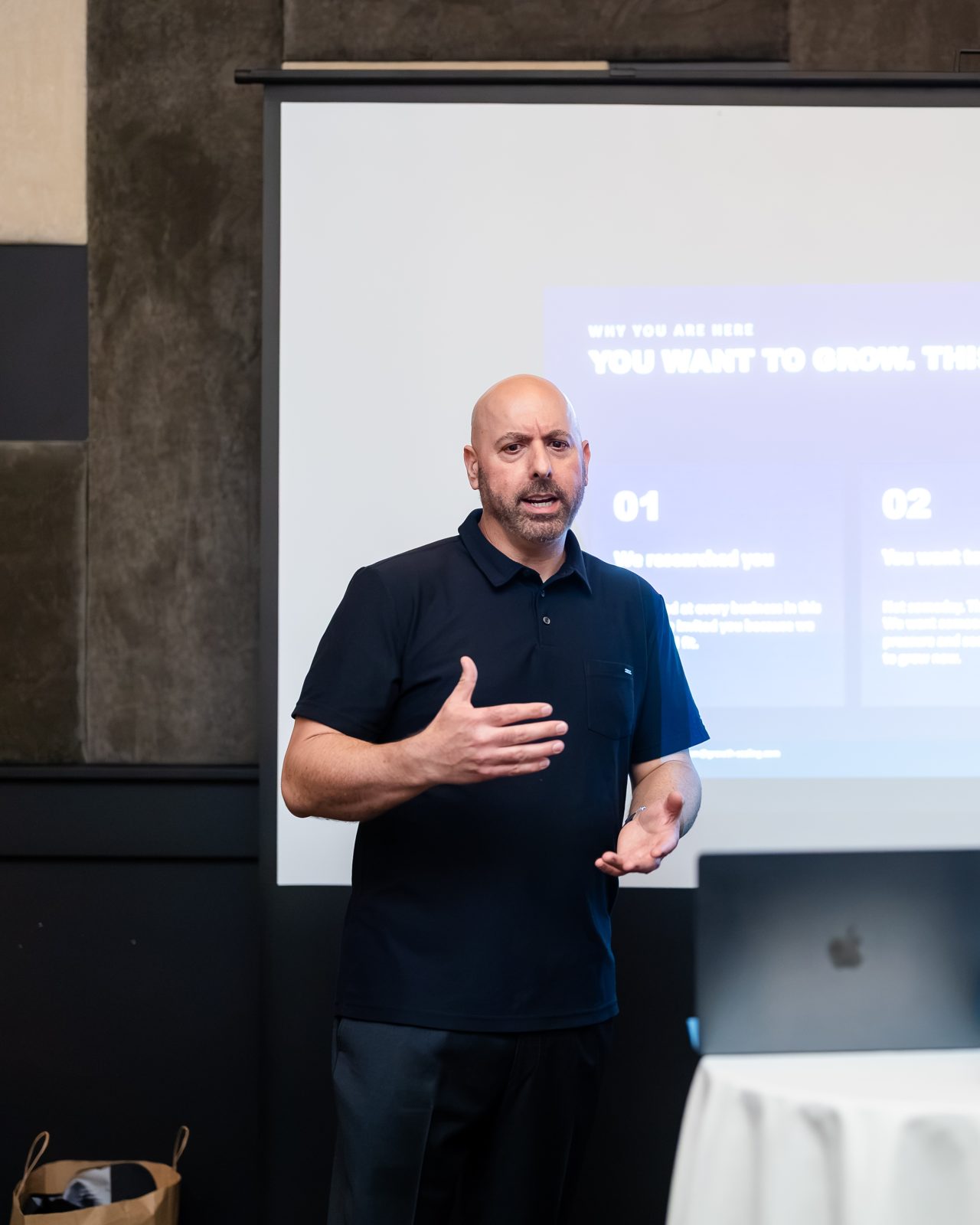
David can speak on this topic
A keynote talk based on this chapter
The Psychology Behind Connecting is also a keynote talk. Audiences leave knowing which words to listen for, the levels of business relationships, and how to make a proven method fit their own style.
Every chapter of The 45 Day Consultant Field Guide is also a keynote talk. David gives these talks to companies, associations, conferences and leadership teams.
David also gives a related keynote, The Psychology Behind Connecting, on the psychology of how people connect, listen and decide whom to trust. See his keynote programs (opens in a new tab)
A real result
How this idea worked for a client
People skills matter most when many people have to move together. For Granite Wellness Centers, we trained the executive leadership team and led an all-staff training, and we wrote the grant application that won a new $2 million grant.
 NonprofitA new $2 million grant
Granite Wellness Centers won a new $2 million grant. We wrote the grant application, trained the executive leadership team and led an all-staff training.
Read the case studyTestimonials
What our clients say
“Right away things started to happen. We have managed to fill up our seminar rooms again, he has found us great new staff, and business is booming. More than a marketing consultant, he is also a business confidant […]”

“David was very helpful with structuring online marketing for my business. He presented clear ideas and strategy that was totally relevant for my dental office. His innovative thinking helps me to think outside the box.”

“We worked with Piedmont Avenue Consulting to implement new sales processes and launch a successful customer loyalty program. As a result, we have dramatically increased revenues from catering events and ‘front of mind’ sales.”

How it works
How we work: call, assessment, plan.
Schedule a call
Tell us where the business is today and where you want it to be.
Assessment
We look at your numbers, marketing, team and operations.
90-day plan
Three to five initiatives with owners and dates, plus a 12-month marketing calendar.
Ongoing initiatives
We stay on as a long-term partner and keep the plan moving.
In the first 90 days, our job is to find our fee: make or save you more than you pay us.
On the blog
Articles that go deeper on this chapter
Keep reading
More chapters from the Field Guide




Questions
Questions owners ask
What is the psychology of sales?
The psychology of sales means understanding people well enough to know what they want and when they are ready. David Mitroff, Ph.D. holds a doctorate in clinical psychology and teaches that psychology is sales.
Who was Albert Ellis?
Albert Ellis was the psychologist who developed Rational Emotive Behavior Therapy, or REBT. David Mitroff, Ph.D. attended a five-day workshop with Albert Ellis in Las Vegas and still uses the lessons with clients.
What should a consultant do when a client uses words like should or must?
Should and must are judgments, and always and never ignore that life changes. David Mitroff, Ph.D. suggests swapping those words for could, however, or might be, and then asking what the client can do.
Why would an advisor give a client less than the advisor could?
The client decides what the business needs. When a dentist wants three full days a week, David Mitroff, Ph.D. builds the marketing plan, calendar and website to fill those three days, and may offer more options along the way.
What are the levels of business relationships?
Terence T. Gorski describes superficial relationships, activity partners, friendship and loving relationships. David Mitroff, Ph.D. notes that most business relationships are activity partners, and some clients become friends over the years.
Why do business relationships go wrong?
Trouble usually starts when two people want different things from the relationship and neither person says so. David Mitroff, Ph.D. calls this a mismatch of levels: nobody did anything wrong, and nobody spoke up.
Should a new consultant copy the style of David Mitroff, Ph.D.?
No. David Mitroff, Ph.D. tells new consultants and speakers to use his techniques as a foundation and adapt them to their own style. A line that works with his humor might fall flat without the same tone.
Can a team hear this chapter as a talk?
Yes. The Psychology Behind Connecting is also a keynote talk by David Mitroff, Ph.D., covering listening, relationship levels and personal style.
Work with us
Schedule a call about your sales
In the first ninety days of working together, our job is to find our fee, which means making or saving you more than you pay us. We start with an initial consultation and a paid assessment, then build a ninety-day plan and a twelve-month marketing calendar.
One conversation and a clear next step.