
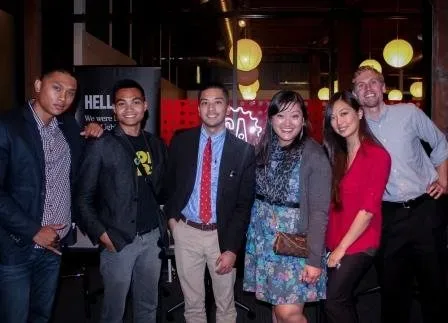


A call with David Mitroff, Ph.D.
Talk through your business with David
Quick answer
The biggest event marketing myths are that an event fails if few people come, that events need a big budget and a big room, that events with no ticket draw more people and that the work ends when the guests go home. In practice, the invitation does much of the work, small full rooms beat large empty ones, a small ticket raises turnout, sponsors and venues can cover costs and follow-up is where the value is. Piedmont Avenue Consulting, Inc. plans and promotes events for owners across the San Francisco Bay Area, Los Angeles, Orange County and New York.
Key takeaways
- An event does not fail when few people come, because every invitation already tells people what the business does.
- A full brunch for eight beats a half-empty mixer for eighty, since full rooms create word of mouth and empty ones create excuses.
- A small ticket price usually raises turnout, because paying even ten dollars is a commitment to show up.
- The event is the middle of the work, and follow-up with guests and those who missed it is where the value is.
Event marketing myths keep many good owners from ever hosting a first event. At Piedmont Avenue Consulting, Inc., we are a business and marketing consulting firm that works with owners in the San Francisco Bay Area, Los Angeles, Orange County and New York to start, grow and scale their businesses. Through The Professional Connector®, our events community, David Mitroff, Ph.D., has hosted more than a thousand events, and the same eight beliefs come up again and again from owners who are thinking about their first one.
Why these myths stick
Most of these beliefs come from watching events from the outside. You see the crowded gala, the sponsor banners and the photos afterward, and you assume that is where hosting starts. You do not see the first nights, when the host sat with four guests and kept going anyway. You also do not see the notes that went out the next morning, which is where the business came from.
The eight myths below share one root. Each one judges an event by the night itself, by the head count, the room or the budget, and leaves out the invitation before it and the follow-up after it. Once you see the whole arc, from the first invitation to the next date on the calendar, most of the fear goes away.
Myth one: An event fails if nobody comes
Fact: The invitation is already working before anyone walks in. Every invitation tells people what you do, shows that your business is active and puts your name in front of them. An event page also stays online and shows up when someone searches for the topic months later. David puts it in one line in The Event Effect:
“It works even if nobody comes. The invitation already did its job.”
David Mitroff, Ph.D., in The Event Effect, Chapter 2: It Works Even If Nobody Comes
For a first event, judge success by how many people you invited and how many replied, not only by who came through the door.
What to count instead of heads
Decide before the night which numbers matter, and write them down. David’s test in the book is to count meetings, not heads:
“Eighty people who drank your wine and left are not a success. Twelve people, three of whom book a follow-up call, are.”
David Mitroff, Ph.D., in The Event Effect, Chapter 4: Start With Why
A simple scorecard for a first event looks like this:
- Invitations sent, by name first and by email second.
- Replies received, including every “can’t make it.”
- Guests who came, and how many brought someone.
- Meetings booked in the two weeks after the event.
- Next steps with a sponsor, a partner or a new client.
Our guide on how to tell whether a business event worked goes through each of these numbers and what to do with them.
Myth two: You need a big budget, a big venue and a big list
Fact: You need an invitation and a place to meet. Some of the best first events are a table at a café, open office hours at your shop or a tasting you already run. David opens The Event Effect with this:
“You do not need a ballroom, a big budget or a huge list. You do not need to have hosted anything before. If you can send an invitation, you can use this book.”
David Mitroff, Ph.D., in The Event Effect, Introduction
Our guide on how to host a business event walks through a simple first event step by step.
Three budgets, three formats
In the chapter on what events cost, David turns the usual order around: decide what you can spend and what you want the event to do, then pick the format. Say the goal is to meet twenty business owners this quarter. With almost no budget, invite them one at a time to coffee. With a little more, host a mixer at a venue that wants to fill a slow night. With a sponsor, host an executive dinner.
“Same goal, three budgets, three formats, and each one works.”
David Mitroff, Ph.D., in The Event Effect, Chapter 18: What Events Cost
The goal stays the same in all three. Only the size of the room changes. Our guide on how to budget for a business event shows the math at each size.
Myth three: A bigger crowd means a better event
Fact: A full small room creates more buzz than a half-empty big one. Guests judge an event by how it feels, and a crowded small room feels like the place to be. In David’s words:
“A full brunch for eight beats a half-empty mixer for eighty, every time. Full rooms create word of mouth. Empty ones create excuses.”
David Mitroff, Ph.D., in The Event Effect, Chapter 5: Pick the Right Event
Book the smaller room first and let a wait list grow. A wait list is good news you can share in the next invitation.
Myth four: Free events draw more people
Fact: A small ticket price usually raises turnout. In David’s experience, roughly half of the people who register for a public event with no ticket price show up. When guests pay ten dollars or more, about three out of four show up. As he writes:
“A small ticket isn’t about the money. It’s a commitment.”
David Mitroff, Ph.D., in The Event Effect, Chapter 5: Pick the Right Event
Higher prices change the math again. Around seventy-five dollars and up, companies often pay instead of individuals, and work gets in the way. Pick a price that matches the event and the people you want in the room.
For an invite-only dinner or a client appreciation night, a ticket rarely fits. For a public workshop or mixer, a small one usually does. Our guide on whether to charge for a business event walks through the choice, event by event.
Myth five: Events cost too much for a small business
Fact: Partners can cover much of the cost. Venues with slow nights often welcome a group of professionals who spend money and come back. Sponsors such as banks, insurance firms and law firms want to meet business owners in a respectful setting. For executive dinners, David sets a clear target:
“The goal is for sponsors to cover the full cost of the dinner.”
David Mitroff, Ph.D., in The Event Effect, Chapter 6: The Executive Dinner
Our articles on how to host an executive dinner and restaurant event ideas explain how the venue and sponsor exchange works.
The exchange works when each side knows what it gets. A venue gets a full room on a quiet night and a group of guests who may return on their own. A sponsor gets a respectful introduction to people it wants to know, with no hard pitch. You get the room and the guests. Put each part in writing before the invitations go out, so nobody is surprised on the night. Our guide on how to get event sponsors and venue partners covers what to offer and what to ask for.
Thinking about hosting your first event?
Schedule a call with David Mitroff, Ph.D. We look at who you want in the room and the simplest event that would bring them together.
Or call David at 510-761-5895, 8 AM to 8 PM, seven days a week.
Myth six: The event is over when the guests go home
Fact: The event is the middle of the work. The invitations and the room create the opportunity. The follow-up turns it into meetings, clients and partners. David describes the moment after the chairs are stacked:
“Most people think that’s the end. It’s actually the middle. The invitations, the room, the introductions: they create the opportunity. Follow-up is where you actually get it.”
David Mitroff, Ph.D., in The Event Effect, Chapter 14: Follow-Up Is Where the Value Is
Send a thank-you to everyone who registered within a day or two, with a photo and a link to the next event. Our article on the follow-up system that wins more business covers the rest.
Myth seven: People who did not come are lost
Fact: The people who could not make it are still part of the event. Send them a note too, saying you missed them and hope to see them next time. David has seen this pay off many times:
“They didn’t come, and they were still part of the event. I’ve had opportunities come from people who showed up and from people who didn’t, again and again.”
David Mitroff, Ph.D., in The Event Effect, Chapter 14: Follow-Up Is Where the Value Is
Myth eight: One great event is enough
Fact: Results come from showing up again and again. The first event is usually the hardest, with fewer guests than you hoped and something that goes wrong. The second and third get easier, and people start to expect them. David explains why a steady rhythm matters:
“The opportunities come from consistency. The person who couldn’t come in March comes in April. The sponsor who watched your first three events signs on for the fourth.”
David Mitroff, Ph.D., in The Event Effect, Chapter 19: It’s Not as Easy as It Looks
Pick one night a month or one night a quarter, keep it the same and invite steadily. Our guide on how to promote an event covers the invitations.
The belief under all eight: you need a reason to host
Every one of these myths gets easier once the event has a clear purpose. David hears the same thing from owners again and again: they want an event because a competitor held one and people talked about it.
“That is not a reason. That is a feeling. And a feeling is an expensive way to plan an event.”
David Mitroff, Ph.D., in The Event Effect, Chapter 4: Start With Why
Before you book a room or design a single invitation, answer a few questions in writing:
- Who is the room for? One kind of guest, named as plainly as you can, such as patients who have been with you for years or architects who specify your work.
- Why would they leave the office? What will they taste, learn, see or meet that they cannot get anywhere else?
- What do you want to happen afterward? A meeting, a partnership, a sponsor, a booked private event or a client conversation. Pick one or two.
- How will you know it worked? A number of meetings or next steps you can count a week later.
When those answers are on paper, the budget, the room, the price and the follow-up almost choose themselves. When they are missing, every other decision turns into a guess.
What to do instead: a simple first event plan
- Pick one audience you want to know better, such as clients, partners or neighbors.
- Pick a small, simple format: a coffee, a tasting, a workshop or a dinner for eight.
- Ask a venue or partner to host or sponsor in exchange for meeting your guests.
- Send personal invitations by name before any public post.
- Set a small ticket price if the event is open to the public.
- Thank everyone who registered within two days, whether they came or not.
- Put the next date on the calendar before the night ends.
Our article on what event marketing is covers the basics and the main types of events.
Five first events for five kinds of business
The plan above fits almost any business. Here is how it might look in a few different ones. These are illustrations of the pattern, not clients.
A restaurant in its slow season
A restaurant is slammed in December and quiet in January. A small brunch series on January weekends, with invitations by name to regulars and neighbors, fills tables that would sit empty and gives guests a reason to bring a friend. The thank-you note includes the next date.
A law firm that teaches
A law firm can host a continuing education workshop in the fall for the professionals who send it clients, then a client appreciation dinner in early December. The workshop shows the firm’s knowledge. The dinner thanks the people who already trust it.
A contractor with a finished job
A contractor can invite past clients, architects and suppliers to walk a finished space, with the owner’s permission. Guests see the work in person, and the conversation turns to the next job without anyone pitching. Our guide on planning a groundbreaking ceremony shows the same idea at the start of a job.
A shop or showroom
A shop is open anyway, so the event is simply saying it out loud. A wine bar can feature a new region each week. A piano store can invite people to drop in and play. The host is already there, and now the neighbors have a reason to stop by.
A professional services firm
An accountant, a consultant or an architect can host a small breakfast for eight clients and partners, with one topic and plenty of time to talk. The room stays small on purpose, so every guest leaves having met everyone else.
Common mistakes on a first event
- Posting publicly before inviting personally. The guests you most want there hear about it from a feed instead of from you.
- Booking the big room first. A half-empty room makes a good event feel like a failed one.
- Leaving without the next date. Guests who enjoyed the night have nowhere to go next.
- Pitching from the front of the room. Guests came for the room, not a sales talk. If you are selling, say so plainly in the invitation.
- Thanking only the guests who came. The people who registered and missed it are often the warmest leads on the list.
- Judging the night by the head count. Count the meetings that follow, and the head count stops mattering so much.
What to do this week
- Write one sentence naming who the room is for and what you want to happen afterward.
- List twenty people you would most like in that room, by name.
- Ask one venue or partner whether it would host a small group on a quiet night.
- Pick a date on a Tuesday, Wednesday or Thursday evening, away from holiday weeks.
- Draft the thank-you note now, before the event, so it goes out within a day or two.
- Put the second date on your calendar, so the first event is the start of a series.

How we work with owners on event marketing
We plan, promote and run events for restaurants, law firms, contractors, healthcare practices, nonprofits and professional services firms, and we host The Professional Connector® events across the San Francisco Bay Area and Southern California. In the first ninety days of working together, our job is to find our fee, which means making or saving you more than you pay us. We start with an initial consultation and a paid assessment, then build a ninety-day plan and a twelve-month marketing calendar. Learn more about our event marketing work.
From David’s books
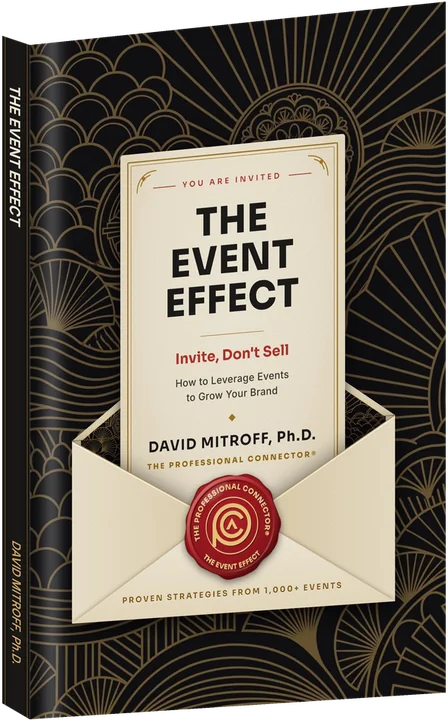
The Event Effect
David wrote the book on events that grow a business. The Event Effect, now in its second edition, covers how to plan, fill, host and follow up on them.
Take action
Your next three steps
- Book the smaller room first, and let a wait list grow that you can mention in the next invitation.
- Ask a venue with slow nights or a sponsor to host or cover costs in exchange for meeting your guests.
- Thank everyone who registered within two days, whether they came or not, and invite them to the next date.
In their own words
What clients say about working with us
“Right away things started to happen. We have managed to fill up our seminar rooms again, he has found us great new staff, and business is booming. More than a marketing consultant, he is also a business confidant […]”
 David RosenbaumPartner, McDowall Cotter, APC

“David was extremely helpful, and the most responsive consultant I’ve ever worked with. If he didn’t know something, he had no problem acknowledging that, and calling in an expert. His follow-up was absolutely impeccable.”
 Judith Szepesi, J.D.Partner, Blakely Sokoloff Taylor & Zafman

Read more client stories or see our case studies.
Frequently asked questions
Frequently asked questions
Does an event fail if only a few people come?
No. The invitations already tell people what your business does and keep your name in mind, and the event page stays online for months. For a first event, count invitations and replies as well as guests.
Do free events get more attendees than paid events?
Not usually. David Mitroff, Ph.D., sees roughly half of the people who register at no charge show up, while about three out of four show up when guests pay ten dollars or more. A small ticket is a commitment.
How can a small business afford to host events?
Start small and use partners. Venues with slow nights often host groups of professionals, and sponsors such as banks, insurance firms and law firms often cover dinner costs in exchange for meeting the guests.
What happens after a business event?
Follow-up turns the event into results. Thank everyone who registered within a day or two, including people who could not come, share a photo and invite them to the next event.
How do you measure whether a business event worked?
Count meetings, not heads. Track invitations sent, replies, guests, meetings booked in the weeks after and next steps with sponsors, partners or clients.
What is the simplest first event for a small business?
A coffee, a tasting, open office hours or a small breakfast for eight. Invite people by name, keep the room small and announce the next date before guests leave.
Does Piedmont Avenue Consulting, Inc. plan events for small businesses?
Yes. Piedmont Avenue Consulting, Inc. plans, promotes and runs events for owners and hosts The Professional Connector® events. Schedule a call with David to talk about your goals.
Let’s grow together.
Schedule a call with David. Tell us who you want to meet, and we will look at the simplest event that would bring them together.
Or call David at 510-761-5895, 8 AM to 8 PM, seven days a week.
About the author
David Mitroff, Ph.D. wrote this article. He is the founder of Piedmont Avenue Consulting, Inc., a business and marketing consulting firm serving the San Francisco Bay Area, Los Angeles, Orange County and New York. Meet David or read more articles by David.
- Founder and Business Growth Strategist at Piedmont Avenue Consulting, Inc.
- Doctorate in clinical psychology, with additional coursework in business administration, law and culinary arts; bachelor’s and master’s degrees.
- Taught marketing and entrepreneurship at the University of California, Berkeley for more than seven years.
- Author of several books, including The 45 Day Consultant, The 45 Day Consultant Field Guide, Online Business Growth Strategies, The Event Effect: Invite, Don’t Sell, and Law Firm Business Growth Strategies (Second Edition).
- Started seven companies; previously owned and ran a recruiting and staffing company.
David works with a small team of consultants and specialists on every engagement. Meet our team or read about Piedmont Avenue Consulting, Inc.