
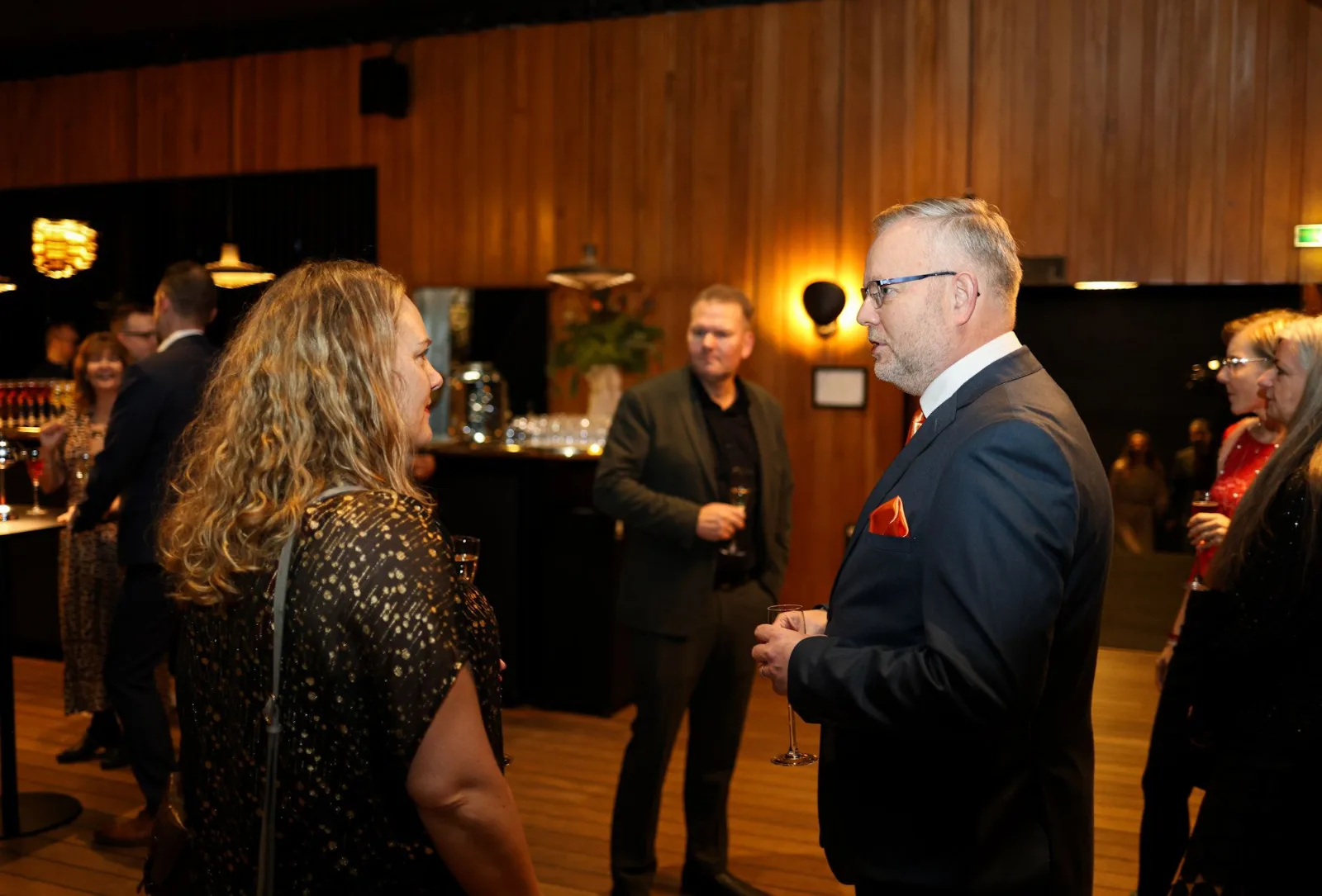


A call with David Mitroff, Ph.D.
Talk through your business with David
Quick answer
When a conference, a trade show or a summit brings your customers to town, give them somewhere to go next. A happy hour after the show, a dinner the night before or a panel on a related theme all work. Pick a time that does not compete with the main program, invite people one at a time and make the event complement the big one. Piedmont Avenue Consulting, Inc. plans these events with owners across the San Francisco Bay Area, Los Angeles, Orange County and New York.
Key takeaways
- Hosting a smaller event around a conference works because the audience is already in town and already thinking about the topic.
- You do not need a booth, a sponsorship or a speaking slot to take part, only a reason, a room and an invitation.
- Get the official program first, since a happy hour that overlaps the conference’s own reception will lose.
- Your event works best when it complements the conference and is held before the program starts, after it ends or on a day off.
Learning how to host an event alongside a conference is one of the fastest ways for an owner to meet the right people without building an audience from scratch. At Piedmont Avenue Consulting, Inc., we are a business and marketing consulting firm that works with owners in the San Francisco Bay Area, Los Angeles, Orange County and New York to start, grow and scale their businesses. Some of the easiest events David Mitroff, Ph.D., has hosted were attached to someone else’s.
What does it mean to host an event alongside a conference?
It means hosting your own smaller event around a big one your customers already plan to attend. In The Event Effect, David gives three examples: a happy hour after a big conference, a dinner the night before an industry summit and a panel on a theme related to a major event in town.
“People are already in the area and already thinking about the topic. You give them somewhere to go next.”
David Mitroff, Ph.D., in The Event Effect, Chapter 5: Pick the Right Event
You do not need a booth, a sponsorship or a speaking slot. You need a reason, a room and an invitation.
Why does this work better than hosting on an ordinary week?
Three reasons.
The audience is already there. The conference has spent months bringing your customers, partners and prospects into the same city. You do not have to convince anyone to travel.
The topic is already on their minds. People attending a conference are thinking about the industry all day. A smaller room that night is where they can talk about what they heard.
The conversations are better. At the main event, people move between sessions, booths and crowded receptions. A dinner for twelve or a happy hour for forty gives them a chance to talk.
“The show brings everyone to the city. The dinner is where the relationships happen.”
David Mitroff, Ph.D., in The Event Effect, Chapter 5: Pick the Right Event
Who already does this?
Companies do it at big trade shows all the time. In The Event Effect, David describes how brands that want to promote their products host private dinners and tastings around the Fancy Food Show, inviting buyers and partners, sometimes with a high-end chef. The show draws the crowd. The dinner is where the brand gets an evening with the buyers it most wants.
The same idea works for a small business. A restaurant near a convention center can host a reception for attendees of one show. A law firm can host a breakfast briefing the morning a legal conference opens. A contractor can host a site tour the day after a building industry expo.
A few more versions we see work for owners:
- An accounting or bookkeeping firm can host a small lunch for the business owners attending a regional small business conference, built around one question everyone at the show is asking.
- A dental or medical practice can invite the vendors and specialists in town for a professional meeting to an evening at a nearby restaurant, where referral partners meet face to face.
- A boutique hotel can host a welcome reception for out-of-town guests on the first night, and introduce them to the hotel’s restaurant at the same time.
- A consultant or coach can host open office hours at a café near the convention center, with a note to clients and contacts that says where to find you.
In each case, the conference does the hard part. You choose the room, the guests and the reason.
What kinds of events work best?
| Event | When to hold it | Best for |
|---|---|---|
| A dinner the night before | The evening before day one | Senior people you want to know well |
| A breakfast or coffee | Before the first session | A short, focused conversation |
| A happy hour after the show | The evening of a show day | Meeting many people at once |
| A panel on a related theme | An evening during the conference week | Showing expertise on the topic of the week |
| A tour or a tasting | The day after | Guests who are staying an extra day |
Our guide to the types of business events covers each format in more detail, and our guide on how to host an executive dinner covers the most focused one.
How do I choose the venue?
Close to the conference, easy to find and a little too small. Guests at a conference are tired of walking, so a room a short walk or ride from the main hall wins over a better room across town.
“A full small room beats a half-empty big one, every time. Book the smaller room and let the wait list grow.”
David Mitroff, Ph.D., in The Event Effect, Chapter 5: Pick the Right Event
Book early. During a big conference, the restaurants and hotel bars near the convention center are in demand, and the private rooms go first. When you ask, tell the venue which conference you are hosting around, how many guests you expect and what kind of evening you have in mind. A venue that hears “a dinner for twelve senior buyers the night before the show” knows exactly what to offer you.
A few questions to settle with the venue before you send a single invitation:
- Is the room private, or will your guests share it with the conference crowd?
- What does each guest cost, all in, with every fee in writing?
- When does the venue need your final count, and what happens if a few people cancel that afternoon?
- Can guests find the entrance without a map? Put the directions in the invitation either way.
How do I pick the time?
Get the official program first, and plan around it. A happy hour that overlaps the conference’s own reception will lose. A dinner that ends early enough for people to rest before day two will win.
For an evening event, David’s usual window is 6 to 8 p.m. Two hours gets everyone into the room at the same time. During a conference, shift that window to start after the last session and any official reception.
Check the rest of the calendar too. In The Event Effect, David writes that certain weeks in January and the fall in San Francisco belong to huge conferences, when hotel rooms and executives’ calendars disappear. That cuts both ways. If you host alongside one of those conferences, the attendees are in town. If you host something unrelated that week, your guests are elsewhere.
Is a big conference coming to your city?
Schedule a call with David Mitroff, Ph.D. We look at who will be in town, and what you could host alongside it.
Or call David at 510-761-5895, 8 AM to 8 PM, seven days a week.
How do I invite people?
One at a time. The best invitations name the conference, say why the person came to mind and ask one clear question:
- To people attending the conference: “Since you’ll be in town for the show, we’re hosting a small dinner the night before. Would you like a seat?”
- To people not attending: “We’re hosting a dinner during the show. Even if you’re not going, you’re welcome to join us.”
- To everyone you know: “I’ll be at the conference all week. If you’re around, let’s find each other.”
That last one comes straight from The Event Effect. You can borrow events that already exist without hosting anything at all.
“I’ll be there if you’re around”
David Mitroff, Ph.D., in The Event Effect, Chapter 2: It Works Even If Nobody Comes
In the book, David writes that this line gives people permission to connect, with no RSVP and no pressure. Our guide on how to promote an event covers the event page and the invitation timeline.
When to send the invitations
Start early enough that people can plan the evening before their conference week fills up. Many attendees book their dinners and side meetings well before they travel. A personal invitation that arrives first gets the yes. Our answers on the event planning timeline show how far ahead each step goes.
Plan on some people saying no. Conference weeks are crowded, and a polite “I can’t make it” is still a good answer. That person now knows you will be at the show, and they know you thought of them. Our answers on how many people to invite to an event show how to plan the list around turnout.
How do I avoid competing with the conference?
“Just make sure your event complements the big one instead of competing with it.”
David Mitroff, Ph.D., in The Event Effect, Chapter 5: Pick the Right Event
A few ways to stay on the right side of that line:
- Do not schedule against the main program. Hold your event before it starts, after it ends or on a day off.
- Tie your topic to the conference theme, so your event adds to the week instead of pulling people away from it.
- Ask the organizers whether they list side events, and whether they would welcome yours.
- Be honest on the invitation that your event is separate from the official program.
A worked example: a dinner the night before a summit
Here is how the pieces fit together for a commercial contractor who wants to meet the developers and architects coming to town for an industry summit.
Step one: read the program
The contractor gets the official program and sees that the summit opens with a morning keynote and ends day one with a reception. The night before is open. That evening becomes the dinner.
Step two: build the guest list
The contractor lists the developers, architects and lenders attending, plus a few clients who would enjoy meeting them. The goal is a table of guests who will be glad they met each other, not a room of prospects.
Step three: pick the room
A private room at a restaurant near the summit hotel, booked as soon as the date is set. The room is a little small for the list, on purpose.
Step four: invite one at a time
Each invitation names the summit, says why the guest came to mind and asks one question: would you like a seat at the table the night before? Clients get a second line asking whom they would like to bring.
Step five: host the evening
The contractor greets each guest at the door, makes introductions around the table and says a few words of welcome. Nobody pitches. The conversation turns to the summit, the market and the work ahead, which is exactly what the guests came to talk about.
Step six: follow up
The next day, every guest gets a thank-you note and a photo, and every person who said no gets a note saying they were missed. The contractor books a coffee with the two or three guests where a real conversation started.
The same steps work for a happy hour, a breakfast or a panel. Only the size of the room changes.
What if the conference is not in my city?
Look for the conferences that bring your customers to the cities you already serve. For a business in the San Francisco Bay Area, Los Angeles, Orange County or New York, that list is long. The Event Effect suggests looking at the next three months of conferences and big events in your area and finding one you could host something alongside.
You can also build a community around a topic in the same way. For several years, David ran a Meetup group for Salesforce users. They met and talked about Salesforce. One topic, one group, every month.
What about a booth?
A booth is one more way to be part of a conference, and it works best when you treat it like a room you are hosting. Our comparison of a trade show booth vs. hosting your own event walks through both, and how to combine them.
What do I do after the event?
The evening is the start. In The Event Effect, David writes that follow-up is where the value is, and a conference week is no different. Within a day, send each guest a short thank-you, a photo or two and one useful link. Send a note to the people who could not come as well, since they were still part of the event.
“Book the follow-up call before people leave the table.”
David Mitroff, Ph.D., in The Event Effect, Chapter 6: The Executive Dinner
At a dinner, that can be as simple as asking two guests, “Can we find a time next week to keep talking?” before the dessert plates clear. Conference weeks end fast, and guests fly home to full inboxes. A meeting already on the calendar survives the trip. Our follow-up system covers the notes, the timing and the tracking.
How do I make it a yearly habit?
Big conferences come back every year, and so can you. Host around the same show next year, in the same kind of room, with the same care on the invitations. Your past guests become your first yeses, and they bring colleagues.
“By the third year, people stop asking who you are and start telling you how they know you.”
David Mitroff, Ph.D., in The Event Effect, Chapter 16: Events That Grow Organizations
Put the next conference on your twelve-month marketing calendar the week this one ends, while the guest list is fresh.
What mistakes do owners make with side events?
- Ignoring the official program, and losing the room to the conference’s own reception.
- Booking the venue too late, after the rooms near the convention center are gone.
- Inviting with a mass email instead of a personal note to each guest.
- Pitching at the table. Guests came for the conversation, not a presentation about your services.
- Hosting once and stopping. The value builds when people see you at the same show year after year.
- Skipping the follow-up, so the evening fades the moment guests fly home.
How do I know whether it worked?
Count meetings, not heads. A dinner for ten that leads to three follow-up meetings did more than a crowded happy hour that led to none. A few weeks after the conference, look at:
- Meetings booked with guests from the evening.
- Replies to your thank-you notes, including from the people who could not come.
- Introductions your guests made for each other, and for you.
- Names to invite next year.
Our guide on how to tell whether a business event worked walks through the full scoreboard.
What can I do this week?
- List the conferences your customers will attend in the next three months.
- Pull the official program for the one that matters most, and mark the open evenings.
- Call two venues near the convention center and ask about a private room.
- Write ten names of people you would most like to see that week.
- Draft one invitation that names the conference and says why the guest came to mind.

How we work with owners on conference events
We look at the conferences, shows and summits that bring your customers to town, pick the one worth hosting alongside, find the venue, write the invitations in your voice and run the follow-up that turns one evening into a year of relationships. In the first ninety days of working together, our job is to find our fee, which means making or saving you more than you pay us. We start with an initial consultation and a paid assessment, then build a ninety-day plan and a twelve-month marketing calendar. Learn more about our business consulting services.
When a side event is one piece of a bigger plan, we start with the assessment. Our page on what happens in a business assessment explains what we look at and what comes after.
From David’s books
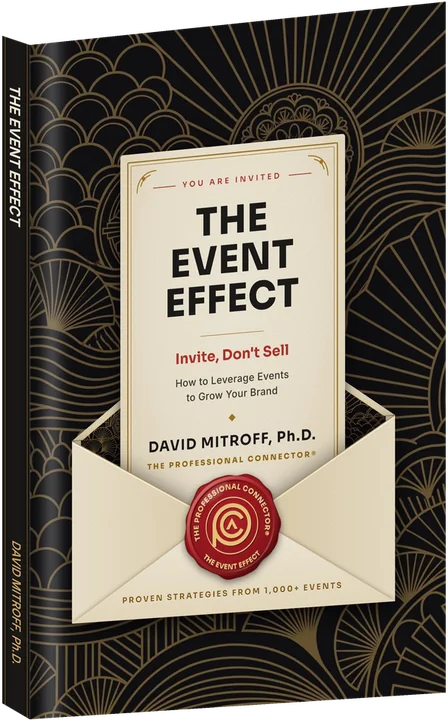
The Event Effect
David wrote the book on events that grow a business. The Event Effect, now in its second edition, covers how to plan, fill, host and follow up on them.
Take action
Your next three steps
- Look at the next three months of conferences in your area and pick one to host something alongside.
- Invite people one at a time, naming the conference and why each person came to mind.
- Ask the conference organizers whether they list side events and whether they would welcome yours.
In their own words
What clients say about working with us
“Right away things started to happen. We have managed to fill up our seminar rooms again, he has found us great new staff, and business is booming. More than a marketing consultant, he is also a business confidant […]”
 David RosenbaumPartner, McDowall Cotter, APC

“David was extremely helpful, and the most responsive consultant I’ve ever worked with. If he didn’t know something, he had no problem acknowledging that, and calling in an expert. His follow-up was absolutely impeccable.”
 Judith Szepesi, J.D.Partner, Blakely Sokoloff Taylor & Zafman

Read more client stories or see our case studies.
Frequently asked questions
Our city pages for the San Francisco Bay Area name the big local weekends, from festivals to arena and fairgrounds dates, that an owner can plan around. We also have pages for business consulting in Downtown Los Angeles and business consulting in Manhattan.
Frequently asked questions
What is a conference side event?
A conference side event is a smaller event, such as a dinner, a breakfast, a happy hour or a panel, that a business hosts around a big conference so attendees have somewhere to go next.
When is the best time to host an event during a conference?
The best time to host an event during a conference is outside the main program: the night before day one, before the first session or after the last session and any official reception.
How do I invite conference attendees to my event?
Invite conference attendees one at a time with a short personal note that names the conference, says why the person came to mind and asks one clear question.
Do I need a booth to host an event at a conference?
No. A business can host a dinner, a happy hour or a panel alongside a conference without a booth, a sponsorship or a speaking slot.
How far ahead do I invite guests to a conference side event?
Invite early enough that guests can plan the evening before their conference week fills up, since the first personal invitation often gets the yes, and book the venue first, because rooms near the convention center go fast.
What do I do after a conference side event?
Within a day, send every guest a thank-you note, a photo and one useful link, write to the people who could not come and book follow-up meetings with the guests where a real conversation started.
Does Piedmont Avenue Consulting, Inc. plan events around conferences?
Yes. Piedmont Avenue Consulting, Inc. plans dinners, happy hours and panels around conferences and trade shows for owners in the San Francisco Bay Area, Los Angeles, Orange County and New York. Schedule a call with David to talk about your business.
Let’s grow together.
Schedule a call with David. Tell us which conference your customers attend, and we will plan what to host alongside it.
Or call David at 510-761-5895, 8 AM to 8 PM, seven days a week.
About the author
David Mitroff, Ph.D. wrote this article. He is the founder of Piedmont Avenue Consulting, Inc., a business and marketing consulting firm serving the San Francisco Bay Area, Los Angeles, Orange County and New York. Meet David or read more articles by David.
- Founder and Business Growth Strategist at Piedmont Avenue Consulting, Inc.
- Doctorate in clinical psychology, with additional coursework in business administration, law and culinary arts; bachelor’s and master’s degrees.
- Taught marketing and entrepreneurship at the University of California, Berkeley for more than seven years.
- Author of several books, including The 45 Day Consultant, The 45 Day Consultant Field Guide, Online Business Growth Strategies, The Event Effect: Invite, Don’t Sell, and Law Firm Business Growth Strategies (Second Edition).
- Started seven companies; previously owned and ran a recruiting and staffing company.
David works with a small team of consultants and specialists on every engagement. Meet our team or read about Piedmont Avenue Consulting, Inc.