

Referral partners and revenue
Turn your relationships into steady revenue
Your next client is often one introduction away. This page shows how David Mitroff, Ph.D. builds referral partners on purpose, three conversations at a time.
The short answer
To turn relationships into revenue, pick twenty people who can send you business, meet three of them every month, and ask for introductions instead of referrals. Piedmont Avenue Consulting, Inc. helps owners build referral partners, events and follow-up systems across the San Francisco Bay Area, Los Angeles, Orange County and New York.
From The 45 Day Consultant Field Guide
In the chapter titled “Turning Relationships into Revenue,” David Mitroff, Ph.D. writes:
“Every name you give is a loan against your reputation. Lend carefully, and come back with options instead of one.”
When you recommend someone, your name goes with them. Check people before you suggest them, and give the client a real choice, not one name.
 (opens in a new tab)
Get the book on Amazon (opens in a new tab)
See every chapter
Your relationship checklist
A checklist for turning contacts into clients
David has taught this system in hundreds of talks, in Los Angeles, Washington, Istanbul and many places in between. The same steps work in every industry.
- Write down twenty people who are referral partners, industry influencers, trusted advisors or past clients who can refer others.
- Add a column for the last date you spoke with each person, and expect some of those dates to be years ago.
- Book three lunches, coffees or video calls from the list every month, which adds up to thirty-six partner meetings a year.
- Go into each meeting to help, not to pitch. Share an idea, ask good questions and offer support.
- Ask for an introduction, not a referral, because an introduction puts much less pressure on the other person.
- Make the introduction easy to give with a short blurb about you and a clear picture of your ideal client.
- Give first by introducing a partner to someone, sharing a useful article or tool, or inviting them to an event, podcast or panel.
- Thank people after every introduction, follow up in a professional way, and measure the results every quarter.
“The arithmetic I put on the screen is simple. Three lunches a month, twelve months, thirty-six strategic partner meetings a year. That is the whole system, and it is why the same people keep sending business.”
A story from the book
When a client asks you for a name
In the book, David tells about a day at a large hotel with a client he had worked with for years. A junior consultant was with him. The owner wanted to redo the landscaping on the whole property and asked if David knew a landscape architect. Before David could answer, the junior consultant said, “I know someone.”
David said, “No, you do not.” The young consultant agreed that he did not, and the owner laughed. Then David asked him to explain why. The answer came quickly: if we introduce someone who does poor work, the relationship suffers and we look bad. A big job with many moving parts has a high chance that something will go wrong.
David then explains his rule. In an emergency, such as a legal question or a broken system on a Friday afternoon, he calls the right person on the spot, because speed is the service. For a large planned project, he says he will come back with options. He calls each person first, asks about their schedule and capacity, and offers the client two or three choices to check out.
Your name goes on every name you give, so check people first and offer a choice.

Why partners matter
What strategic partners can do for your business
You do not need to do everything yourself. You need to be known by the right people.
Cross-referrals
Partner with website designers, accountants, PR firms, real estate agents, lawyers or human resources consultants who serve the same clients you want to reach.
Joint workshops
Create webinars or workshops together. Both brands meet new, relevant audiences and gain visibility, credibility and engagement.
Bundled services
Package your work with services that fit with yours, such as marketing strategy, branding and implementation offered as one business growth package.
Access to decision-makers
A trusted partner can connect you directly with the people who make the decisions, so you skip cold outreach and win more often.
Beyond the first sale
Book the next meeting and focus on the right people
David worked with Soul Shoppe, a San Francisco Bay Area nonprofit that brings social-emotional learning, bullying prevention and conflict resolution programs to elementary schools. He was a consultant for about three years and an advisor for much longer. The programs have reached more than a million students. One change made a big difference: every workshop now included a follow-up meeting with the principal, booked at the same time and built into what the school paid for.
The school got more value. Soul Shoppe got time with the decision-maker while the workshop was still fresh. Those meetings led to more work across each school, introductions to other schools, and quotes from principals to use in marketing. The lesson for any owner is simple. Book the next conversation when you book the first one, and make the next conversation part of what the client receives.
The chapter also points to Robin Dunbar, who writes in his book How Many Friends Does One Person Need? that people can keep around a hundred and fifty stable relationships at a time. Dunbar found these come in layers of about five, fifteen, fifty and a hundred and fifty. In David’s view, your Top 20 list is the core. Behind those twenty sit about eighty more people who rotate in and out, depending on your clients and your industry.
From the full book
What The 45 Day Consultant adds
The Field Guide builds on David’s full book, The 45 Day Consultant. In the chapter titled “Becoming the Expert”, he writes:
“Some people try to meet everyone in the room. That works if you have the energy. However, for me, it’s about quality over quantity. I’ve found that if you find people you actually like, those relationships naturally grow.”
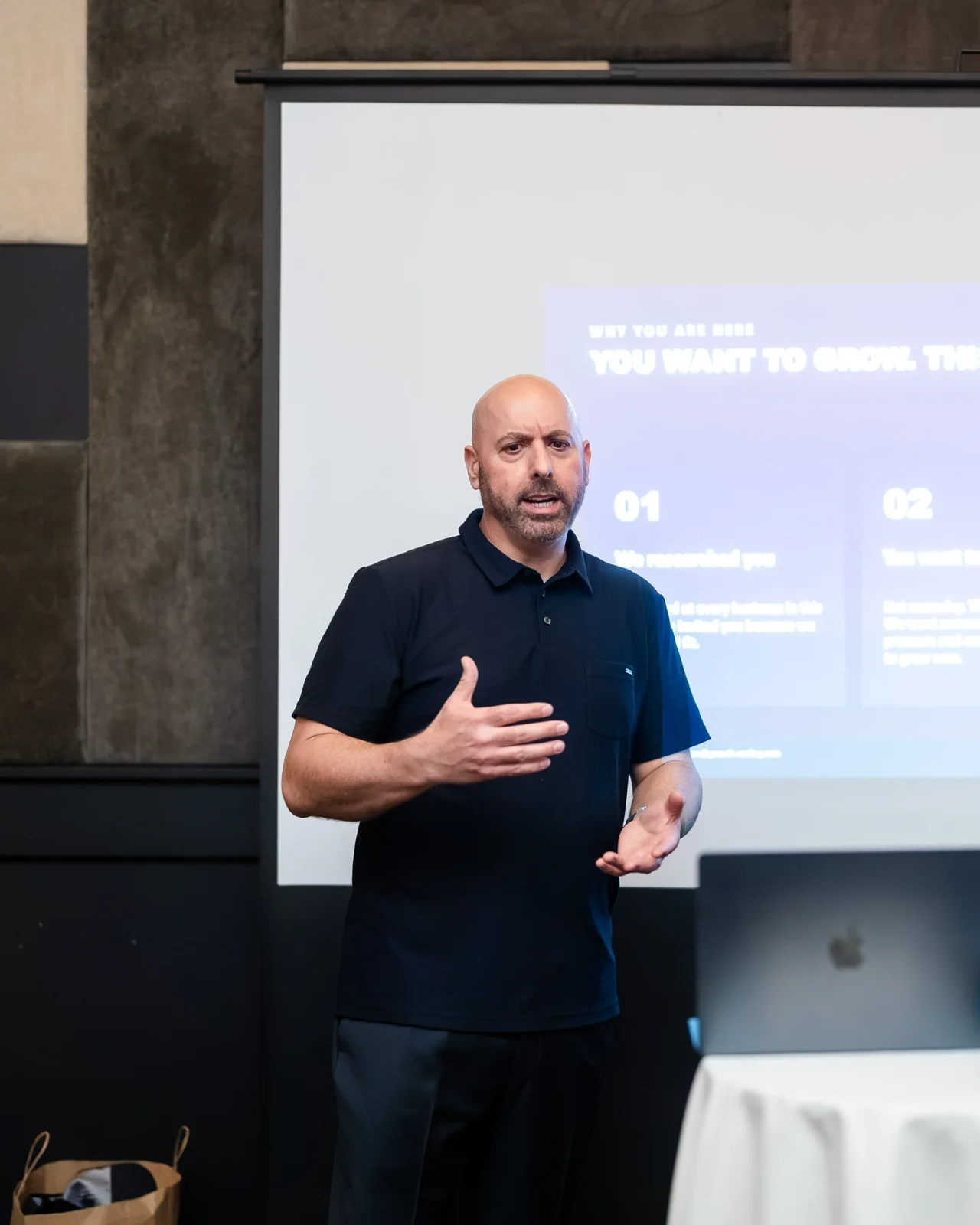
David can speak on this topic
A keynote talk based on this chapter
This chapter is also a keynote talk David gives. Audiences leave with a Top 20 list started and a plan for three partner meetings every month.
Every chapter of The 45 Day Consultant Field Guide is also a keynote talk. David gives these talks to companies, associations, conferences and leadership teams.
David also gives a related keynote, Turning Relationships into Revenue, on turning the people you already know into introductions and new business. See his keynote programs (opens in a new tab)
A real result
How this idea worked for a client
Taking two Orangetheory Fitness studios in Colma/Daly City and Pinole from bare dirt to launch meant a franchise agreement, site selection, build-out, hiring and training. Projects with that many moving parts are where every name you suggest needs real care.
 Fitness franchiseTwo studios opened
Two Orangetheory Fitness studios, in Colma/Daly City and Pinole, taken from bare dirt to launch: franchise agreement, site selection, build-out, hiring and training.
Read the case studyTestimonials
What our clients say
“Right away things started to happen. We have managed to fill up our seminar rooms again, he has found us great new staff, and business is booming. More than a marketing consultant, he is also a business confidant […]”

“David was very helpful with structuring online marketing for my business. He presented clear ideas and strategy that was totally relevant for my dental office. His innovative thinking helps me to think outside the box.”

“We worked with Piedmont Avenue Consulting to implement new sales processes and launch a successful customer loyalty program. As a result, we have dramatically increased revenues from catering events and ‘front of mind’ sales.”

How it works
How we work: call, assessment, plan.
Schedule a call
Tell us where the business is today and where you want it to be.
Assessment
We look at your numbers, marketing, team and operations.
90-day plan
Three to five initiatives with owners and dates, plus a 12-month marketing calendar.
Ongoing initiatives
We stay on as a long-term partner and keep the plan moving.
In the first 90 days, our job is to find our fee: make or save you more than you pay us.
On the blog
Articles that go deeper on this chapter
Keep reading
More chapters from the Field Guide




Questions
Questions owners ask
What is the Top 20 Strategy?
The Top 20 Strategy is a list of twenty people who can send you business: referral partners, industry influencers, trusted advisors and past clients. David Mitroff, Ph.D. teaches owners to meet three people from the list every month. That rhythm creates thirty-six partner meetings a year.
Why ask for an introduction instead of a referral?
A referral asks someone to vouch for you, which feels risky to many people. An introduction only says, “You two can talk.” David Mitroff, Ph.D. finds that introductions are much easier to give and work just as well.
Who belongs on a Top 20 list?
Choose people who serve the same kind of clients you want, such as accountants, lawyers, website designers, real estate agents, PR firms or human resources consultants. Past clients belong there too. Piedmont Avenue Consulting, Inc. helps owners pick the right names through lead generation work.
Is a Top 20 list only for business owners?
No. Salespeople, architects, engineers, lawyers, piano teachers and employees who want to grow inside a company all benefit. David Mitroff, Ph.D. says twenty names and three conversations a month is the number one way he knows to grow a business, or to grow inside one.
Should you recommend someone the moment a client asks?
For an emergency, such as a legal question or a broken system on a Friday afternoon, yes, because speed is the service. For a large planned project, David Mitroff, Ph.D. promises to come back with options, checks each person first, and then offers the client two or three choices.
How many relationships can one person keep up?
Robin Dunbar, in the book How Many Friends Does One Person Need?, describes about a hundred and fifty stable relationships at a time. David Mitroff, Ph.D. treats the Top 20 list as the core of that larger group.
How do you build the next meeting into the first sale?
Book the follow-up meeting when the client books the first project, and include that meeting in what the client pays for. David Mitroff, Ph.D. helped Soul Shoppe add a meeting with the principal to every school workshop, which led to more work and introductions to other schools.
Can events help you build referral partners?
Yes. A joint webinar or workshop with a partner puts both brands in front of new, relevant audiences. Piedmont Avenue Consulting, Inc. plans events like these through event marketing.
Work with us
Schedule a call about your Top 20 list
In the first ninety days of working together, our job is to find our fee, which means making or saving you more than you pay us. We start with an initial consultation and a paid assessment, then build a ninety-day plan and a twelve-month marketing calendar.
One conversation and a clear next step.