

Busy or full
Planning a productive day as a business owner.
Busy is the day that happens to you. Full is the day you chose on purpose, with work that has a reason to be there.
The short answer
Busy versus productive comes down to choice: busy work reacts to whatever arrives, while productive work is chosen because the work moves a clear result forward. Piedmont Avenue Consulting, Inc. helps owners set priorities, build simple systems and plan marketing that fits a full calendar, across the San Francisco Bay Area, Los Angeles, Orange County and New York.
From The 45 Day Consultant Field Guide
In the chapter titled “Busy Is Reacting, Full Is Choosing,” David Mitroff, Ph.D. writes:
“Important work is often quiet. If you do not give it a place on the calendar, urgent work will take all the space available.”
Nobody calls to remind you to document a process or call a partner you have not spoken to in months. If that work has no time on the calendar, urgent work wins every day.
 (opens in a new tab)
Get the book on Amazon (opens in a new tab)
See every chapter
Side by side
A busy day versus a full day
Busy
- How the day starts
- The phone, the inbox and the next request decide the day.
- What gets attention
- Visible work only. Invisible work waits until something breaks.
- How price moves
- When work is scarce, people get less selective and charge less.
- How success is measured
- Time is used, so the week feels productive.
- Where the hours go
- Hours go to things you cannot control.
Full
- How the day starts
- The calendar holds clients, projects and conversations chosen for a reason.
- What gets attention
- Visible work, plus the quiet work that keeps the business running and growing.
- How price moves
- When work is plentiful, people get more selective and charge more.
- How success is measured
- Something is better because you were involved.
- Where the hours go
- Hours go to things you can control.
Aim for full: a demanding week is fine when every piece of work has a reason for being there.
“Being busy means time is occupied. Being valuable means something is better because you were involved.”
The work inside the work
Planning time for invisible work
Every role has visible work and invisible work. The attorney handles the matter. The contractor finishes the project. The restaurant serves the guests. Behind each one, someone builds the relationship, gathers the information, confirms expectations, sends the invoice and follows up. David writes that businesses become hard to manage when the invisible work happens only after something breaks.
This is the difference between working in the business and working on the business. A restaurant that only designs systems and never serves food has no business. A restaurant that serves every night but never reviews costs, trains staff, maintains equipment or plans for the seasons creates problems that did not need to happen. Both kinds of work are necessary.
Start every project with one question: what will be different when this is finished? A company that asks for more marketing may really need more qualified inquiries or more repeat business. A team that asks for another meeting may need a decision or clear assignments. If nobody can name the result, the work tends to drift and turn into a pile of tasks.
From the book
Prepare before the crisis
A crisis is going to come, so the best time to prepare is while things are calm. Notice the early warning signs, get ready before you need to, and learn afterward so the next one is smaller. David applies the same idea to a career.
You do not have to wait for a crisis to change. Take on the project nobody assigned you. Volunteer for the work that teaches you what you want to master, and get paid to learn while you do the work. David writes that there is no perfect time to start, so start now.
Do the hard thinking while things are calm, and a crisis becomes a turning point instead of a collapse.
Put the chapter to work
Write down what you can control
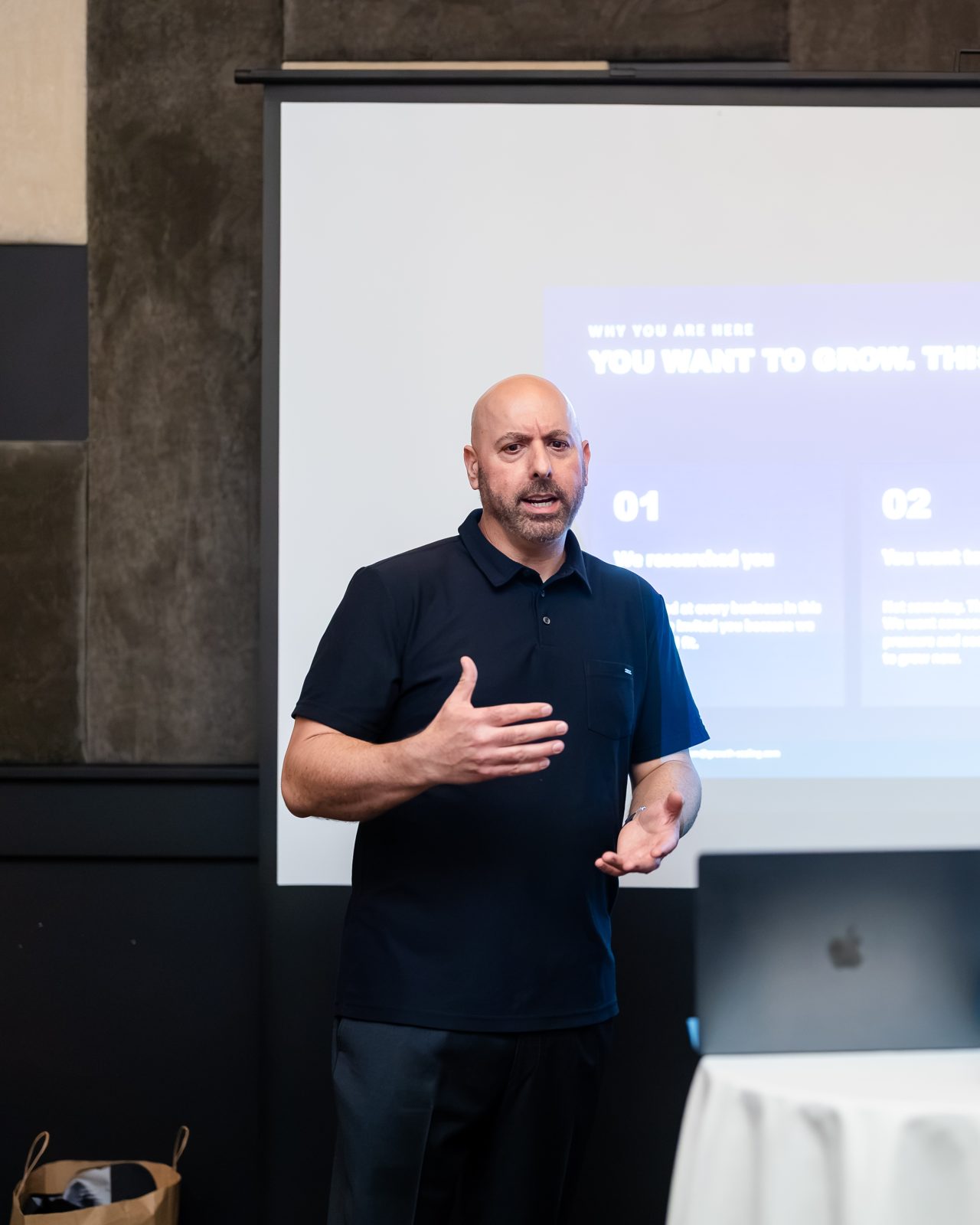
David covers this exercise in most of his talks, whoever is in the room. The columns change with the audience. The rule stays the same.
- Draw two columns: what you cannot control on the left and what you can control on the right.
- For a hotel general manager, the left column holds the economy, brand standards and the new hotel opening down the road.
- The right column holds the rate on your two busiest nights, who in town knows your name and who you pick up the phone and call.
- Name the left column once, and then set the list down.
- Spend the week on the right column, because every hour spent on the left is an hour the right column did not get.
- Pick one busy activity, such as a recurring meeting or report, and write down the result the activity should create.
- Decide whether the activity should continue as it is, change, move to someone else or stop.
- Choose one important idea that is still only an idea, make the first version smaller, and give the idea a person, a date and a clear definition of done.
From the full book
What The 45 Day Consultant adds
The Field Guide builds on David’s full book, The 45 Day Consultant. In the chapter titled “What Is a Consultant?”, he writes:
“The opposite of structure is not freedom. The opposite of structure is chaos, and chaos feels like freedom right up until the week it does not. No structure means no protected time to think, no reliable way to deliver, and a calendar that fills with whatever shouts loudest.”

David can speak on this topic
A keynote talk based on this chapter
Busy Is Reacting, Full Is Choosing is also a keynote talk. Audiences leave with the two column exercise and a plan to spend their week on what they can control.
Every chapter of The 45 Day Consultant Field Guide is also a keynote talk. David gives these talks to companies, associations, conferences and leadership teams.
David also gives a related keynote, The Why Behind Leadership: How Psychology Drives Influence and Decision Making in the Workplace, on how psychology shapes influence, conversations and decisions at work. See his keynote programs (opens in a new tab)
A real result
How this idea worked for a client
Granite Wellness Centers won a new $2 million grant. We wrote the grant application, trained the executive leadership team and led an all-staff training. Results like that start with knowing what needs to be different when the work is finished.
 NonprofitA new $2 million grant
Granite Wellness Centers won a new $2 million grant. We wrote the grant application, trained the executive leadership team and led an all-staff training.
Read the case studyTestimonials
What our clients say
“Right away things started to happen. We have managed to fill up our seminar rooms again, he has found us great new staff, and business is booming. More than a marketing consultant, he is also a business confidant […]”

“David was very helpful with structuring online marketing for my business. He presented clear ideas and strategy that was totally relevant for my dental office. His innovative thinking helps me to think outside the box.”

“We worked with Piedmont Avenue Consulting to implement new sales processes and launch a successful customer loyalty program. As a result, we have dramatically increased revenues from catering events and ‘front of mind’ sales.”

How it works
How we work: call, assessment, plan.
Schedule a call
Tell us where the business is today and where you want it to be.
Assessment
We look at your numbers, marketing, team and operations.
90-day plan
Three to five initiatives with owners and dates, plus a 12-month marketing calendar.
Ongoing initiatives
We stay on as a long-term partner and keep the plan moving.
In the first 90 days, our job is to find our fee: make or save you more than you pay us.
Keep reading
More chapters from the Field Guide




Questions
Questions owners ask
What is the difference between busy and productive?
Busy means time is used. Productive means something is better because you were involved. David Mitroff, Ph.D. uses the word full for a calendar of work chosen on purpose, where every task has a reason to be there.
Why do business owners stay busy without growing?
Urgent work arrives with pressure, and quiet work does not. Owners answer calls, emails and requests all day while planning, training and relationship building wait. Piedmont Avenue Consulting, Inc. helps owners put that quiet work on the calendar so growth gets real time.
What does working on the business mean?
Working on the business means improving the systems, relationships, people and decisions that let the work continue and grow. David Mitroff, Ph.D. says both working in and working on the business are necessary. See our streamlining operations work.
How should a new project start?
Ask one question first: what will be different when this is finished? If the answer is unclear, the work tends to drift or become a pile of tasks. Piedmont Avenue Consulting, Inc. begins client work with a call and a paid assessment, so the result is clear before the work begins.
What is the two column exercise?
Write what you cannot control on the left and what you can control on the right. Name the left column once, then spend the week on the right. David Mitroff, Ph.D. covers this exercise in most of his talks.
How does a full calendar affect pricing?
When work is scarce, most people get less selective and charge less. When work is plentiful, people get more selective and charge more. David Mitroff, Ph.D. calls this the growth cycle.
Does a business need a crisis to change?
No. A layoff, a lost client or a market shift can force decisions, but owners do not need to wait for one. David Mitroff, Ph.D. suggests using any period of change to reassess what is working and choose the next action.
Work with us
Schedule a call about managing your time
In the first ninety days of working together, our job is to find our fee, which means making or saving you more than you pay us. We start with an initial consultation and a paid assessment, then build a ninety-day plan and a twelve-month marketing calendar.
One conversation and a clear next step.