
The owner mindset
Think Like an Owner, Whatever Your Title
Ownership is written on the paperwork. Owner thinking is a choice anyone can make, from the front desk to the corner office.
The short answer
To think like an owner means you finish the task in front of you and then ask what result the task is meant to create. Piedmont Avenue Consulting, Inc. helps owners and their teams build this habit, along with clearer roles and stronger operations, across the San Francisco Bay Area, Los Angeles, Orange County and New York.
From The 45 Day Consultant Field Guide
In the chapter titled “Think Like an Owner, Whether or Not You Are One,” David Mitroff, Ph.D. writes:
“The paperwork tells us who owns the company. It does not tell us who understands the customer, notices the opportunity, or takes responsibility for moving the work forward.”
A title tells you who signs the agreements. It does not tell you who cares about the customer, and that second person is the one a growing business needs most.
 (opens in a new tab)
Get the book on Amazon (opens in a new tab)
See every chapter
Our point of view
What thinking like an owner means
We believe the most useful person in any business is the one who cares about the outcome. In the book, David Mitroff, Ph.D. writes about the best employee he ever had. She started as an intern, stayed six years, and is still an employee today, by choice. She has no wish to own a company. She thinks like an owner anyway, and that is what made her the best.
This does not mean acting like you control decisions that belong to someone else. Owner thinking does not spend company money without permission, change an agreement or step outside the limits of a role. Owner thinking means seeing how your work connects to the customer, the project and the team. You finish the task and stay curious about whether the task solved the problem.
David has seen this from more than one side. Before he started Piedmont Avenue Consulting, Inc., he spent six years at LexisNexis as a solutions consultant, with a salary, a quota and managers. He learned how large companies make decisions and why those decisions can take time. That experience did not become less useful when he started his own company. That experience became the foundation.
“Owner or employee is a payroll question. Worker or consultant is a mindset question. Thinking like an owner means taking care of that situation and then asking what the failure is telling you.”
From the book
The air conditioner in room 214
David tells this story to rooms of hotel general managers. The air conditioning in room 214 is out again. One person submits the work order. The other person asks how many rooms have had this problem and how much revenue the problem has cost. Then that person calls the air conditioning company to inspect the whole building, instead of waiting for the next room to go out.
The pattern repeats. A group cancels. One person reports the lost revenue, and the other calls two other groups that same afternoon. The breakfast attendant quits. One person covers the shift. The other covers the shift and then builds a bench of backup staff, so the problem does not fall on the same person again. Same situation, same title, same pay. Only one of them is thinking like an owner.
The front desk may not be allowed to hire a contractor. That person can still notice the same complaint coming back and bring the pattern to the right person. The general manager can look at the cost. The owner can decide whether a bigger fix makes sense. A consultant can help compare the options. Nobody needs to pretend to have authority they do not have.
Everyone can add information and judgment from where they sit.
Same idea, every industry
What looking one level deeper looks like
David gives examples from many kinds of work. The task matters. The result matters more.
Dental office
A patient reschedules for the third time. Moving the appointment is the task. Asking whether the time, the cost or worry about the procedure is the real issue is owner thinking.
Law firm
A client asks an attorney for one document. Before preparing the document, the attorney asks what the client is trying to do. The real concern may be control, risk, timing or family.
Construction
A shipment will be late. Updating the schedule is the task. Checking other projects with the same supplier, and calling the customer before the delay becomes a surprise, protects the result.
Financial advice
A client asks to move money. Making the transfer may be part of the job. Asking what changed, and whether the move fits the client’s larger goals, is where the value begins.
Shared ownership
Two partners can both work hard and still feel the split is unfair. David says to agree on what the word work means before you share a business, and write the answers down.
Put the chapter to work
Questions to build owner thinking
Owner thinking grows in ordinary moments. You do not need a new title to begin. Use these questions this week, whatever your role.
- Pick one problem that keeps coming back and affects customers, coworkers, revenue, time or quality.
- Write down the immediate task the problem creates and the larger result the problem affects.
- Ask what caused the problem, who else the problem touches and whether the problem has happened before.
- Think about what the problem may be costing in money, time or trust.
- Handle what sits inside your authority, and bring a clear recommendation to the person who owns the rest.
- If you lead the business, find one decision that keeps returning to you and ask whether your people have the context, standards, information and authority to handle the decision.
- If you advise clients, ask what the client is really trying to accomplish before you deliver the requested service.
- If you share ownership, agree in writing who takes the Saturday morning call, what vacation looks like and how many owners must agree before you hire someone.
From the full book
What The 45 Day Consultant adds
The Field Guide builds on David’s full book, The 45 Day Consultant. In the chapter titled “What Is a Consultant?”, he writes:
“Doing this work and owning a company are two different decisions. You get to make them separately.”
David can speak on this topic
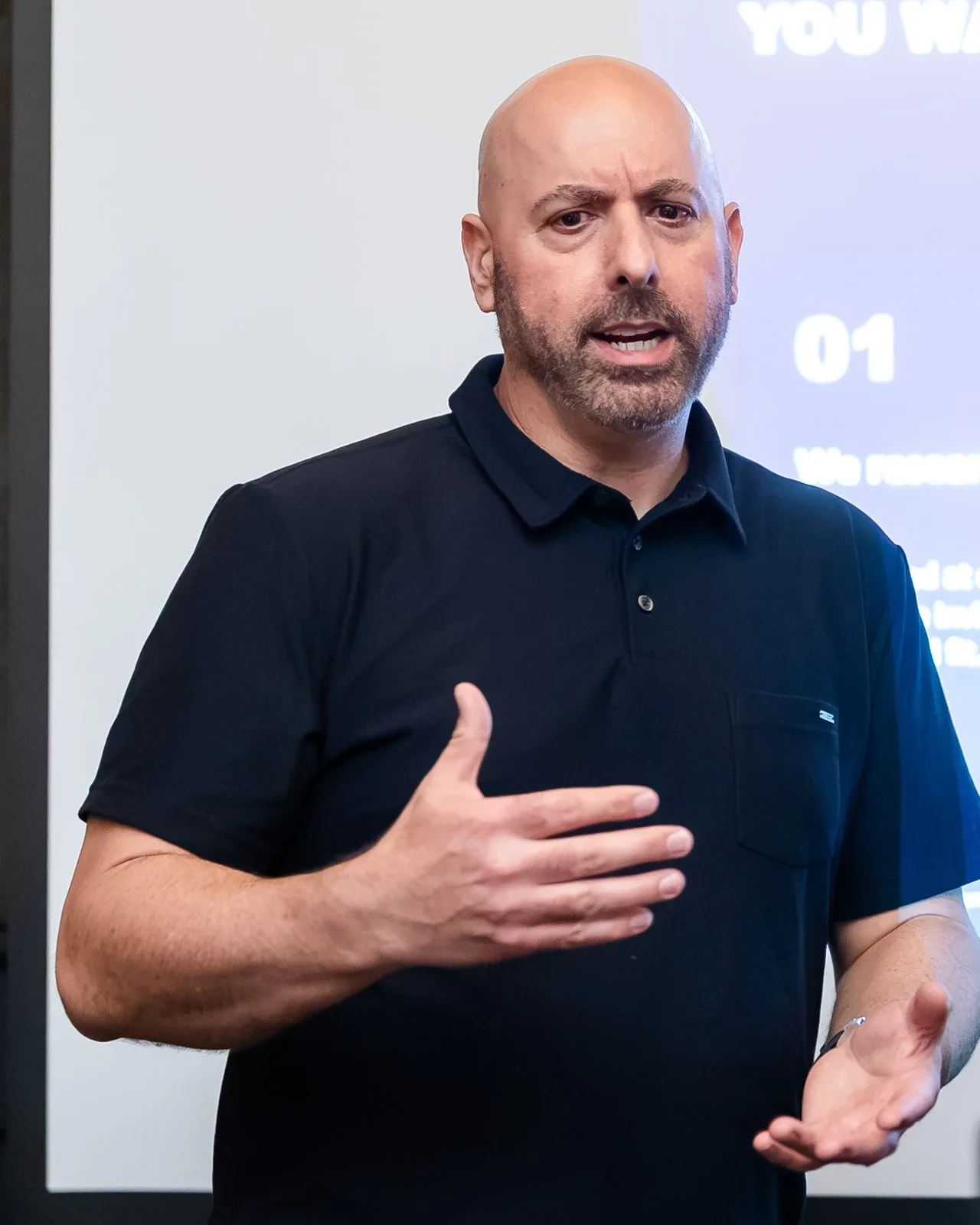
A keynote talk based on this chapter
Think Like an Owner is also a keynote talk David gives to teams, managers and industry groups. Audiences leave with one simple habit: finish the task, then look one level deeper at the result.
Every chapter of The 45 Day Consultant Field Guide is also a keynote talk. David gives these talks to companies, associations, conferences and leadership teams.
David also gives a related keynote, Consulting Success: How to Start and Grow a Consulting Business, built for solo and boutique consultants, coaches and professionals who want to build a brand, attract clients and grow revenue. See his keynote programs (opens in a new tab)
A real result
How this idea worked for a client
Moler Barber College grew from one location to five, with our help on planning, site selection, build-out, hiring and training. Hiring and training people who see the larger result is how a business grows past one location.
 EducationOne school to five
Moler Barber College grew from one location to five, from planning and site selection through build-out, hiring and training, with each school up and running.
Read the case studyTestimonials
What our clients say
“Right away things started to happen. We have managed to fill up our seminar rooms again, he has found us great new staff, and business is booming. More than a marketing consultant, he is also a business confidant […]”

“David was very helpful with structuring online marketing for my business. He presented clear ideas and strategy that was totally relevant for my dental office. His innovative thinking helps me to think outside the box.”

“We worked with Piedmont Avenue Consulting to implement new sales processes and launch a successful customer loyalty program. As a result, we have dramatically increased revenues from catering events and ‘front of mind’ sales.”

How it works
How we work: call, assessment, plan.
Schedule a call
Tell us where the business is today and where you want it to be.
Assessment
We look at your numbers, marketing, team and operations.
90-day plan
Three to five initiatives with owners and dates, plus a 12-month marketing calendar.
Ongoing initiatives
We stay on as a long-term partner and keep the plan moving.
In the first 90 days, our job is to find our fee: make or save you more than you pay us.
Keep reading
More chapters from the Field Guide



Questions
Questions owners ask
What does thinking like an owner mean for an employee?
For an employee, thinking like an owner means caring about the outcome, not only the assigned task. David Mitroff, Ph.D. describes the habit as finishing the work in front of you and then asking whether the work solved the problem.
Do you have to own a business to think like an owner?
No. In the Field Guide, David Mitroff, Ph.D. writes about his best employee, who has no wish to own a company and still thinks like an owner. Ownership is a legal and financial matter. Owner thinking is a choice anyone can make.
Does thinking like an owner mean making decisions above your role?
No. Owner thinking respects the limits of each role. An employee who cannot approve a repair can still spot a pattern and bring the pattern to the right person. David Mitroff, Ph.D. says nobody needs to pretend to have authority they do not have.
How can a business owner help a team think like owners?
Start with one decision that keeps coming back to you. Ask whether your people have the context, standards, information and authority to handle that decision. Piedmont Avenue Consulting, Inc. helps owners build clearer expectations, better training and smoother handoffs through streamlining operations work.
Why does owner thinking matter for consultants?
A consultant who thinks like an owner sees the client’s whole business, not a list of deliverables. David Mitroff, Ph.D. asks what the client is really trying to accomplish before deciding which service fits. Learn more about our business consulting.
What should business partners agree on before sharing a company?
Partners should first agree on what the word work means. One partner may bring in clients while the other serves them. Some firms have every owner do both jobs, and others split the roles on purpose. David Mitroff, Ph.D. says either can succeed, and trouble starts when nobody defines the split.
Where does Piedmont Avenue Consulting, Inc. work with owners?
Piedmont Avenue Consulting, Inc. works with owners across the San Francisco Bay Area, Los Angeles, Southern California, Orange County and New York. Working together starts with a call, then a paid assessment, then a 90-day plan with three to five initiatives.
Work with us
Schedule a call about your team
In the first ninety days of working together, our job is to find our fee, which means making or saving you more than you pay us. We start with an initial consultation and a paid assessment, then build a ninety-day plan and a twelve-month marketing calendar.
One conversation and a clear next step.