

Growth without more hours
How to scale a small business
Growth means more work. Scaling means more work without more of you, because a system, a person or a product carries the load.
The short answer
To scale a small business, decide what kind of business you are building, track where your week goes, and hand off the repeatable work so a system or a person carries the load. Piedmont Avenue Consulting, Inc. helps owners build those systems across the San Francisco Bay Area, Los Angeles, Orange County and New York.
From The 45 Day Consultant Field Guide
In the chapter titled “Scale Beyond Yourself,” David Mitroff, Ph.D. writes:
“Design the business so it can run without you. Then decide whether you want it to.”
A business that can run without the owner has real value and gives the owner choices. Whether you step back is a separate decision you can make later.
 (opens in a new tab)
Get the book on Amazon (opens in a new tab)
See every chapter
Start this week
A scaling checklist for owners and teams
Scaling starts with knowing where your hours go. These steps come straight from the chapter.
- Decide on purpose whether you are building a lifestyle business, a job you created, or a company that runs without you.
- Track one week in thirty-minute blocks, and write down what you did, not what you meant to do.
- Sort every line into three piles: only you can do this, someone else could do this, or nobody needs to do this.
- Delete the nobody pile this week, such as the status meeting with no agenda and the report nobody reads.
- Hand off scheduling, confirmations, invoicing, payment follow-up, research, formatting and meeting notes first.
- Record yourself doing your five most repeated tasks, and have the recordings turned into written procedures.
- Package one repeating piece of your work into a fixed-scope, fixed-price offering.
- Keep client judgment, pricing decisions, the recommendation and the relationship with you.
- Put a week off on the calendar and treat whatever breaks as your build list.
“Hand off the repeatable before the difficult. The goal is to buy back the hours that produce nothing distinctive.”
A story from the book
When a product depends on the owner
David has worked with many bakeries, which he calls a happy line of work, with plenty of macarons, cookies and baklava. He sees the same pattern again and again. The owner is a gifted pastry chef who makes one amazing thing, such as a soufflé or a crème brûlée cheesecake. People drive across town for that dessert. And the staff cannot make the dessert. They follow the recipe and it comes out burnt or flat.
That dessert depends on one pair of hands. So the dessert is for special occasions and the owner’s own days in the kitchen. The dessert cannot go to a second location, and the business cannot be built on the dessert, because then the business would be built on one person. David says consulting has the same kind of dessert: services only the owner or the most senior person can deliver.
Before adding any service, he asks the bakery question. Can somebody else make the service? If yes, the service can scale, and you can sell as much as you can staff. If only you can make the service, offer the service as a special, price the service that way, and do not build the year around the service.
Build the everyday menu on what a trained person can deliver the same way every time.
Know what you are building
Three kinds of business
People get into trouble by drifting into one kind of business while wishing for another. Pick on purpose.
A lifestyle business
The point is the life, and the business pays for that life. Teaching surfing in Hawaii is one example. The business stops when you stop, and for some people that is right.
A job you created
A coffee shop with a couple of employees and your name on the door. The business runs a few days without you. The money is a wage, not a return.
A company
Built to run without you, with systems, documented processes and people who own parts of the work. The value sits in the business, so you can sell or step away.
Not only for owners
Scaling inside a company, and the exit
A company with fifty employees that wants a hundred and fifty has the same problem as a small firm. So does a sales team of six that needs to be twelve. David names three things that keep a team small: everything routes through one person, nothing is written down, and every project is custom. A manager who fixes those three gets a department that runs during a vacation, which is the only kind that gets bigger.
For a person who does the work, scaling means output stops being capped by hours. A template built once that ten colleagues use. A client meeting written down so a new hire runs the meeting the same way. You are still the expert, and you stop being the bottleneck. At exit time, a business is worth something because the business keeps running when the founder walks out the door. For a consulting practice, the value is the systems, the team, the recurring clients and the name.
From the full book
What The 45 Day Consultant adds
The Field Guide builds on David’s full book, The 45 Day Consultant. In the chapter titled “What Is a Consultant?”, he writes:
“It helps to separate three things that get treated as one. Starting is getting the business open and the first clients in the door. Growing is doing more of what already works. Scaling is something else again: building the consulting practice so that more work does not automatically mean more hours from you.”

David can speak on this topic
A keynote talk based on this chapter
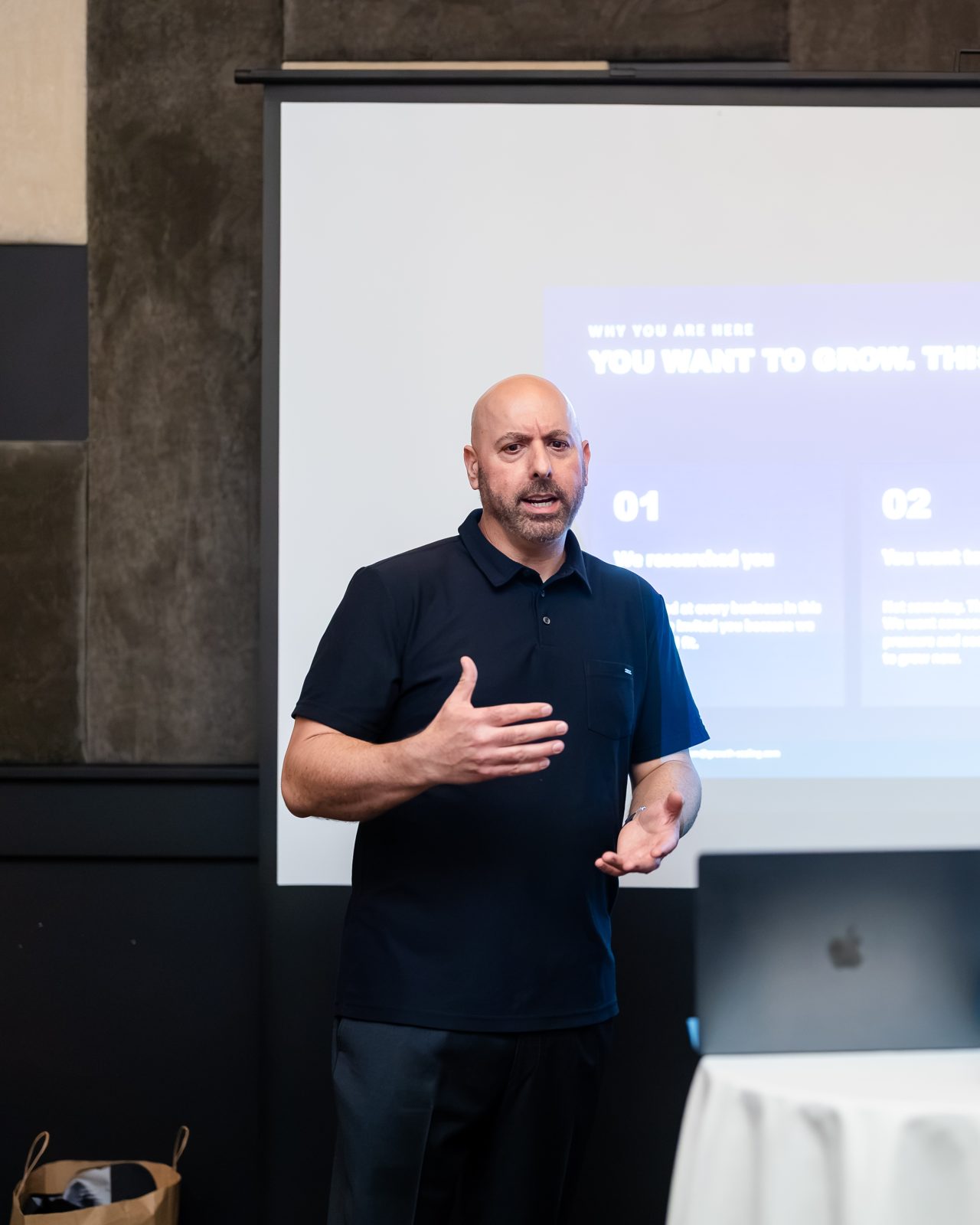
This chapter is also a keynote talk David gives. Audiences leave with the three-pile week audit and a clear first list of tasks to hand off.
Every chapter of The 45 Day Consultant Field Guide is also a keynote talk. David gives these talks to companies, associations, conferences and leadership teams.
David also gives a related keynote, Consulting Success: How to Start and Grow a Consulting Business, built for solo and boutique consultants, coaches and professionals who want to build a brand, attract clients and grow revenue. See his keynote programs (opens in a new tab)
A real result
How this idea worked for a client
Moler Barber College grew from one location to five through planning, site selection, build-out, hiring and training. Growth across five locations works when systems and trained people carry the work, not one person.
 EducationOne school to five
Moler Barber College grew from one location to five, from planning and site selection through build-out, hiring and training, with each school up and running.
Read the case studyTestimonials
What our clients say
“Right away things started to happen. We have managed to fill up our seminar rooms again, he has found us great new staff, and business is booming. More than a marketing consultant, he is also a business confidant […]”

“David was very helpful with structuring online marketing for my business. He presented clear ideas and strategy that was totally relevant for my dental office. His innovative thinking helps me to think outside the box.”

“We worked with Piedmont Avenue Consulting to implement new sales processes and launch a successful customer loyalty program. As a result, we have dramatically increased revenues from catering events and ‘front of mind’ sales.”

How it works
How we work: call, assessment, plan.
Schedule a call
Tell us where the business is today and where you want it to be.
Assessment
We look at your numbers, marketing, team and operations.
90-day plan
Three to five initiatives with owners and dates, plus a 12-month marketing calendar.
Ongoing initiatives
We stay on as a long-term partner and keep the plan moving.
We start with an assessment, agree on the priorities that matter most, and define what success looks like, then build a 90-day plan for ongoing work.
On the blog
Articles that go deeper on this chapter
Keep reading
More chapters from the Field Guide




Questions
Questions owners ask
What is the difference between growth and scaling?
Growth is more clients, more revenue and more work. Scaling is more without a matching increase in you, because a system, a person or a product carries the work. David Mitroff, Ph.D. and Steven Lockhart wrote Growth Scaling Your Business about this difference.
What should a small business hand off first?
Hand off the repeatable before the difficult: scheduling and confirmations, invoicing and payment follow-up, background research, formatting, meeting notes and keeping client records current. Piedmont Avenue Consulting, Inc. helps owners build these systems through streamlining operations work.
What work should the owner keep?
Client judgment, pricing decisions, the recommendation itself and the relationship. David Mitroff, Ph.D. says those are the reasons someone hires a consultant instead of a vendor.
How does an owner find out where the week goes?
Write down what you did in thirty-minute blocks for one week, then sort each line into only you, someone else, or nobody. David Mitroff, Ph.D. says the only-you pile turns out to be around a third of the week for most consultants.
Can a service that only the owner delivers still be offered?
Yes, as a special. David Mitroff, Ph.D. calls this the bakery question: can somebody else make the service? If only the owner can, price that service as a special and do not build the year around that offer.
Does scaling matter for people who work inside a company?
Yes. A manager whose team runs during a vacation gets a department that can grow. An employee whose template ten colleagues use stops being the bottleneck. Piedmont Avenue Consulting, Inc. works with owners, managers and teams on the same systems through business consulting.
What makes a business worth something at exit?
A business has value because the business keeps running when the founder walks out the door. For a consulting practice, David Mitroff, Ph.D. says buyers or partners look at the systems, the team, the recurring clients and the name.
Work with us
Schedule a call about scaling your business
Every engagement starts with an assessment and a shared definition of success. We start with an initial consultation and a paid assessment, then build a ninety-day plan and a twelve-month marketing calendar.
One conversation and a clear next step.