

Field Guide Chapter 21
How to start a business
David Mitroff, Ph.D. did not quit his job and then hope. He kept working, stayed useful in conversations, and let his first clients find him.
The short answer
Here is how to start a business: begin before you feel ready, be useful in conversations, and let early clients show you what they will pay for. Keep the paperwork simple and build systems as you grow. Piedmont Avenue Consulting, Inc. helps new and growing owners in the San Francisco Bay Area, Los Angeles, Orange County and New York with planning, marketing and operations.
From The 45 Day Consultant Field Guide
In the chapter titled “Start Before You Feel Ready,” David Mitroff, Ph.D. writes:
“If you are waiting until you feel like a consultant before you act like one, this is the part to notice. The title showed up after the work did. It usually does.”
You do not need a title, a logo or a perfect plan to begin. Start doing useful work for people, and the business name and the paperwork can follow.
 (opens in a new tab)
Get the book on Amazon (opens in a new tab)
See every chapter
A true story from the book
The man who wrote David’s first contract
David was working at LexisNexis, selling research tools to law firms. He was good at the job and enjoyed the work, but after a couple of years he was a little bored. So he took classes at the University of California, Berkeley Extension, just to learn something. In one class he met two people, and the three of them started a hardware and software company. That company became one of the seven companies David has founded over the years.
Now, when people asked what he did, David had two answers: a job, and a company. That second answer changed every conversation. People told him their ideas. One person he helped think through an idea then introduced him to a man who ran camps teaching kids to build and program robots. They had lunch for an hour. David asked a lot of questions and shared a few observations.
At the end of lunch, the robotics owner had an idea. What if they met for lunch twice a month, and he paid for lunch and also paid David for his advice? Two weeks later he came back with a contract he had written himself. The contract covered ownership of ideas and work product, confidentiality, a month-to-month term and the duties of each side. Near the top, he had typed two words: Business consultant.
They met twice a month for several years. David helped him grow the original location and then open a second one. David did not pick a title, build a website and go looking for a client. A client who valued his thinking wrote the title down and put a number next to the title.
Your first contract can come from somebody who already values the way you think.
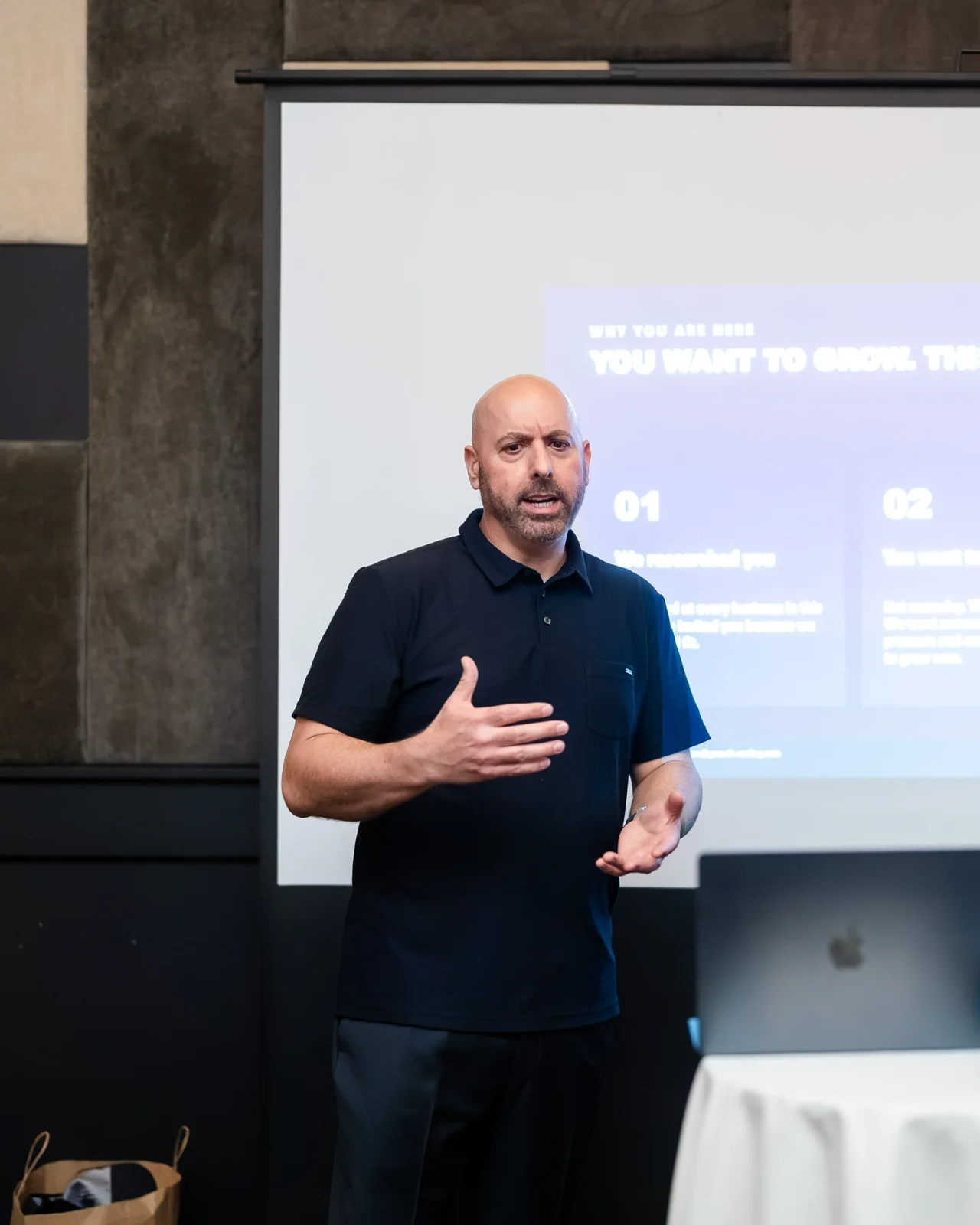
“That is worth sitting with, because it is the opposite of how most people imagine this starts. I did not pick a title, register a brand, build a website, and go looking for somebody to hire me. Somebody who valued what I was already doing wrote it down, named it, and put a number next to it.”
The second client
How David set his first price
David often hired Ben & Jerry’s for ice cream socials at the events he produced, and he got to know the manager. One day he told the manager that a few changes in how they handled event bookings would bring in more events. That was not a pitch, just an observation from a regular customer. The manager asked him to share the idea with the owner, who held six or seven franchises across Northern California.
The owner liked the ideas and asked how David charged. David explained the lunch arrangement with his other client. Lunches were optional, he said, but meeting with the owner personally at least once a month was not, because things drift when the owner is not in the room. Then the owner asked how much.
David wanted to buy furniture. He knew what the furniture cost, so he worked out what he needed each month to pay for the furniture and make the engagement worth his time. The result was an odd number, down to the dollar. The owner asked why he did not round the number up. David said the owner was welcome to round up, but the number he wanted was the one he gave. The owner paid that figure every month for around six years.
From twenty events to seven hundred
How we grew a catering business
When David and the Ben & Jerry’s owner started, the catering side did about twenty events a year. Five years later the catering side was doing seven hundred. They did not get there by selling harder.
One customer system
Every request that used to arrive by phone or fax and live in one person’s memory was assigned, staffed, confirmed and invoiced in one customer relationship management system.
Written procedures
Standard operating procedures, training manuals and short videos meant a party in one town ran the same way as a party in another town.
A rule called just say yes
A Thursday call for a Saturday party got a yes. Two parties on the same afternoon got a yes, and somebody in the family put on an apron.
Keep the owner in the meetings
David met with the owner personally at least once a month, because things drift when the owner is not part of the conversation.
Put it to work
Steps to start your business this week
David’s first two paying clients came with no website, no logo, no business cards and no advertising. Both came from being useful. Here is what to do now.
- Ask the people you meet what else they do, and have your own second answer ready.
- Be useful in a conversation before anybody is paying you.
- Make one introduction this week with no expectation of anything in return.
- Ask for a number you can explain to yourself, and then do not move off that number.
- Keep your job while you test the idea, the way David stayed employed while his first two clients signed on.
- Accept a simple month-to-month agreement for early work, and adapt your first contract for the next client.
- Keep learning outside your job description, and take a class in something that interests you.
- Whatever seat you are in, use everything that seat offers while you have the seat.
From the full book
What The 45 Day Consultant adds
The Field Guide builds on David’s full book, The 45 Day Consultant. In the chapter titled “Setting Up the Business”, he writes:
“Start with the basics and get them live this week. Start before you feel ready. Ready arrives later, and it arrives because you started.”

David can speak on this topic
A keynote talk based on this chapter
This chapter is also a keynote talk by David Mitroff, Ph.D. Audiences leave ready to start before they feel ready, to set a price they can explain, and to build simple systems early.
Every chapter of The 45 Day Consultant Field Guide is also a keynote talk. David gives these talks to companies, associations, conferences and leadership teams.
David also gives a related keynote, Launching a Product Silicon Valley Style, on testing an idea, launching it and learning fast, the way startups do. See his keynote programs (opens in a new tab)
A real result
How this idea worked for a client
Starting a business means many pieces moving at once. For two Orangetheory Fitness studios in Colma/Daly City and Pinole, our team went from bare dirt to launch, handling the franchise agreement, site selection, build-out, hiring and training.
 Fitness franchiseTwo studios opened
Two Orangetheory Fitness studios, in Colma/Daly City and Pinole, taken from bare dirt to launch: franchise agreement, site selection, build-out, hiring and training.
Read the case studyTestimonials
What our clients say
“Right away things started to happen. We have managed to fill up our seminar rooms again, he has found us great new staff, and business is booming. More than a marketing consultant, he is also a business confidant […]”

“David was very helpful with structuring online marketing for my business. He presented clear ideas and strategy that was totally relevant for my dental office. His innovative thinking helps me to think outside the box.”

“We worked with Piedmont Avenue Consulting to implement new sales processes and launch a successful customer loyalty program. As a result, we have dramatically increased revenues from catering events and ‘front of mind’ sales.”

How it works
How we work: call, assessment, plan.
Schedule a call
Tell us where the business is today and where you want it to be.
Assessment
We look at your numbers, marketing, team and operations.
90-day plan
Three to five initiatives with owners and dates, plus a 12-month marketing calendar.
Ongoing initiatives
We stay on as a long-term partner and keep the plan moving.
In the first 90 days, our job is to find our fee: make or save you more than you pay us.
On the blog
Articles that go deeper on this chapter
Keep reading
More chapters from the Field Guide




Further reading
Articles on guide to starting a business
- What is a DBA? A plain definition of a fictitious business name for owners
What a DBA, or fictitious business name, is. - Why form an LLC in Montana?
Why some owners form an LLC in Montana. - The benefit of starting a Pennsylvania LLC
What a Pennsylvania LLC offers an owner.
Questions
Questions owners ask
Do you need a website before you start a business?
Not to find a first client. In the Field Guide, David Mitroff, Ph.D. writes that his first two paying engagements came with no website, no logo, no business cards and no advertising. Both came from being useful in a conversation.
Should you quit your job before starting a business?
David Mitroff, Ph.D. did not. He was still employed the whole time his first two clients signed on. He did not quit first and then hope.
How do you set your first price?
Ask for a number you can explain to yourself, then hold to that number. David Mitroff, Ph.D. based his first monthly figure on furniture he wanted to buy, and the client paid that exact figure every month for around six years.
Who writes the first consulting contract?
Sometimes the client does. The first contract David Mitroff, Ph.D. signed was written by his client, and the second was adapted from the first. Both were month to month, and neither required a proposal.
How do small introductions turn into clients?
Be useful before anybody pays you. David Mitroff, Ph.D. helped one person think through an idea, and that person then introduced him to the owner who became his first client. Try one introduction this week with no expectation of anything back.
What systems help a new business grow?
In the book, David Mitroff, Ph.D. describes three pieces: one customer relationship management system, written procedures with training manuals and short videos, and a culture of saying yes. Piedmont Avenue Consulting, Inc. helps owners build systems like these through streamlining operations.
How does Piedmont Avenue Consulting, Inc. help someone starting a business?
Start by scheduling a call with Piedmont Avenue Consulting, Inc. Next comes a paid assessment, then a 90-day plan with three to five initiatives and a twelve-month marketing calendar, then ongoing work together. In the first 90 days, our job is to find our fee: make or save the client more than the client pays us. See our work with startups.
Work with us
Schedule a call about starting your business
In the first ninety days of working together, our job is to find our fee, which means making or saving you more than you pay us. We start with an initial consultation and a paid assessment, then build a ninety-day plan and a twelve-month marketing calendar.
One conversation and a clear next step.