

Leading the people you hire
Leadership for owners who hire well
Hiring someone is one job. Leading that person well is a second job, and very few people are ever taught how to do the second one.
The short answer
Good leadership for business owners starts with hiring for attitude, then teaching the job, holding thirty, sixty and ninety day reviews, and telling people the truth early. Piedmont Avenue Consulting, Inc. helps owners and managers hire, train and lead teams across the San Francisco Bay Area, Los Angeles, Orange County and New York.
From The 45 Day Consultant Field Guide
In the chapter titled “The Why Behind Leadership,” David Mitroff, Ph.D. writes:
“You can teach someone the job. It is very hard to change their attitude. Hire for the attitude, then teach the job.”
This is the hiring rule of Norman Mitroff, Ph.D., David’s father, who runs a retained executive search firm. Skills can be trained, so look first for the person who brings the right attitude.
 (opens in a new tab)
Get the book on Amazon (opens in a new tab)
See every chapter
What the research says
Two ideas that shape how David leads
Psychologists David Dunning and Justin Kruger described a pattern: people with limited knowledge in an area tend to overestimate how much they know, and accurate self-assessment arrives later. David sees this in new hires around the three-month mark. They know enough to feel competent, but not enough to be competent. That is when small mistakes show up, such as a newsletter with the wrong date or a price quoted wrong.
The popular chart calls the first hump the peak of Mount Stupid and the dip after the valley of despair. David notes that those labels are not academic, but the pattern is real. So he warns new people on day one and again at thirty, sixty and ninety days, and names the mistakes that are coming. When one happens, the mistake feels like a stage, not a verdict. Then he adds more contact, not less.
Jack Welch argues in Winning that candor is a kindness, and David’s experience matches. When a role is not working, both people can feel the problem, and the employee usually feels it first. Most people feel relief when someone finally says so, because they already knew. Sometimes the answer is a different seat in the same company. Sometimes the answer is a clean, respectful exit. Either way, handle the conversation early and with care.
Sources named in the book: Justin Kruger and David Dunning, “Unskilled and Unaware of It,” Journal of Personality and Social Psychology, 1999; Jack Welch, Winning, HarperBusiness, 2005.
“Most people do not leave a company. They leave a bad manager. Now you are the manager.”
Habits that keep good people
What good managers do every week
Managing people is a skill. That means the skill can be learned, and the skill has to be practiced.
Book the reviews on day one
Put the thirty, sixty and ninety day reviews on the calendar on the first day. A review can move a few days, but all three happen.
Ask what you could do better
In each review, ask what is working, what is not, and what the manager could do better. Ask that last question like you mean it.
Check their access
New people get limited access on purpose. Part of every review is finding what they are locked out of and fixing that on the spot.
Define a good job
Be clear about what a good job looks like. David finds that most underperformance is really a problem of definition.
Praise specifically
“Good work” teaches nothing. “The way you handled that client on Tuesday” teaches something. Give feedback close to the event, in small amounts.
Remove what gets in the way
Ask people what is blocking them, then remove the block. Let them do the work their way when the outcome is right.
A story from the book
When an employee wanted a different job
In the book, David tells about an employee who worked with him for six years. For four of those years, a big part of her job was organizing and attending his events, more than fifty a year, in person. One day she told him she did not want to do events anymore. David said yes, and asked for three months to find someone whose job that would be.
He did not hire one person to replace her. He split the job in two. One person, paid by the event, came to each event, checked people in and took care of the room. Another person in Zurich, Switzerland, also paid by the event, handled the content, the posts and the newsletter. The events ran the same as before.
She still came to a couple of events she wanted to attend. She put her time into other work, and when she said she wanted to learn certain skills, David paid for her classes. She grew, and because she grew, the business grew. When someone says a job no longer fits, David treats that as information that arrives early enough to act on.
People stay a long time when you let them grow, so redesign the role instead of fighting the change.

Owners and managers alike
Hire for fit, then teach people to think like owners
You do not have to own the company to hire for the company. David has hired as an employee, as a recruiter at a staffing firm, and as an owner. The same tools work in all three seats: the reviews, fit before skill, and documenting the work so the work does not depend on one person. What changes is what you can offer. A hiring manager can offer training, a team, a path upward and the resources of a large organization.
David wants eight questions running in everyone’s head, such as how can this be improved, how do we keep this from happening again, and what are we missing. The last question is how each person can make the company more efficient and make life easier for clients and teammates today. He also sets an order for new hires. Read the operations binders, watch the videos and do the work the current way first. Then ask questions. Then make suggestions.
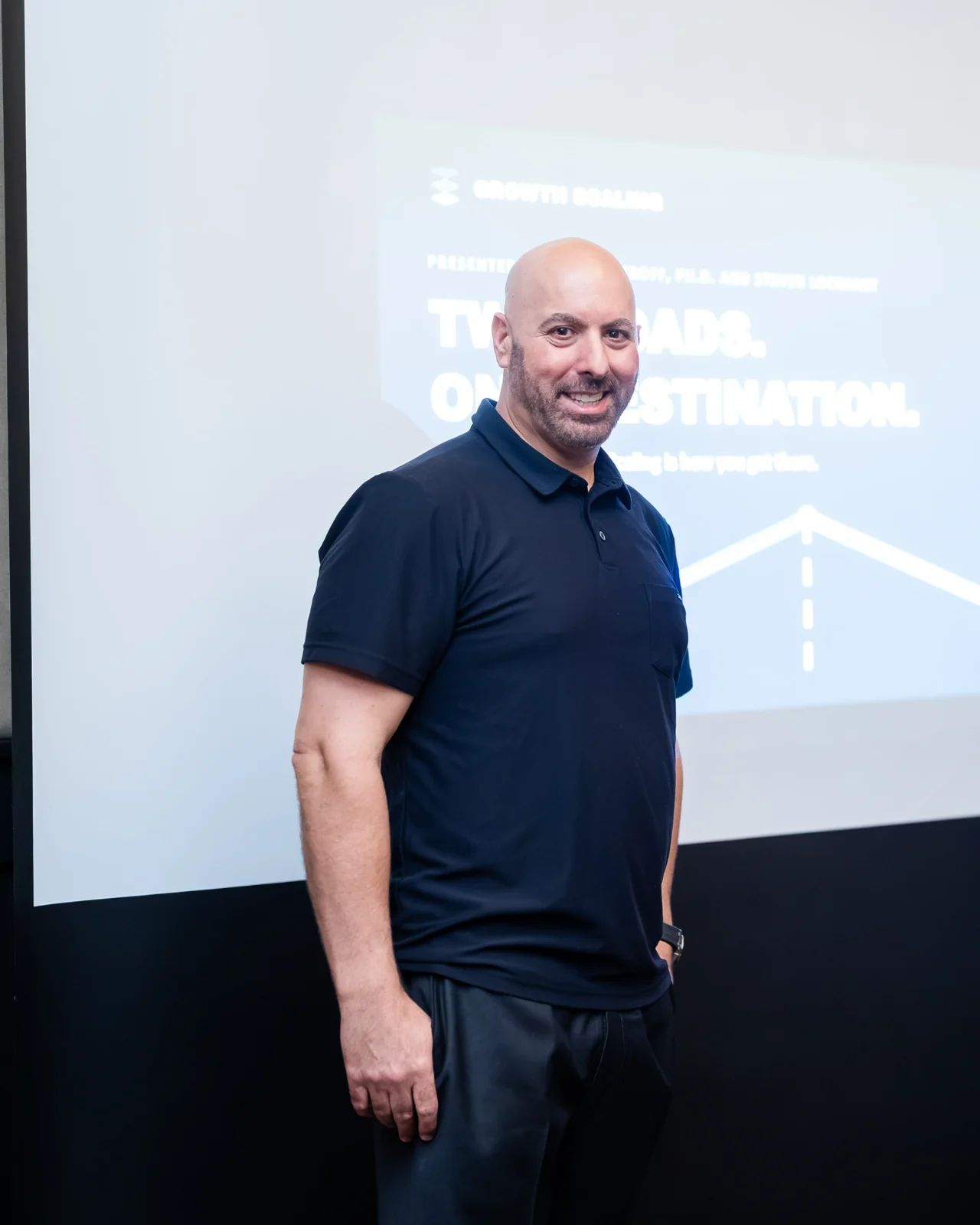
David can speak on this topic
A keynote talk based on this chapter
This chapter is also a keynote talk David gives. Leaders take home a simple review rhythm, a plan for the ninety-day wobble, and a kinder way to say hard things.
Every chapter of The 45 Day Consultant Field Guide is also a keynote talk. David gives these talks to companies, associations, conferences and leadership teams.
David also gives a related keynote, The Why Behind Leadership: How Psychology Drives Influence and Decision Making in the Workplace, on how psychology shapes influence, conversations and decisions at work. See his keynote programs (opens in a new tab)
A real result
How this idea worked for a client
For Granite Wellness Centers, we trained the executive leadership team and led an all-staff training, along with writing the grant application that won a new $2 million grant. Trained leaders and a trained staff are how a good plan gets carried out.
 NonprofitA new $2 million grant
Granite Wellness Centers won a new $2 million grant. We wrote the grant application, trained the executive leadership team and led an all-staff training.
Read the case studyTestimonials
What our clients say
“Right away things started to happen. We have managed to fill up our seminar rooms again, he has found us great new staff, and business is booming. More than a marketing consultant, he is also a business confidant […]”

“David was very helpful with structuring online marketing for my business. He presented clear ideas and strategy that was totally relevant for my dental office. His innovative thinking helps me to think outside the box.”

“We worked with Piedmont Avenue Consulting to implement new sales processes and launch a successful customer loyalty program. As a result, we have dramatically increased revenues from catering events and ‘front of mind’ sales.”

How it works
How we work: call, assessment, plan.
Schedule a call
Tell us where the business is today and where you want it to be.
Assessment
We look at your numbers, marketing, team and operations.
90-day plan
Three to five initiatives with owners and dates, plus a 12-month marketing calendar.
Ongoing initiatives
We stay on as a long-term partner and keep the plan moving.
We start with an assessment, agree on the priorities that matter most, and define what success looks like, then build a 90-day plan for ongoing work.
On the blog
Articles that go deeper on this chapter
Keep reading
More chapters from the Field Guide




Questions
Questions owners ask
What are thirty, sixty and ninety day reviews?
These are three review meetings that David Mitroff, Ph.D. puts on the calendar on a new hire’s first day. Each review is a real conversation about what is working, what is not, and what both people could do better. A review may move a few days, but never gets deleted.
What is the ninety-day wobble?
Around three months in, a new person knows enough to feel competent but not enough to be competent, so small mistakes appear. David Mitroff, Ph.D. names those mistakes in advance and adds more contact during this stage, not less.
Should a business hire for skill or attitude?
Hire for attitude. Norman Mitroff, Ph.D., father of David Mitroff, Ph.D., runs a retained executive search firm and says a person can learn the job, but attitude is very hard to change. Teach the job after the hire.
What does thinking like an owner look like for an employee?
An employee who thinks like an owner keeps asking how the work can improve, how to stop a problem from happening again, and how to make the day easier for clients and teammates. David Mitroff, Ph.D. says none of this requires owning anything.
How should a manager handle a role that is not working?
Say so early, directly and kindly. David Mitroff, Ph.D. agrees with Jack Welch, who argues in Winning that candor is a kindness. The answer may be a different seat in the company or a respectful exit.
Do employees and contractors need different management?
Yes. An employee wants to know where they fit and where the role is going. A contractor wants a clear scope, a clear deadline and prompt payment. Piedmont Avenue Consulting, Inc. helps owners manage both kinds of working relationships through business consulting.
Can a hiring manager use these ideas without owning the company?
Yes. The reviews, hiring for fit and documenting the work all hold no matter who signs the offer letter. Piedmont Avenue Consulting, Inc. works with owners, managers and team leaders on hiring, training and streamlining operations.
Work with us
Schedule a call about your team
Every engagement starts with an assessment and a shared definition of success. We start with an initial consultation and a paid assessment, then build a ninety-day plan and a twelve-month marketing calendar.
One conversation and a clear next step.