An iconic brand with an under-used revenue stream
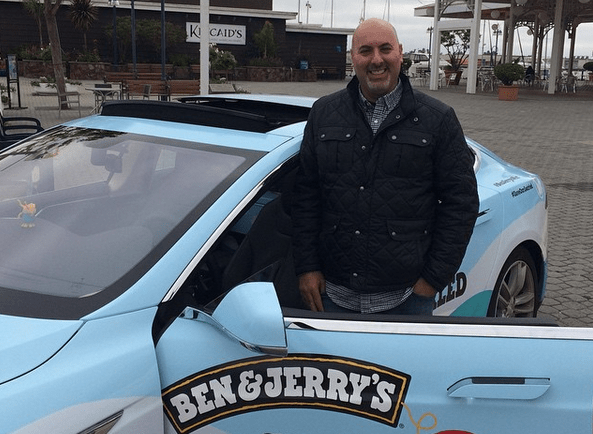
Ben & Jerry’s needs no introduction as an ice-cream brand — but the Northern California operation we partnered with was running something most franchisees overlook: three San Francisco and Davis scoop shops plus a full-service corporate catering program built to serve events from 10 to 5,000+ attendees. The retail side was healthy. The catering side was the opportunity.
When we began in 2008, catering ran like a summer hobby attached to a year-round business. Demand spiked in warm months and went quiet the rest of the year, and there was no system to capture corporate buyers — the employee-appreciation, company-picnic, convention, and sales-promotion events that fill a calendar regardless of season. This is the classic pattern we see across Bay Area restaurant and food-service businesses: real demand exists, but nothing is built to capture it consistently.
Inside the Bay Area corporate catering opportunity
Corporate catering is one of the most resilient revenue lines available to a food brand, and it’s frequently the most neglected. Unlike walk-in retail, corporate demand isn’t weather- or season-dependent — companies host employee-appreciation events, picnics, conventions, and sales promotions all year, and they plan them in advance with real budgets. For a brand as recognizable as Ben & Jerry’s, that combination of built-in trust and event-scale ordering is a natural fit. The gap is rarely demand; it’s the absence of a system to capture and convert it. That’s precisely where focused Bay Area food and beverage consulting earns its keep — translating brand strength into booked, repeatable revenue rather than letting it sit idle for eight months of the year.
The challenge: corporate catering marketing that works year-round
The brief was deceptively simple — make catering a dependable profit center rather than a seasonal bump. In practice that meant three problems at once. First, demand was concentrated in summer, so revenue was lumpy and hard to staff against. Second, the program had no lead-generation engine; bookings came from whoever happened to find them. Third, marketing wasn’t coordinated across the three locations, so the brand spoke with three slightly different voices and no shared sales process.
None of these are unusual. They’re the default state of most multi-location food businesses before someone treats marketing as a system. Our job was to install that system without adding overhead the franchise couldn’t sustain.
The strategy: a repeatable franchise marketing strategy
We started where we always start — by auditing what already existed. The team, the locations, the brand equity, and the relationships were assets sitting partly idle. Rather than recommend a big new spend, we built a year-round demand engine on top of what was there, then layered in the channels and collateral that corporate buyers actually respond to.
The plan had three moving parts: a consistent multi-location presence so all three shops marketed as one program; a always-on lead-generation layer aimed squarely at corporate event planners; and a managed sales process so inquiries didn’t leak. Each part reinforced the others, which is what separates a campaign from a program.
What we did for Bay Area food and beverage growth
The work spanned strategy, creative production, and operations. Concretely, we:
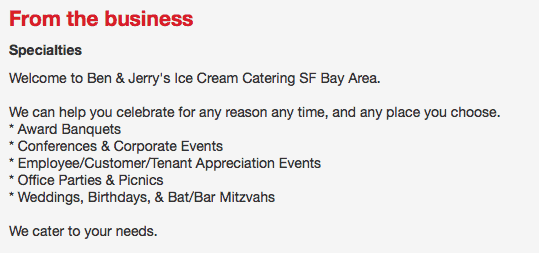
- Reframed the summer-only corporate catering program into a year-round, profitable operation with demand targeted at corporate buyers across all four seasons.
- Grew the program from roughly 20 events a year to more than 700 — a step-change in volume that turned catering into a primary revenue line.
- Created new print marketing collateral with matching online content, running a coordinated campaign across Yelp, Facebook, and Google Local so all three locations presented one consistent program.
- Coordinated production of a professional sales video to help corporate buyers visualize large-format catering and shorten the decision cycle.
- Implemented systems to manage the business sales process — capturing inquiries, tracking the pipeline, and following up so leads converted instead of leaking.
- Advised on creative email promotions, customer loyalty, and front-of-mind marketing to keep the program top-of-mind between events.
That last point matters more than it looks. Corporate catering is a repeat-purchase business — the company that books a summer picnic also books the December party. The loyalty and front-of-mind work is what compounds one booking into a relationship.
Restaurant catering lead generation that compounds
The engine that made the numbers move was disciplined restaurant catering lead generation. Corporate event planners don’t browse — they search, compare reviews, and shortlist fast. So we concentrated the program where those decisions actually happen: local search and review platforms like Yelp, a well-optimized Google Business presence across all three locations, and Facebook for community reach and event promotion. Critically, every inquiry fed a single tracked pipeline rather than three disconnected inboxes.
Because catering is a repeat-purchase business, each captured lead carried compounding value — the planner who books a summer picnic is the same buyer who books the holiday party. Pairing lead generation with loyalty and structured email follow-up is what turned a list of one-off events into a renewing book of business, and it’s the difference between a busy summer and a profitable year.
The results: from 20 to 700+ events a year
The headline outcome was volume: a program that ran roughly 20 events a year grew to 700+, and the seasonal sideline became a year-round, profitable operation. Just as important, the franchise gained a system it could run — a coordinated brand presence, a lead pipeline aimed at corporate buyers, and a sales process that turned interest into booked events. The engagement has continued over many years, with ongoing advice on email promotions, loyalty, and front-of-mind marketing.
This is the pattern we aim for in every engagement: not a one-time spike, but durable capability the client owns afterward. You can see the same philosophy at work across our portfolio of client engagements.
We tracked progress the way we track every engagement — against specific, time-bound objectives rather than vanity metrics. Event volume, booking conversion, and repeat-client rate were the numbers that mattered, and reviewing them on a regular cadence kept the program honest and the franchise’s investment accountable.
Piedmont Avenue Consulting helped us open our new store, from negotiating with vendors to building our website to overall marketing strategy. We have been growing while others are closing.
Why it worked — and what it means for your business
Three things made the difference, and all three transfer to other food and beverage operators. The program targeted corporate buyers, whose demand isn’t seasonal. It used the channels those buyers actually search — local search, reviews, and social proof — rather than chasing vanity reach. And it ran on a repeatable sales process, so growth didn’t depend on any one person remembering to follow up.
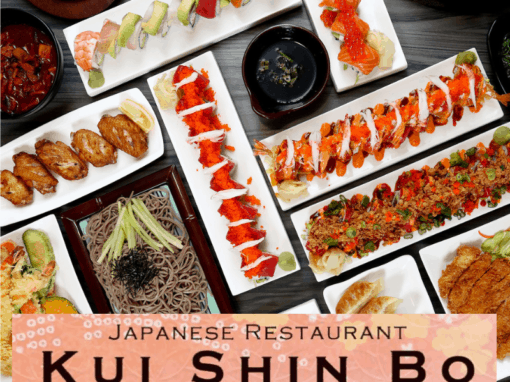
If you operate a franchise, restaurant, or catering business and your off-season revenue dips the way Ben & Jerry’s once did, the fix usually isn’t a bigger budget — it’s a system. A focused Bay Area food and beverage marketing consultant can often find that leverage inside what you already have. For a comparable hospitality-side engagement, see how we approached Kui Shin Bo’s restaurant expansion and catering partnerships, or how we drove Library on Main’s rebrand into a dining and event space.
The methodology behind the numbers
The Ben & Jerry’s results weren’t a lucky campaign — they came from the same four operating principles we bring to every client engagement. First, we refocused what already existed: the locations, team, and brand equity were assets we redeployed before recommending any new spend. Second, we paired strategy with implementation, staying through execution rather than handing over a slide deck and disappearing. Third, we transferred skills, leaving the franchise with a documented sales process it could run without us. Fourth, we tied everything to outcomes with timing — measurable targets reviewed on a regular cadence.
That sequence is deliberately industry-agnostic. The specifics change for a law firm or a hotel, but the logic — find the leverage, build the system, hand over the keys — is what makes results durable instead of temporary, and it’s why a single engagement so often turns into a multi-year relationship.